January 21-24, 2026
I visited Koh Rong, an island off the coast of Cambodia near Sihanoukville.
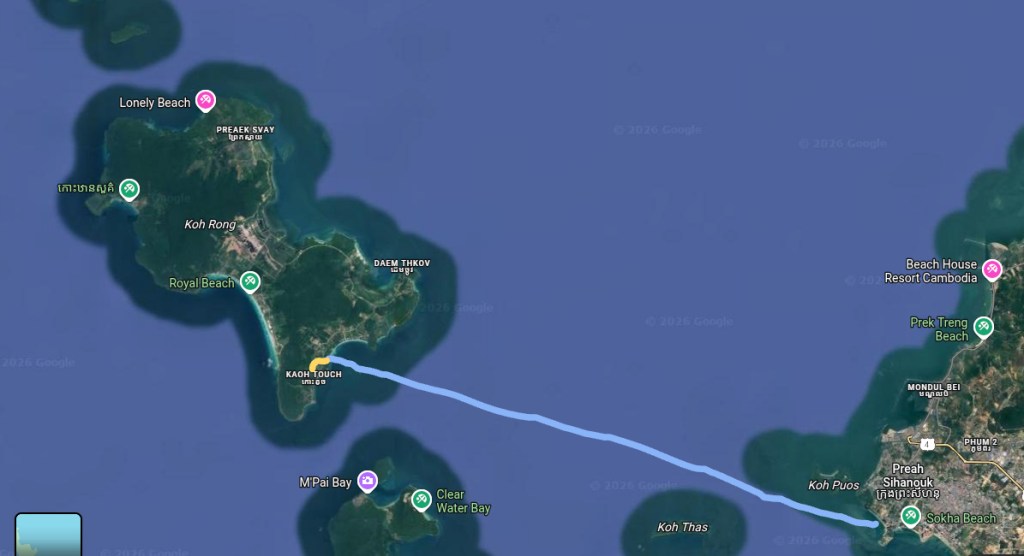
The Google map above shows the route I took.
I arrived in Sihanoukville by train, the daily service from Phnom Penh. I was whisked to the port by taxi, paid the return fare of $US 25 (about $AUD 38, NTD 750), and was the last one to board the speedboat, the boat immediately departing. On the Google map it’s marked as a blue line. I had not had my lunch, and was quite hungry.
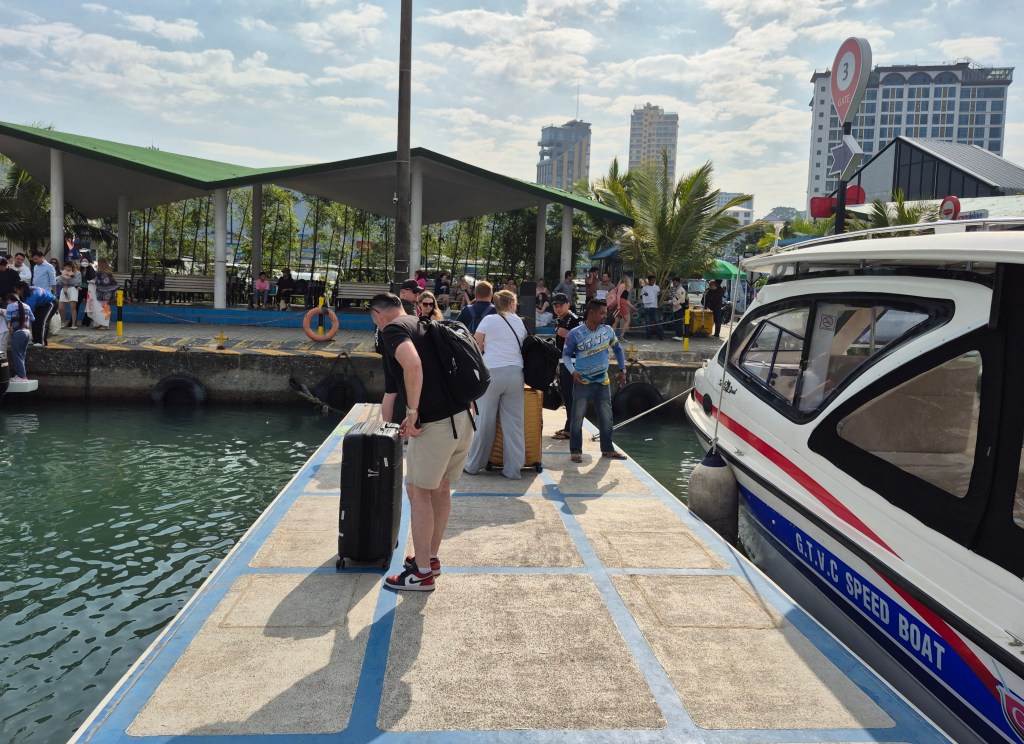
The photo above shows the boat at the pier. I took this when coming back to the same pier, so the circumstances are different, but the speedboat (GTVC Speedboat) is a similar model.
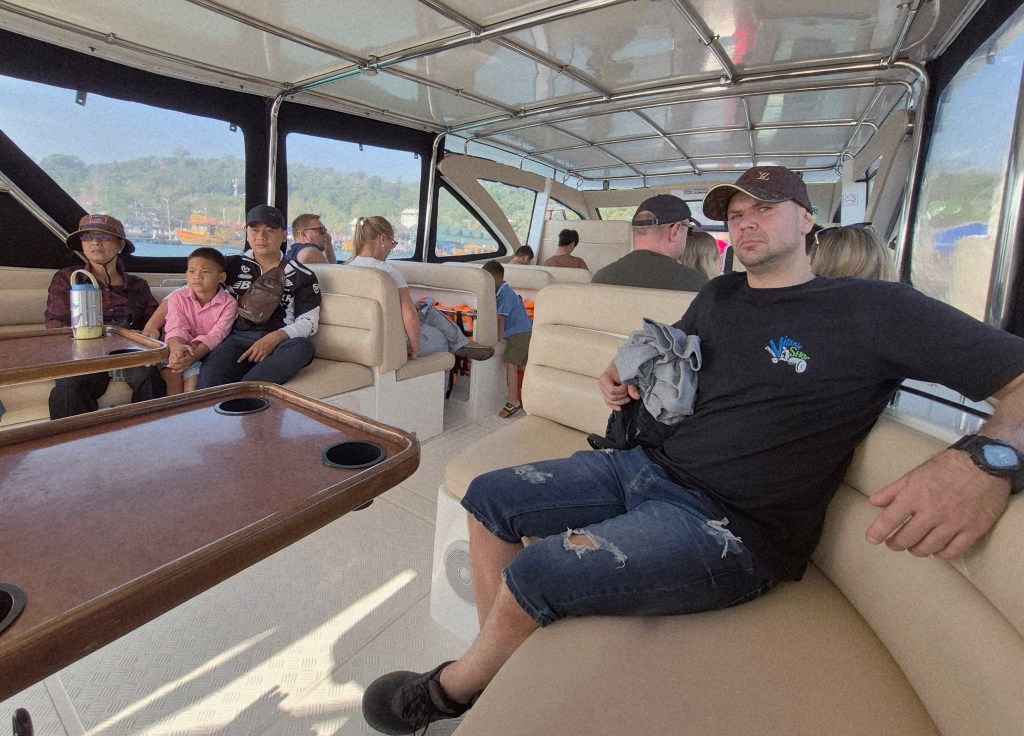
Inside the speedboat.
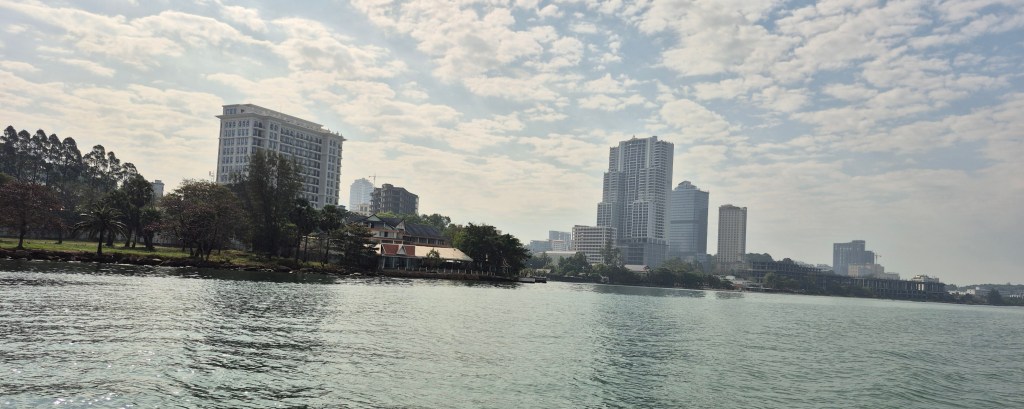
Sihanoukville from the water. Sihanoukville has developed a sinister reputation:
“Scam centers in Cambodia are clandestine fraud operations, controlled by international and organized criminal networks specializing in online fraud and operating in Cambodia. Policy analysis has characterized Cambodia as a global nexus and among the global epicenters of trafficking-linked transnational cyber-fraud, with scam networks recruiting coerced and voluntary workers from dozens of countries and targeting victims worldwide…. The operations of organized crime in the country is a serious regional issue, and their activities are estimated to generate between $12.5 and $19 billion annually, a figure that could represent up to 60% of Cambodia’s gross domestic product (GDP). … This environment of corruption and political patronage has created fertile ground for the expansion of transnational criminal networks, including Chinese triads that have fled increased crackdowns in China since 2018. Many of these groups have established operations in special economic zones such as Sihanoukville, where lax regulation and political protection have enabled them to thrive.”
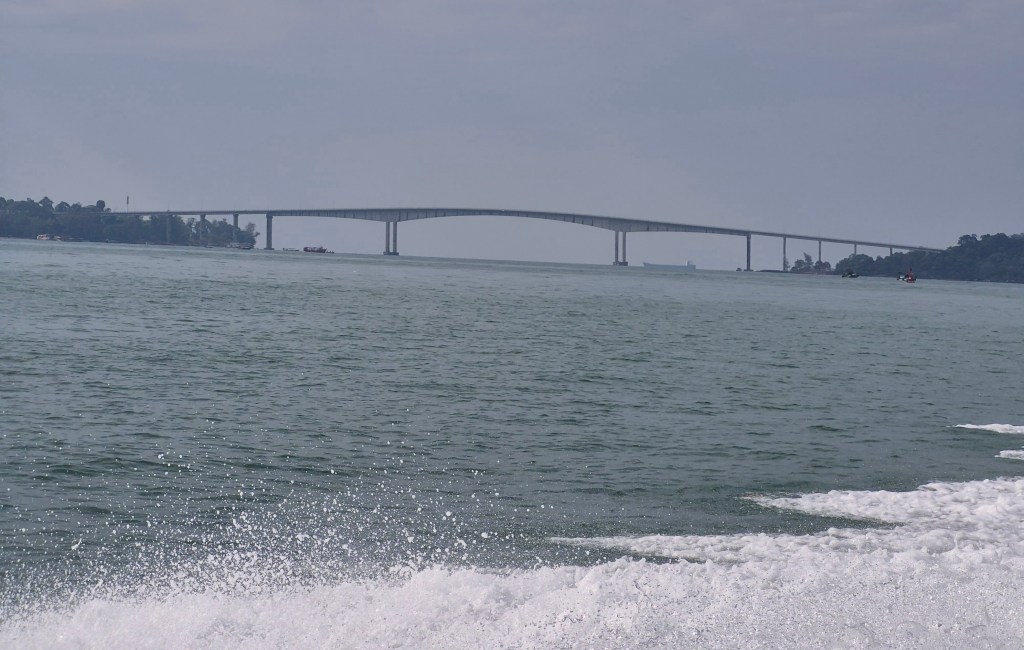
Sihanoukville is connected to Koh Puos (“Snake Island’) by the Techo Morakat Bridge.
When I got off the boat, there was no gangway to walk down; instead you leapt down to the pier from the side of the boat. I couldn’t leap, but fortunately half-a-dozen men carried me to the pier. Success! I walked off the pier and went looking for my hotel.
The area I was in seemed quite different to the local area – quite right too, as I soon found out that I had got off at the wrong stop. Fortunately, the distance wasn’t far, and a tuk-tuk driver carried me for $US 10 ($AUS 15, NTD 300). On the Google map above it’s marked as a yellow line. There is a dirt road around the island though dense tropical forest, quite spectacular. The road is in the process of being rapidly upgraded, with a grader working and detour signs, the tuk-tuk rattling over corrugated dirt.
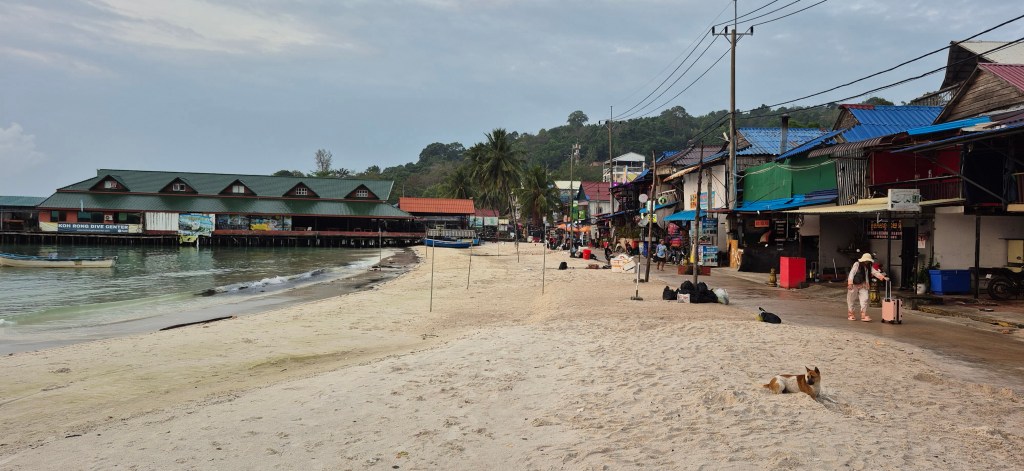
We turned off the road to plunge down towards the sea in a narrow passage, then drove right along the shore among ramshackle buildings. The area is known as Koh Touch (above).
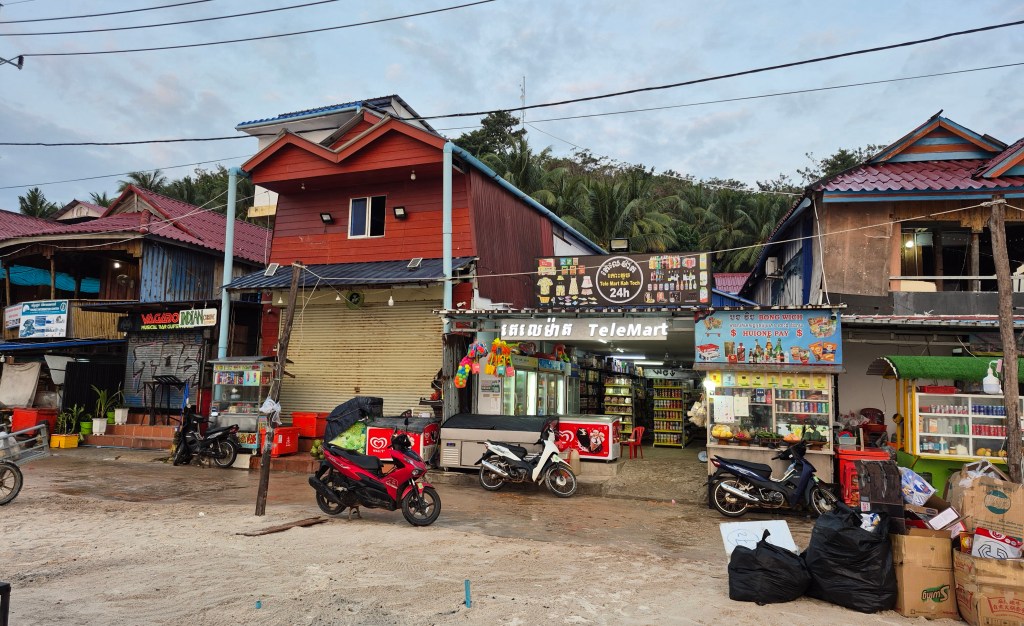
The driver dropped me right outside my hotel, Vagabonds (left). I checked in, which consisted of paying $US 60 in cash to two French women, one of whom did not speak English at all. I was led to a stairway, really a ladder, which I climbed with my left hand helping on the rungs.
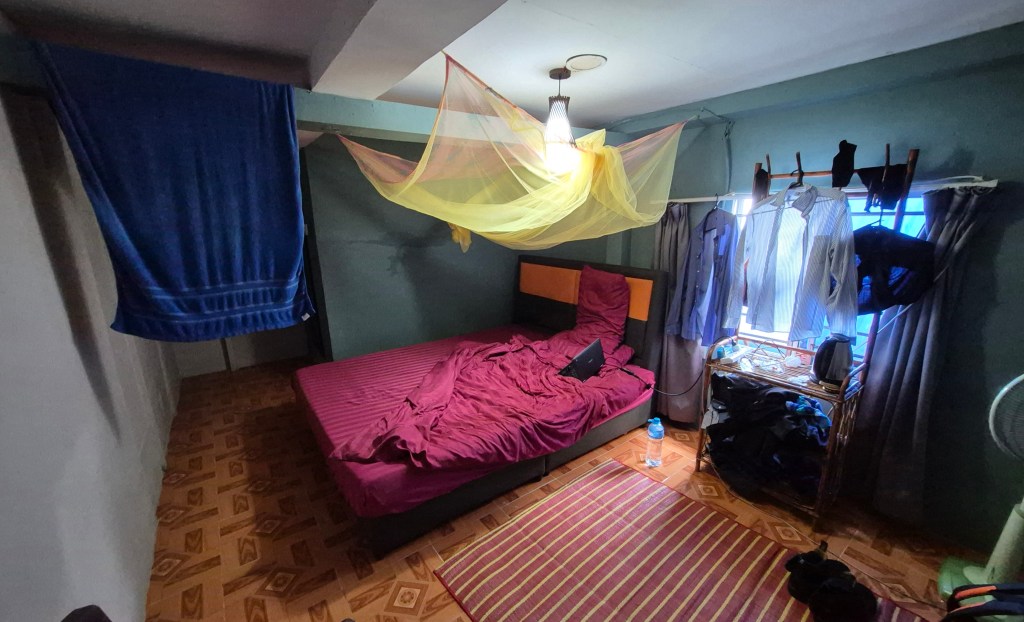
My room. No air-con, just a fan, but it did have an en-suite with a hot shower and a temperamental toilet. Cost $US 20 ($AUD 30, NTD 600) a night, not too bad.
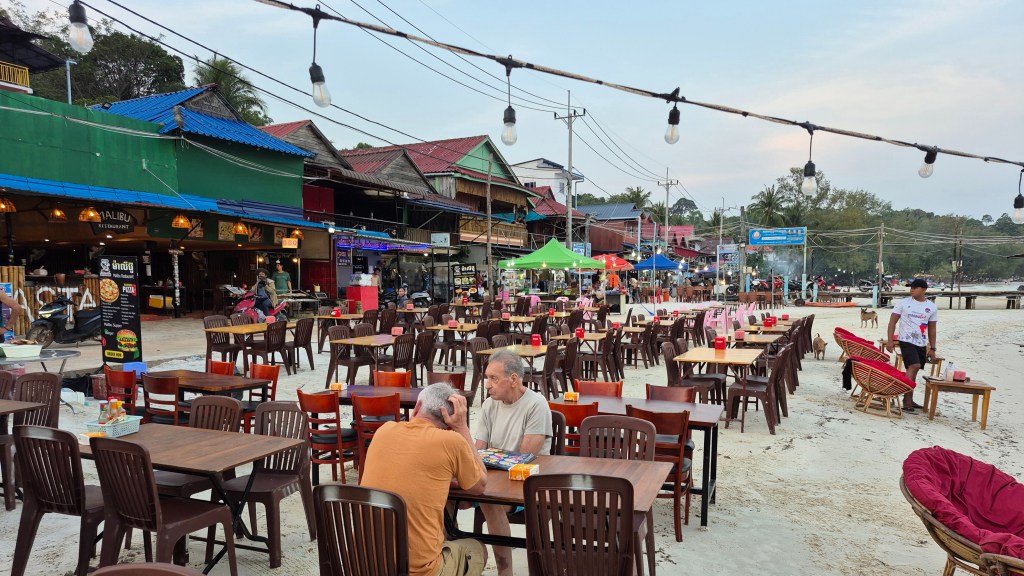
Exhausted by my trip, I grabbed a quick bite to eat and rested. When I emerged from the hostel, proprietors were setting up chairs and tables right next to the sea.
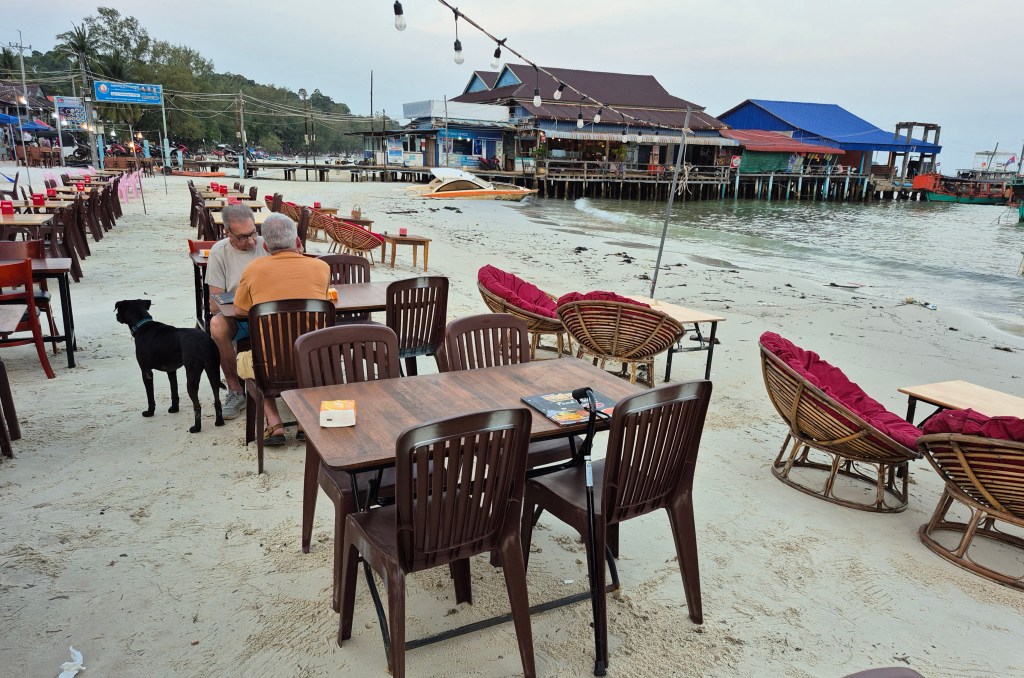
And why not? People don’t worry about rules that specify a minimum distance from the sea, nor boats that are swamped by sand on the beach (above centre of the photo).
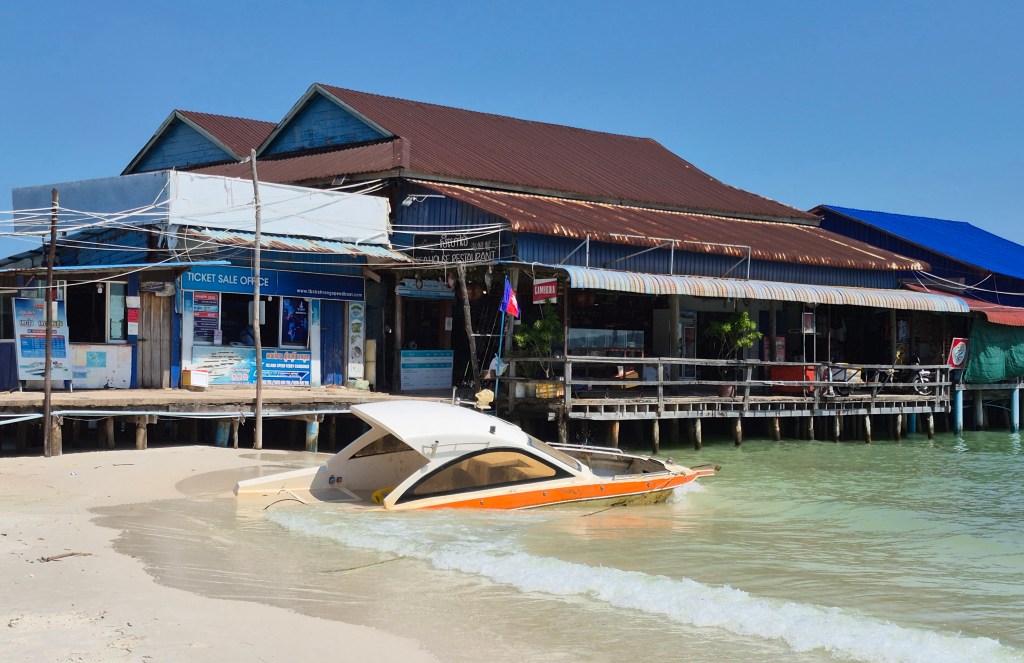
The swamped speedboat, filled with sand, the next day. The following day some men were digging the boat out, presumably to float her off.
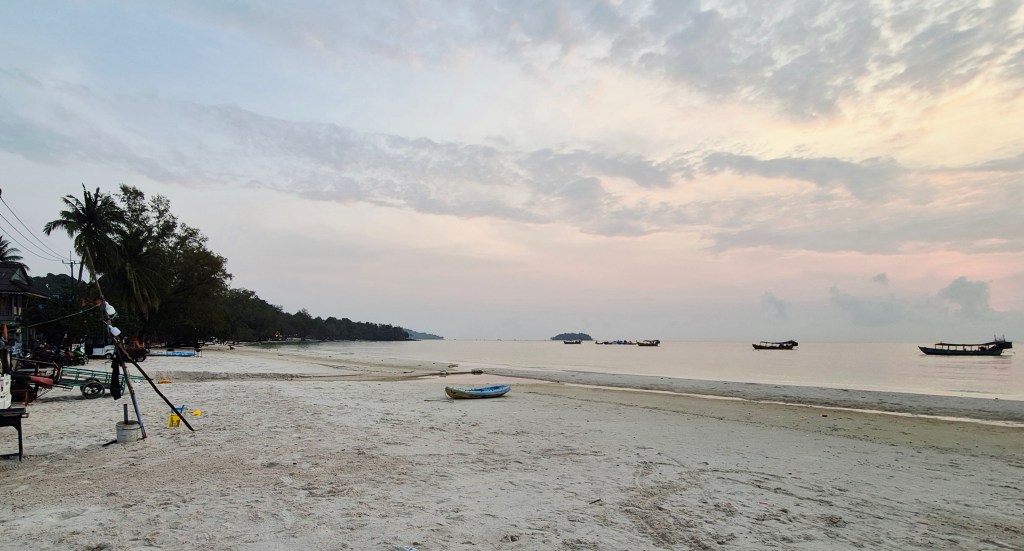
The next day in the early morning I went out to photograph.
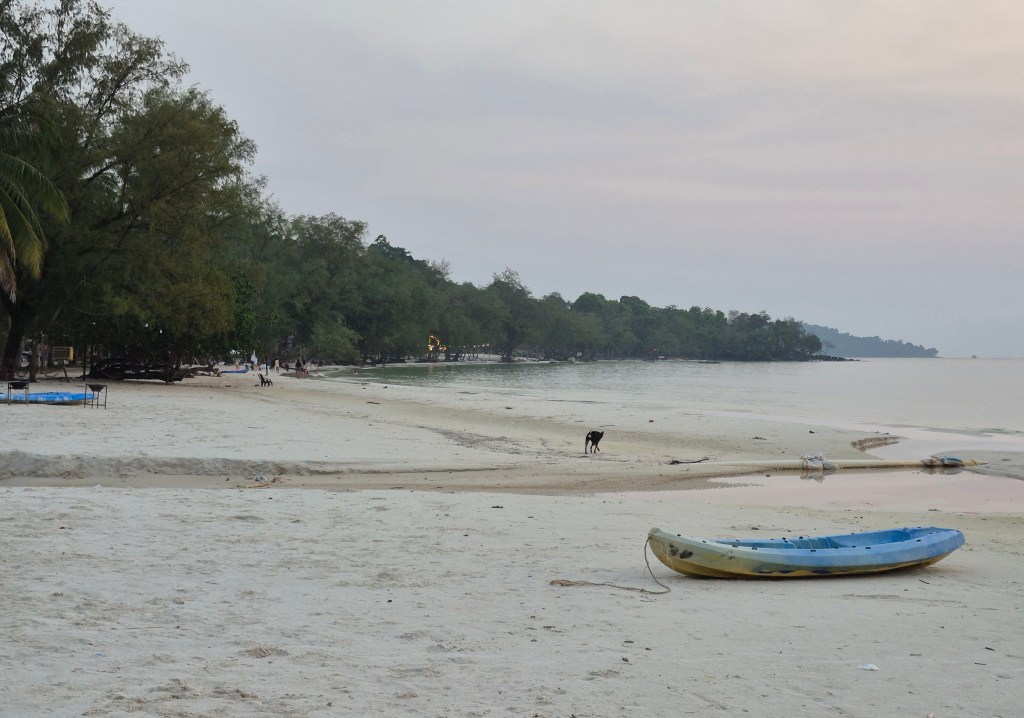
Travelfish said “Cambodia’s second largest island, Koh Rong boasts arguably the most beautiful beaches in the country. If you’re a beach-bum at heart, this island belongs on your ‘must visit in Cambodia’ list.”
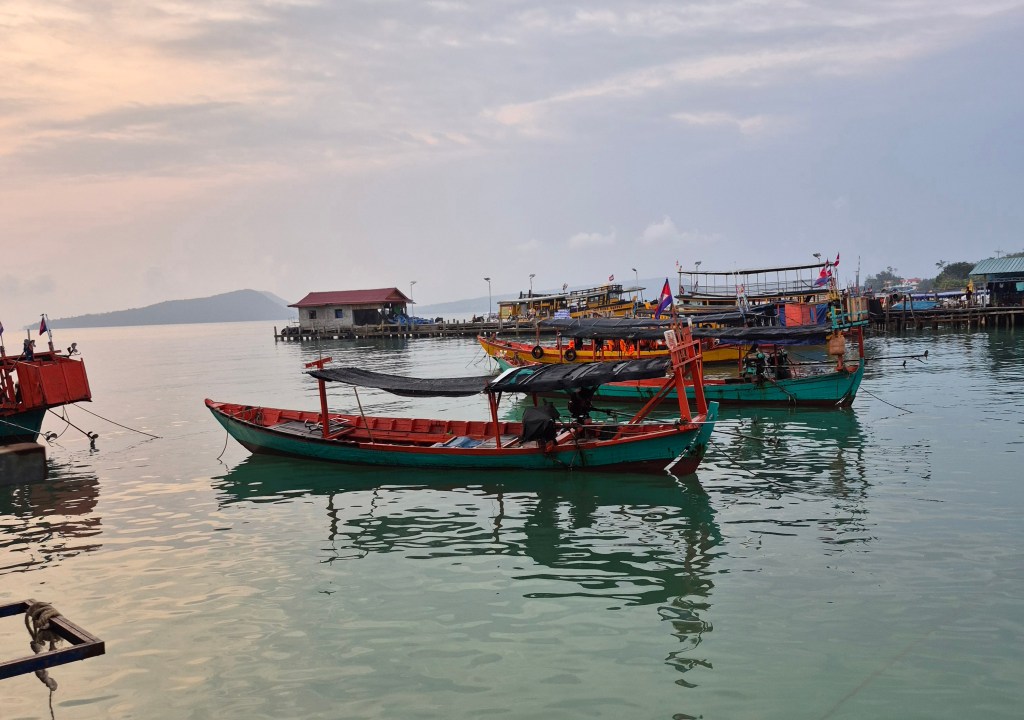
It was a photographer’s dream. Wikivoyage said “Until few years ago, Koh Rong used to be an undiscovered Island with only a few local families living from what the sea provided. There are about four small villages. Tourism slowly started around 2008”.
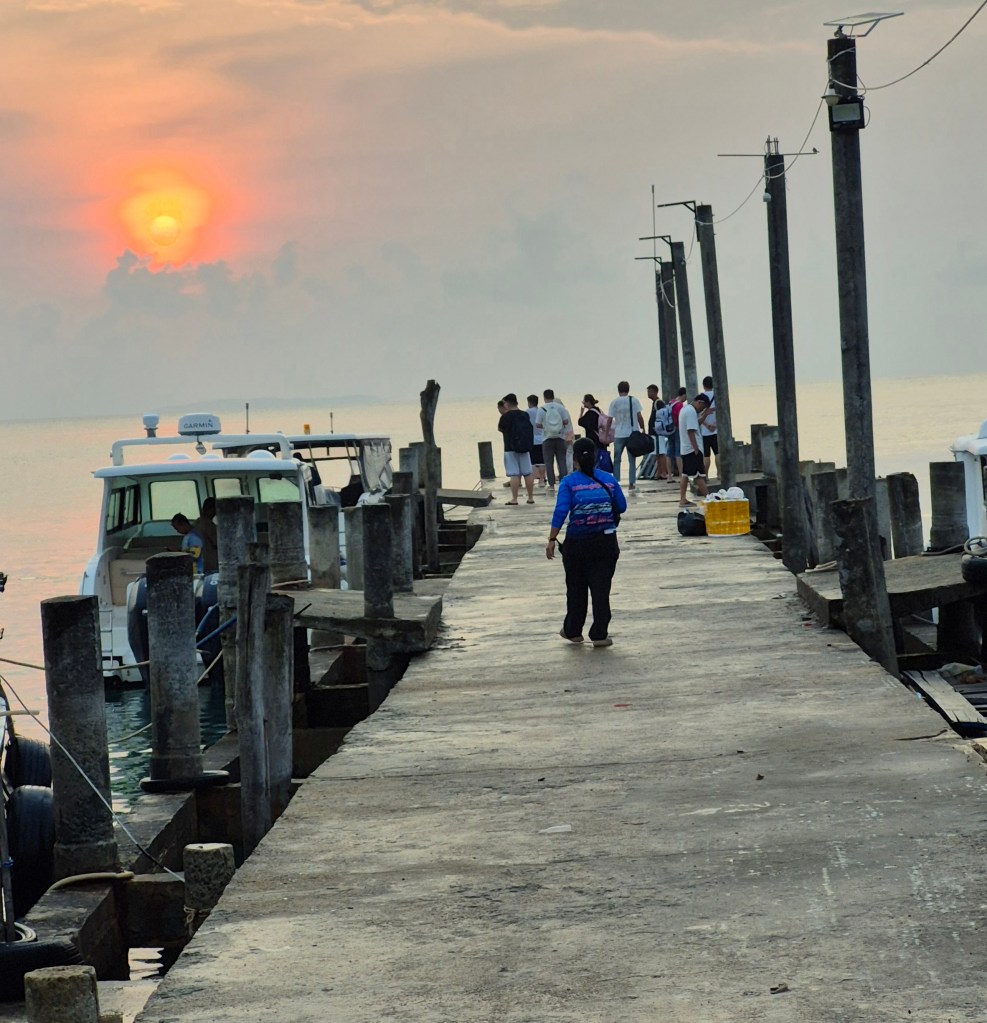
I took a shot of tourists waiting for a boat.
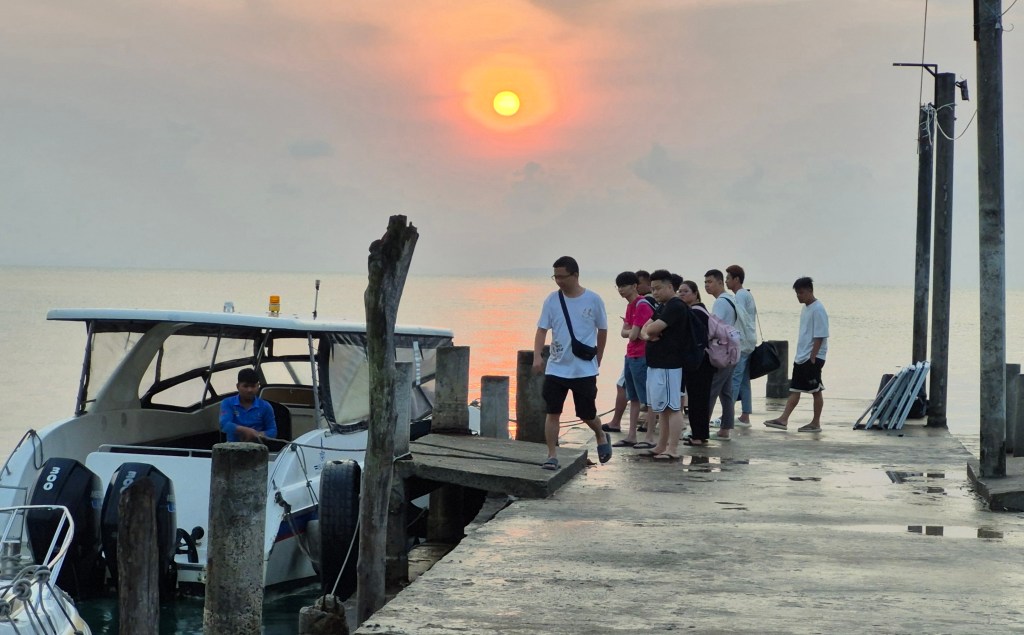
The sun was climbing out of the sea as the tourists’ boarded.
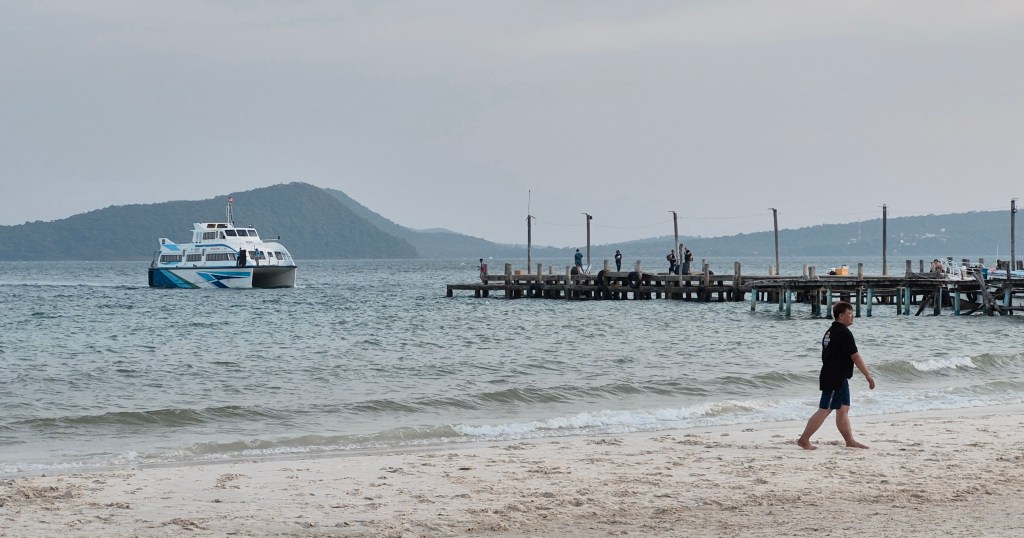
The above photo shows a speedboat (not mine) approaching the pier, the other islands in the background. I was reminded of Koh Pha Nga in Thailand, 30 years ago.
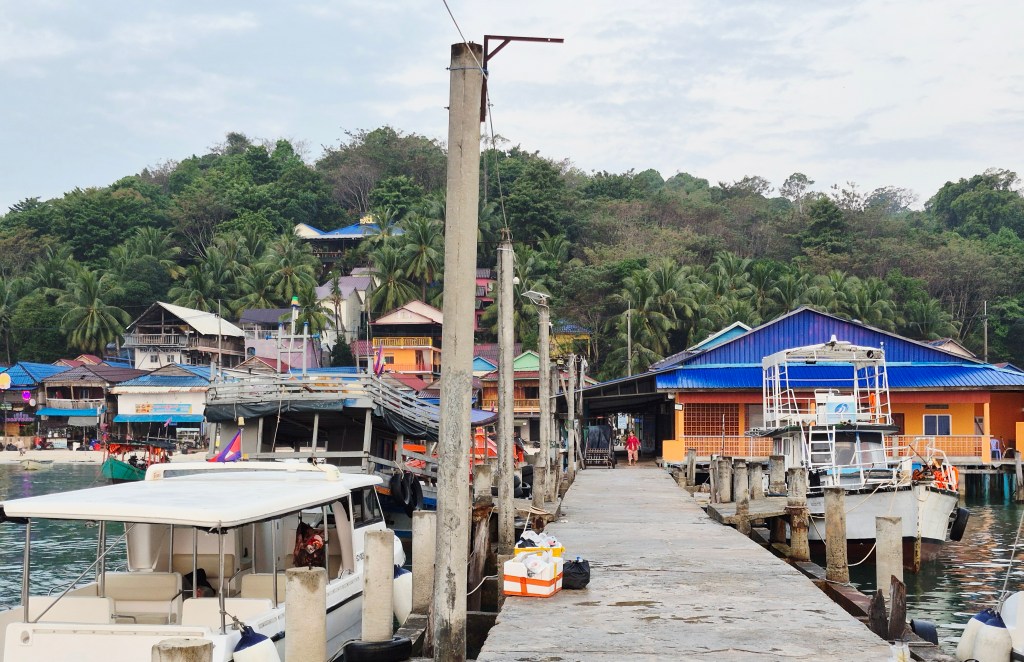
A view looking back to the beach from the pier. In Koh Touch the development is only along the shore; the rest is tropical jungle.
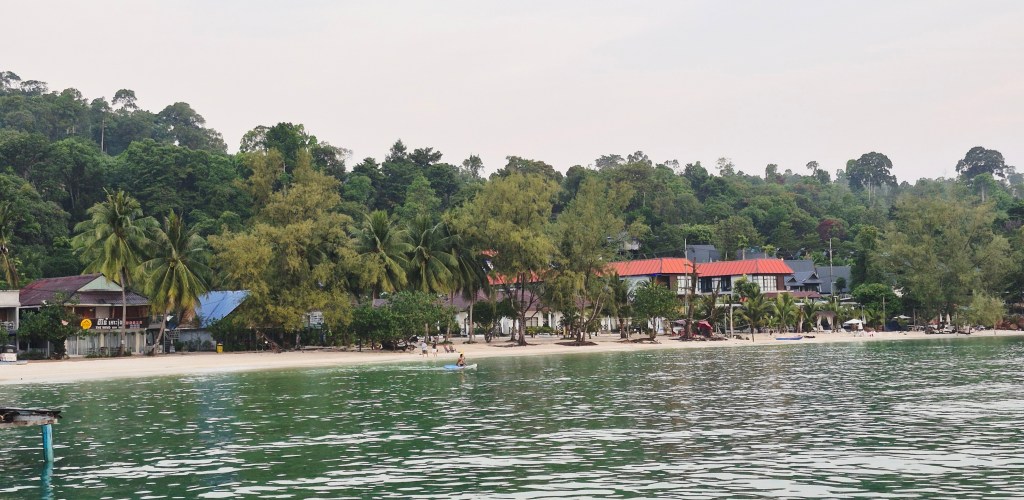
Another view of the beach. Wikivoyage said “Unfortunately almost all places seem solely interested in short-term profits: garbage and unfiltered wastewater are routed to the sea and one can watch the island getting dirtier every month.”
Above is a short clip giving you a sense of place
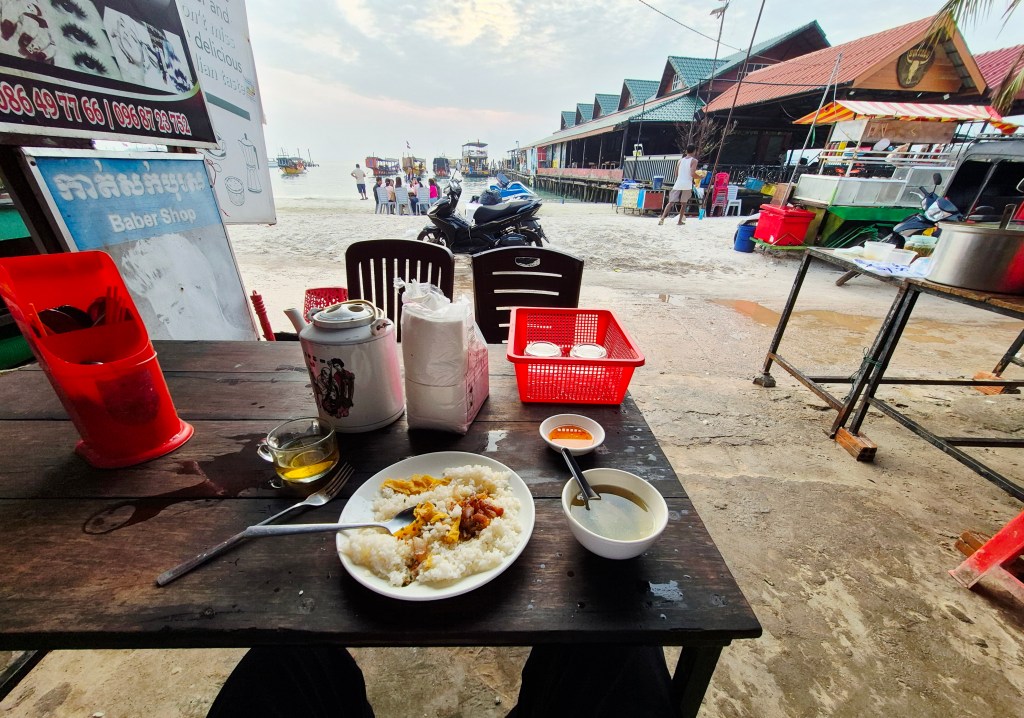
I stopped at a barber shop that was temporarily converted into a small restaurant. I had pork, omelet, and rice, with soup and tea (above). The food was delicious, and cost me around 8,000 riel, about $US 2 ($AUS 3, NTD 60).
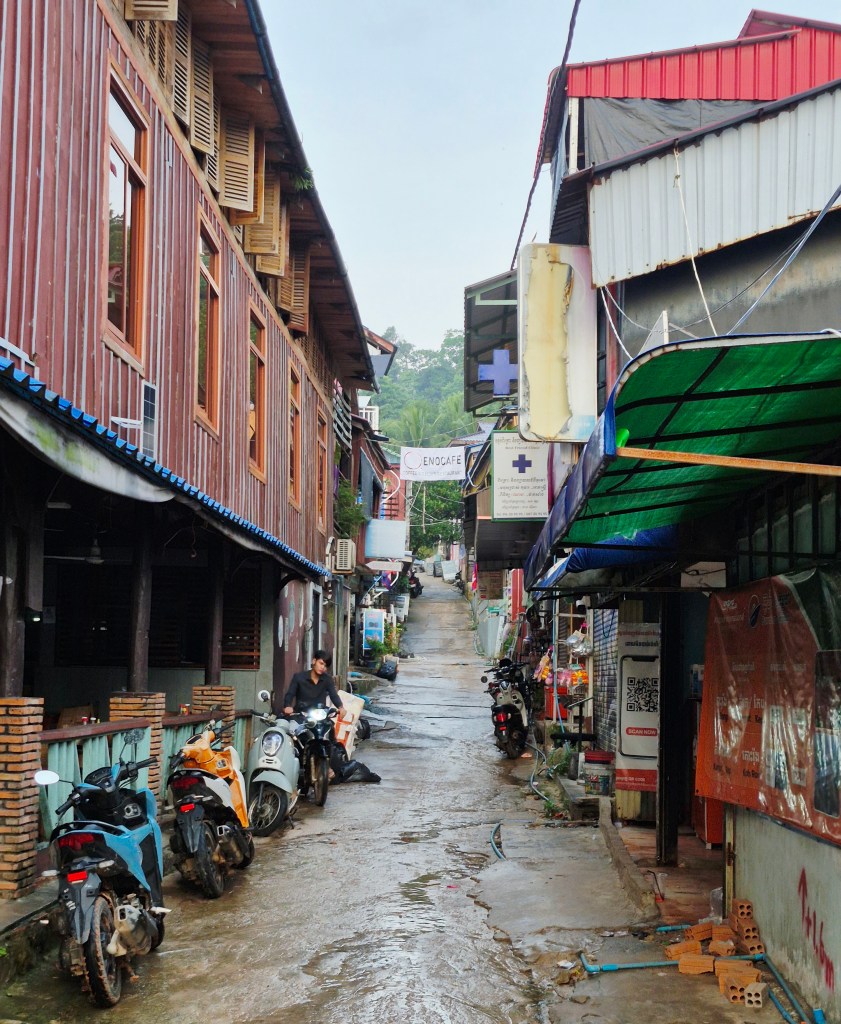
There was a path running perpendicular to the beach.
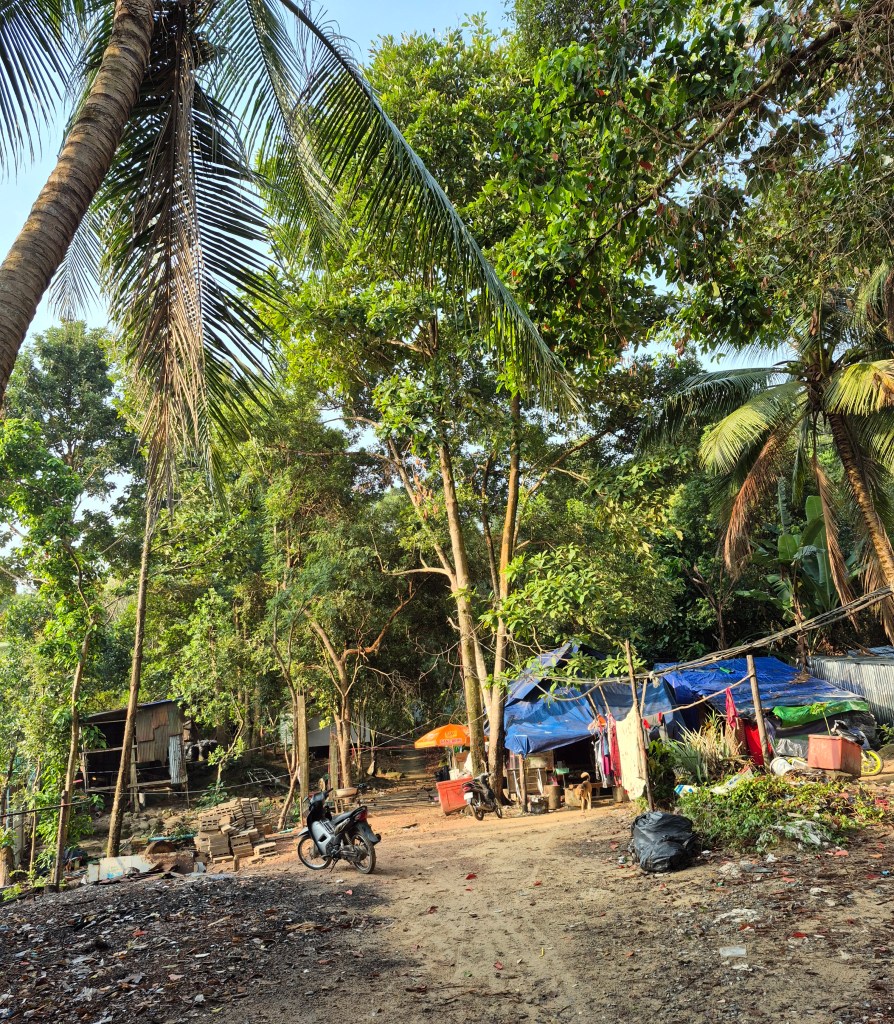
Up the hill there was a contrast to the beach life (above).
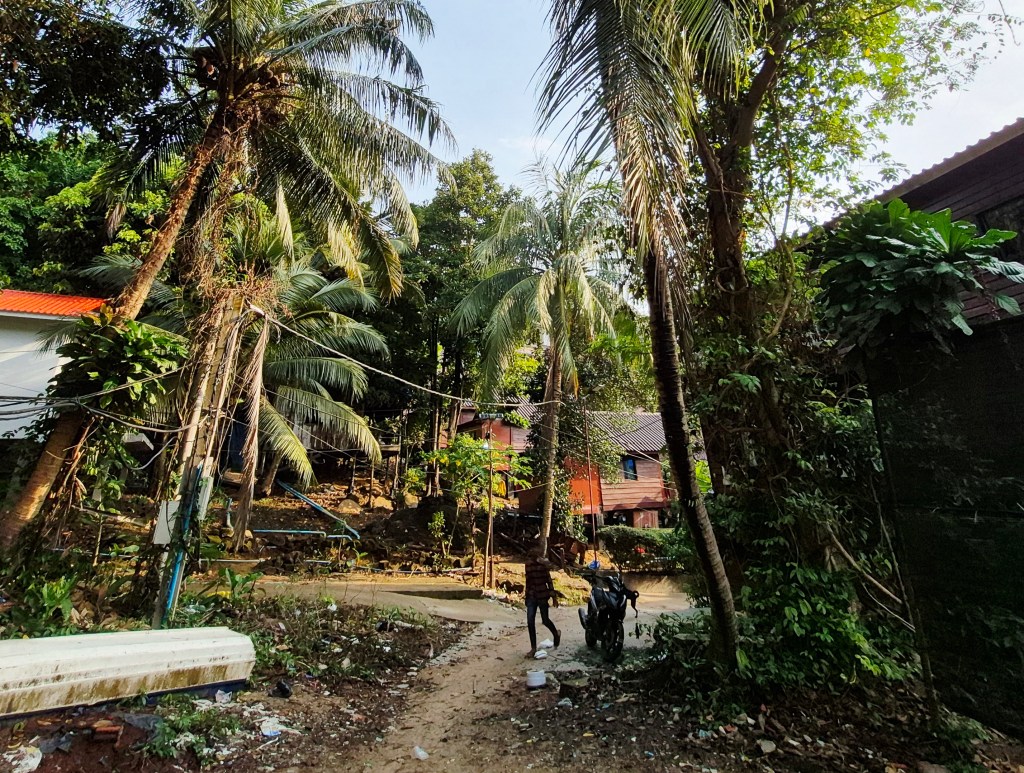
Quite beautiful scenes. Travel fish said “Looking to make a difference? Friends of Koh Rong was established in 2013 and works to help the local communities on Koh Rong adapt to the tourism industry that is changing their way of life forever.”
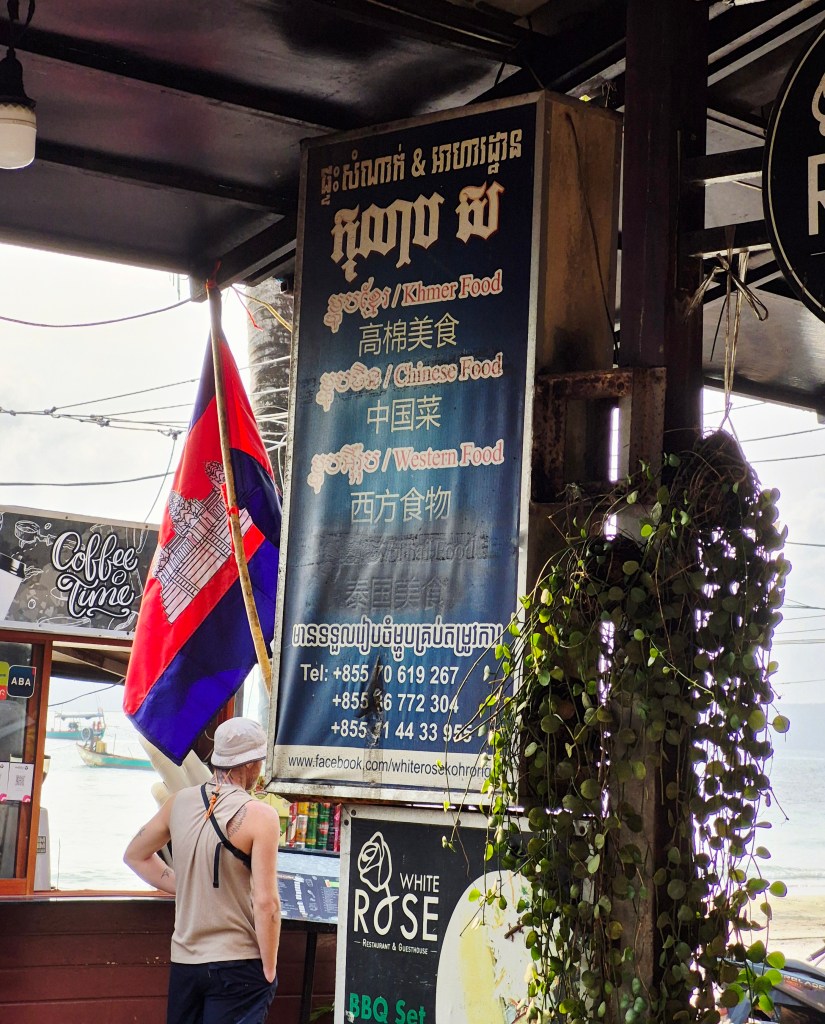
Back on the beach, in the White Rose restaurant. In the photo above, note the “Khmer Food / Chinese Food / Western Food” but the “Thai Food” was airbrushed out. Cambodia and Thailand were fighting at the borders, so I assume this is why. I overheard a tourist asking for “Pad Thai”, only to be corrected by the waiter calling the dish “Pad Khmer”.
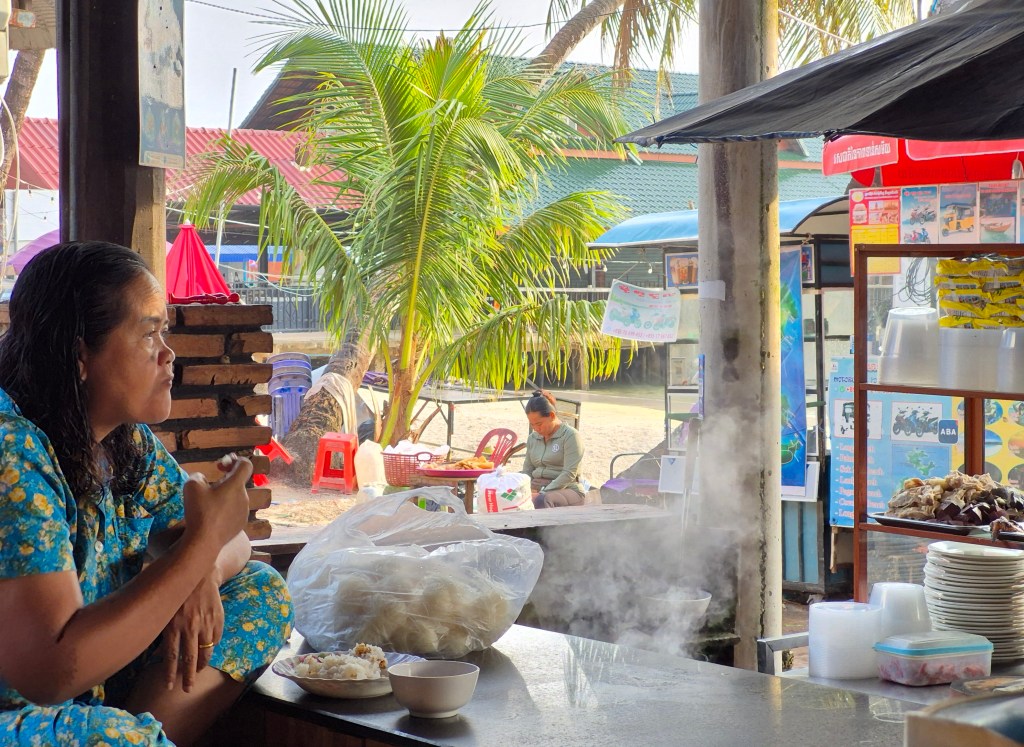
This restaurant accepted all comers, including Khmers (the menu started with traditional Cambodian cuisine) but also Chinese, and Westerners like me.
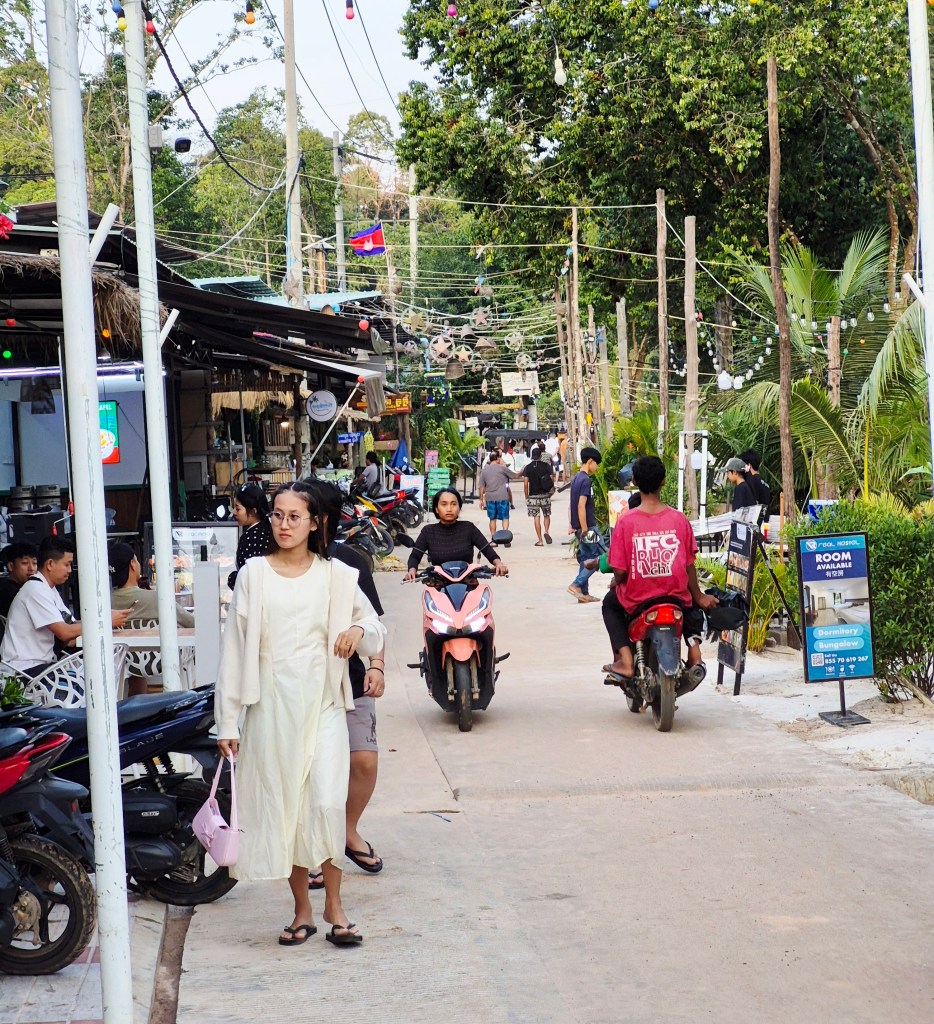
The road along the beach. I think the inhabitants have heard of motorcycle riders protected by a helmet, but most of them don’t do it.
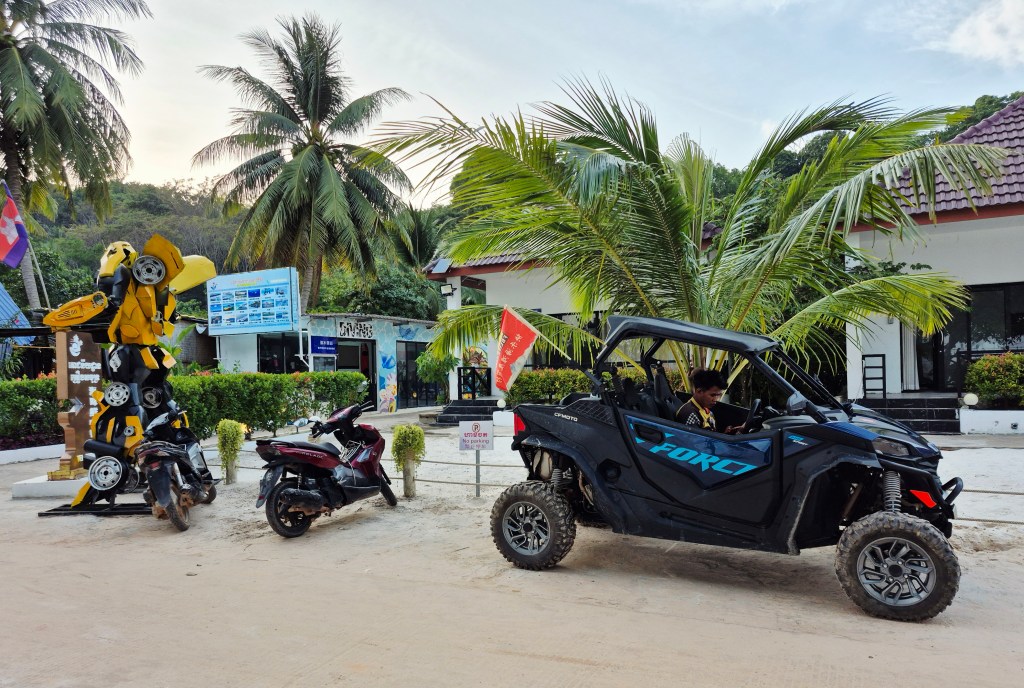
The above photo shows a hotel catering to the Chinese; there were signs in both Chinese and Khmer (at extreme left). I took this photo because there was an off-road buggy parked outside the apartments.
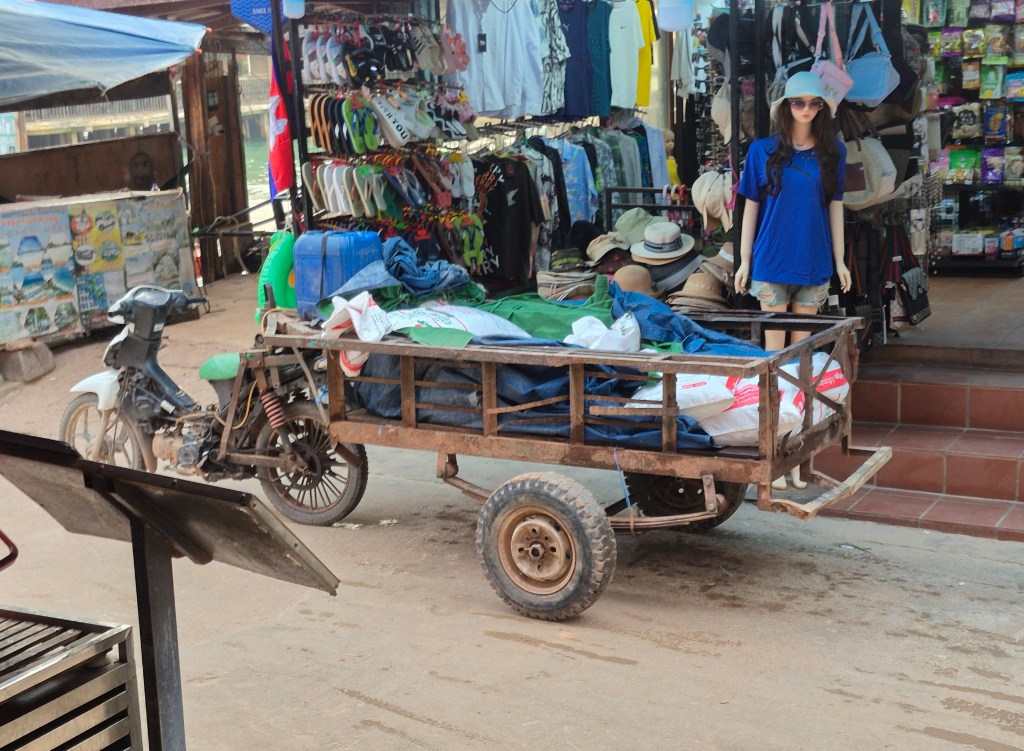
In contrast, there was more traditional transportation, like this motorcycle and trailer.
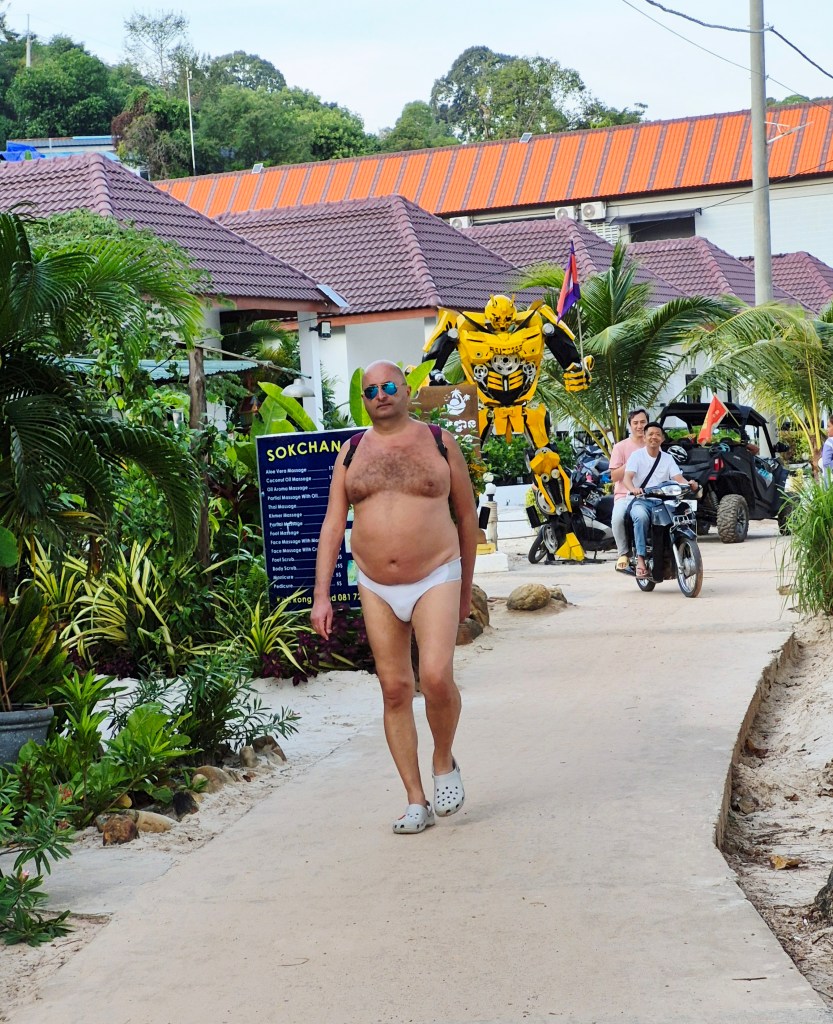
There were odd fashion choices, like some Western young women in bikinis paired with short skirts, and this man in underwear (above), sunglasses, and Crocs, and nothing else.
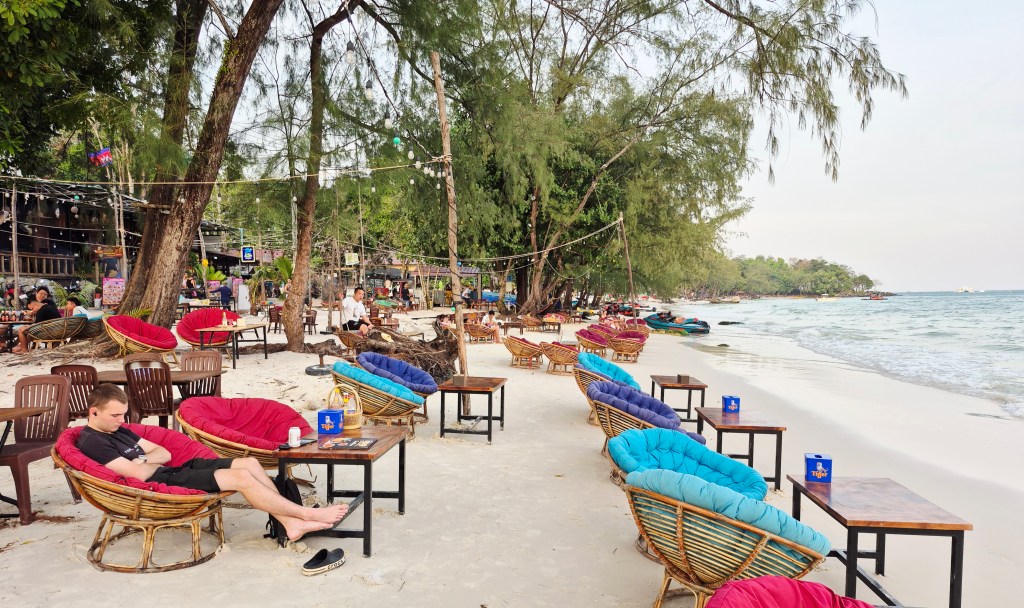
At the end of the day the restaurants set up again on the beach.
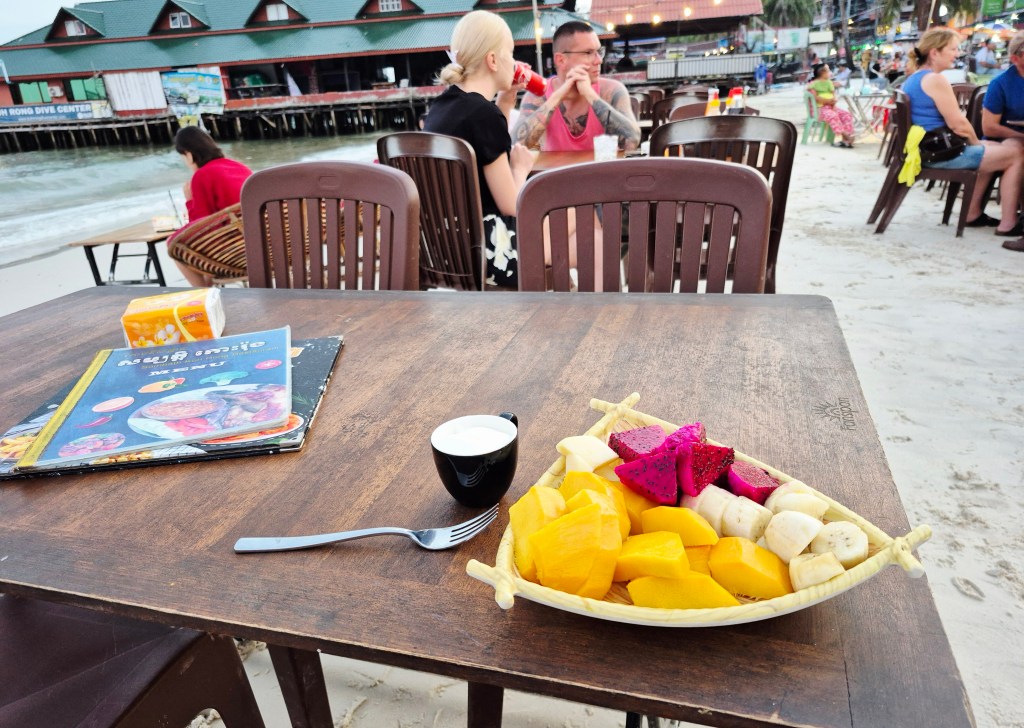
I had fruit salad and yogurt. This is the life!
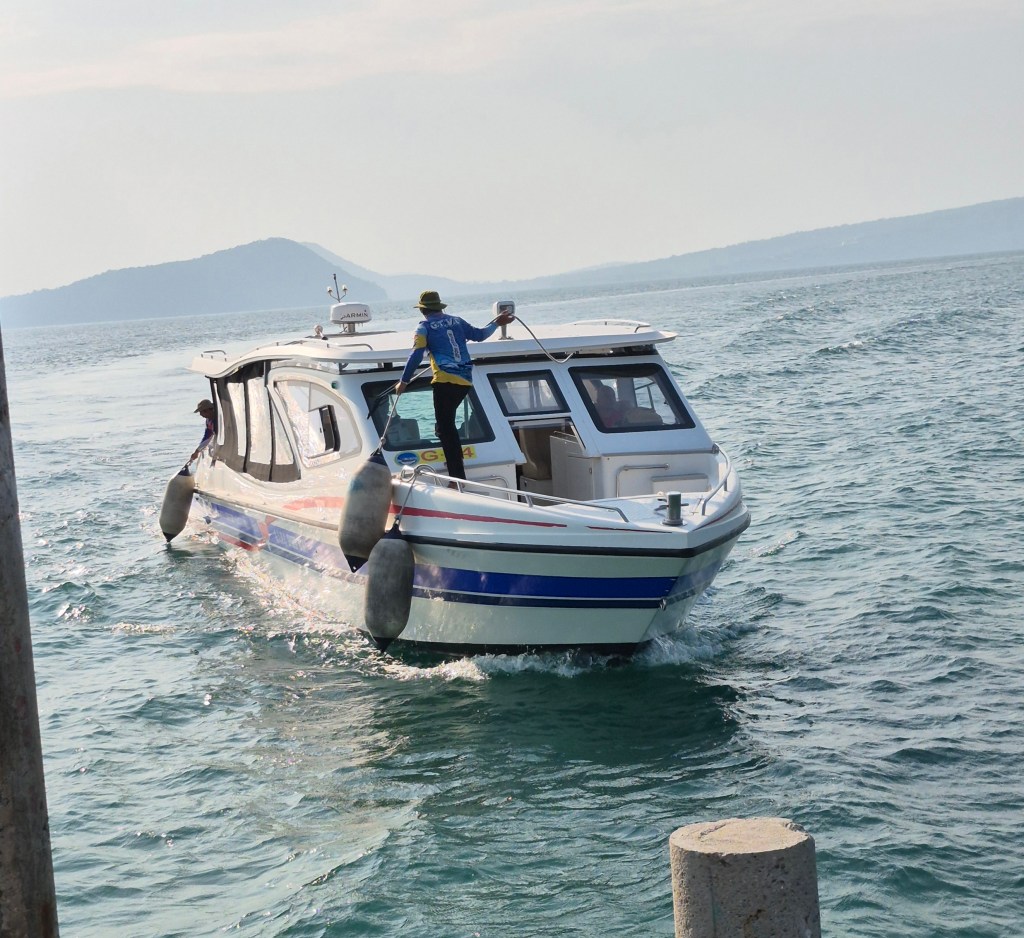
My three days were up. The photo shows an GTVC boat coming to take me away from Koh Rong.
 Wandering Richard