May 26, 2024
The NTNU MTC semester had just finished, so I had a week off. I planned a quick trip (9 days / 8 nights) to Thailand.
I asked my father if there was anything that he wanted me to do in Bangkok. He suggested I visit the botanic garden, as he has an interest in them. So I went to Google and I found an ideal match, Queen Sirikit Botanic Garden, a major centre for research. The problem was, it’s near Chiang Mai, and I would be based in Bangkok, nearly 700km away, too far to travel. My father then suggested Queen Sirikit Park in Bangkok as an alternative. He advised me to go on a self-guided tour, alerting me to unique and interesting flora.
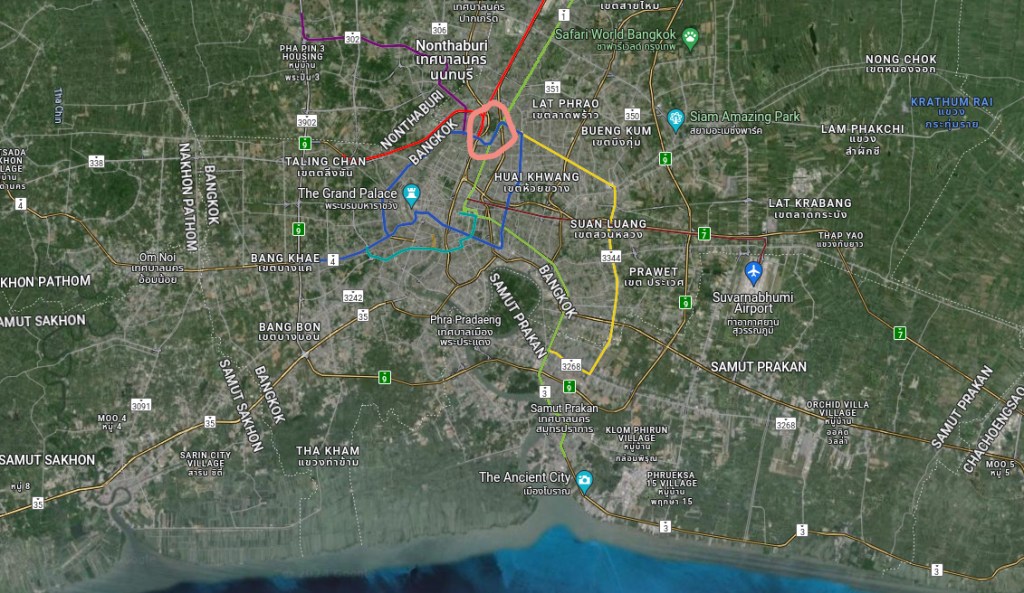
Queen Sirikit Park is located in the north of Bangkok. I’ve added a red circle roughly corresponding to the Google map below.

Queen Sirikit Park is part of a complex of parks, directly to the north of Chatuchak Markets. The local BTS (an elevated light rail system) station is Mo Chit (sounds like “Mor Chidt”).
Before I went to Queen Sirikit Park I went online to see if there was a brochure or any kind of material. The Expats in Bangkok website give it a favourable review:
“Stretching across an impressive expanse of 200 acres, Queen Sirikit Park boasts a diverse array of meticulously manicured gardens. Explore the exotic wonders of the orchid gardens, where vibrant blooms dance in the gentle breeze, or lose yourself amidst the tranquil groves of rare tropical plants. The park also invites you to wander through its magnificent botanical gardens, where you can marvel at an astounding collection of indigenous flora, showcasing the incredible biodiversity of Thailand. … it also serves as an educational hub, offering courses and workshops on gardening, horticulture, and environmental conservation. Immerse yourself in the fascinating world of botany and learn from the experts who passionately share their knowledge and love for nature with visitors of all ages.”
However I couldn’t find publicly-accessible information on specific botanic materials.

After breakfast at my hotel, I took the BTS – here’s a photo of a station. Despite starting at 7:30am, the weather was hot and very humid; I estimate the temperature was 35 degrees, but it’s the humidity that does the most damage.
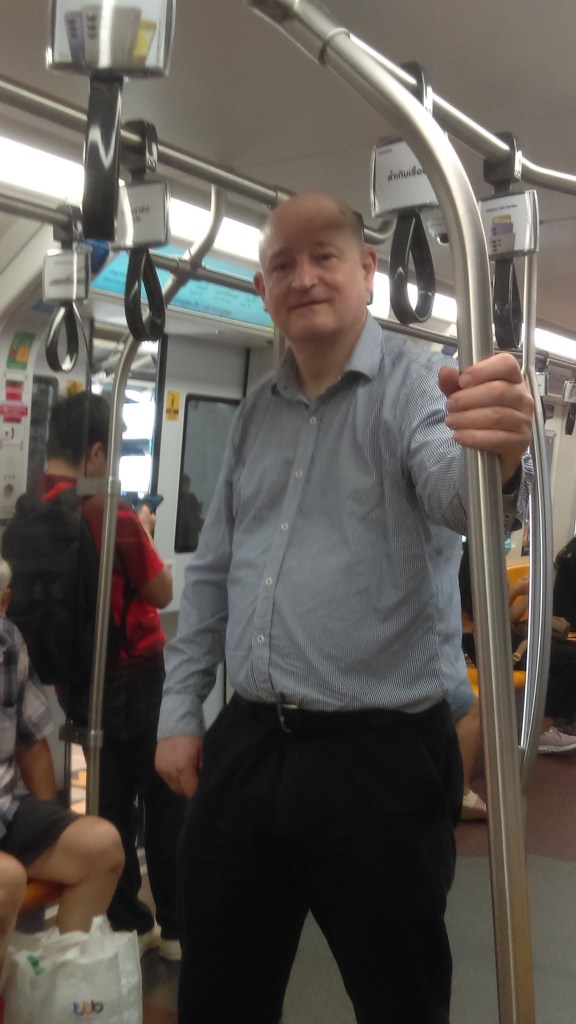
Here’s me, on the BTS, taken by an obliging passenger.

On the Mo Chit BTS station, looking westward over the park. It’s not actually Queen Sirikit Park, but Chatuchak Park; my destination lies further west.

A photo of some motosai riders. As this AFAR article explains, motosai are motorcycle taxis. On a moto-scooter, you sit pillion, behind the motosai rider; helmets for the pillion are optional.
“Motosais are a ubiquity in Bangkok’s cityscape. Usually congregated in makeshift shelters at the top of a soi (Thai for “side street”) or around the entrance of metro stations, they connect all corners of town for a prenegotiated handful of baht—two handfuls if you’re a farang (foreigner) like me. The drivers’ tattered nylon vests are instantly recognizable; flashes of neon orange hurtling through traffic, bearing the name of their win (a loosely defined pack of motosai drivers) in swirly Thai characters. To kill time between rides, they watch Thai soap operas on dashboard-mounted smartphones, play checkerboard games with bottle caps, and chug stubby bottles of Red Bull. Some manage a curbside snooze on their backseat.”

I walked around the southern edge of the park complex and along the border with Chatuchak Markets. In this photo Chatuchak Market is across the road, behind the motosai guy.
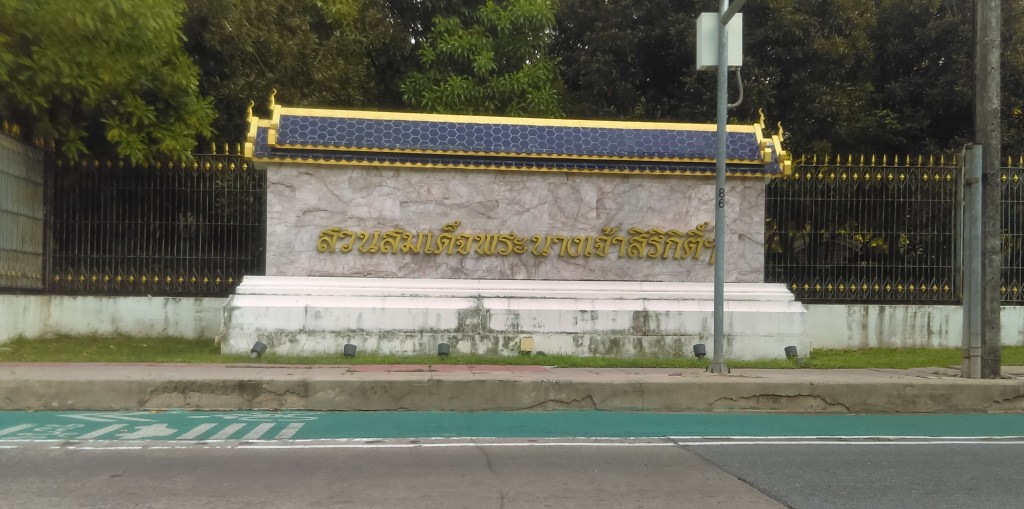
I walked on until I came to this elaborate sign (above). Is it Queen Sirikit Park? I have no idea what it means, as there is no English translation. This is a problem for a non-Thai speaker like me.

Beside the sign there is an open gate. I went though this gate and found myself in a well-tended garden (above).
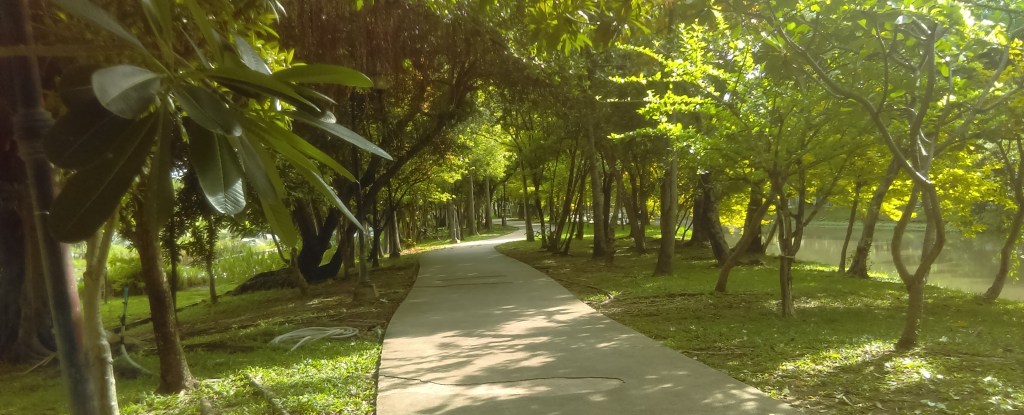
The garden was quite beautiful (above), with a path, a lake visible to the right, and trees with accompanying descriptions.

There were workers under an old fig.
I selected a YouTube clip of Queen Sirikit Park, filming at head height while walking around.
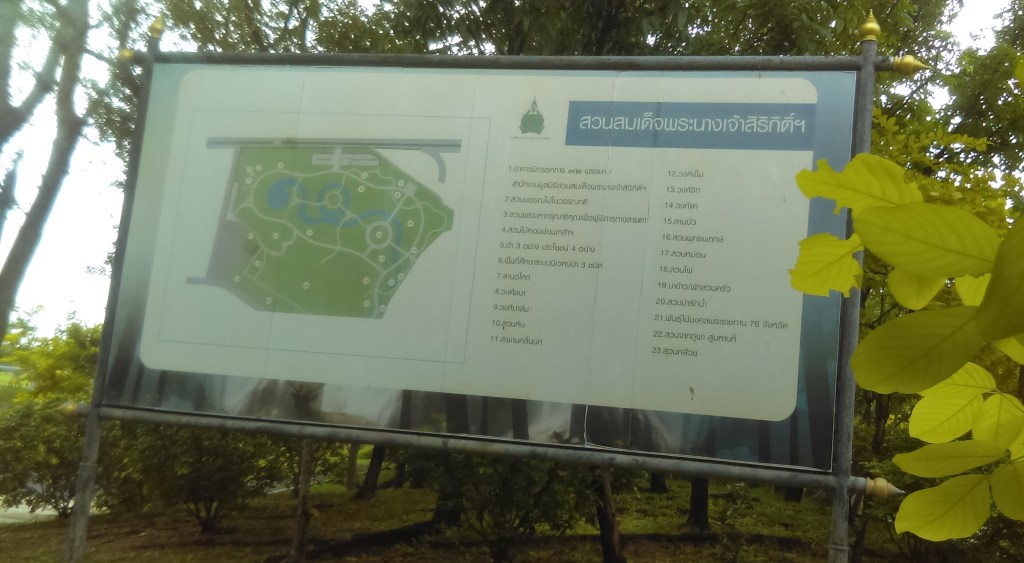
In the above photo, there is a major sign giving a layout of the Park. Or, I think it is doing that, as the sign is only in Thai.

Similarly, all the interpretive signs are only in Thai, although I can read the scientific name.
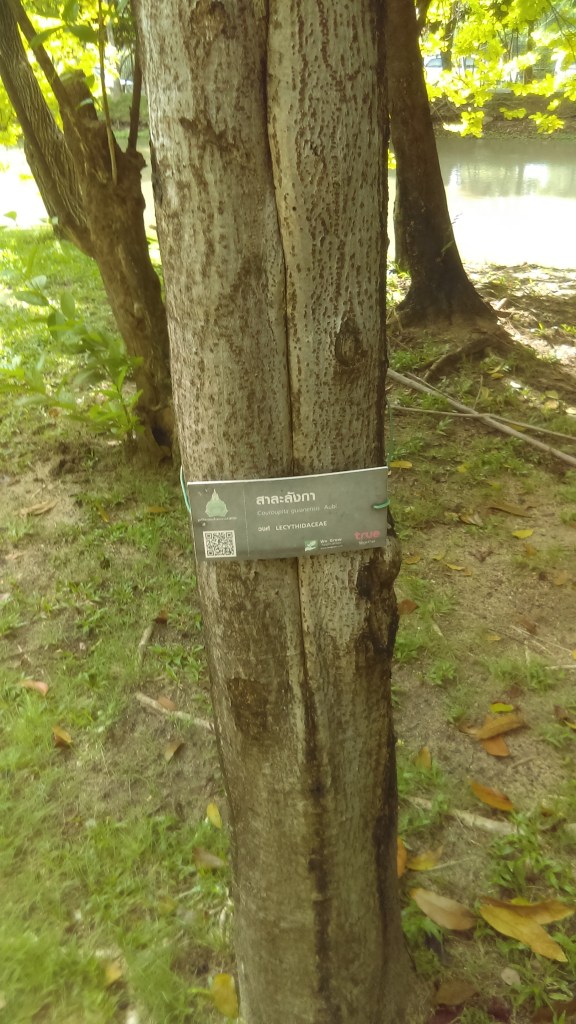
The signs affixed to trees are in Thai.
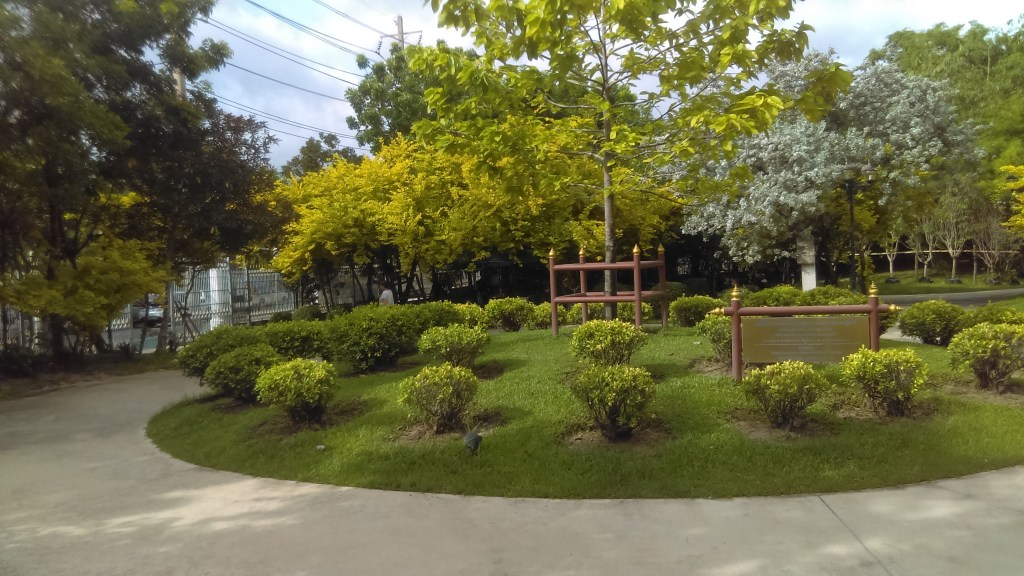
Although it’s difficult to make out, the above sign is all in Thai too. It seems like most information on Queen Sirikit Park is in Thai, including interpretive signs and unique and interesting flora. I don’t speak Thai, so all this written information is out of reach.
It’s a real pity that my father wasn’t with me at Queen Sirikit Park. He would find it very interesting.
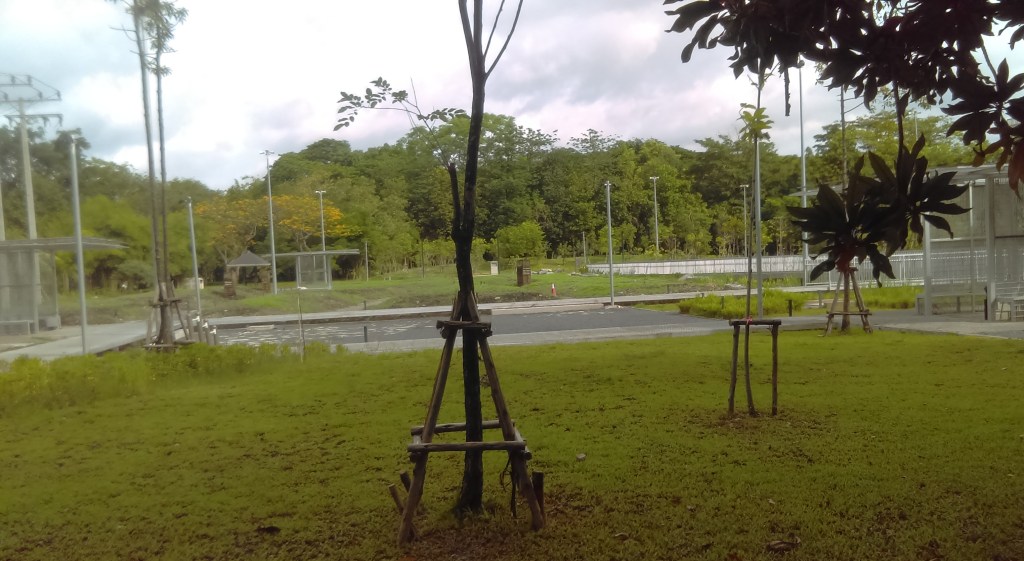
I read that part of Queen Sirikit Park is still under construction; it’s true (above).
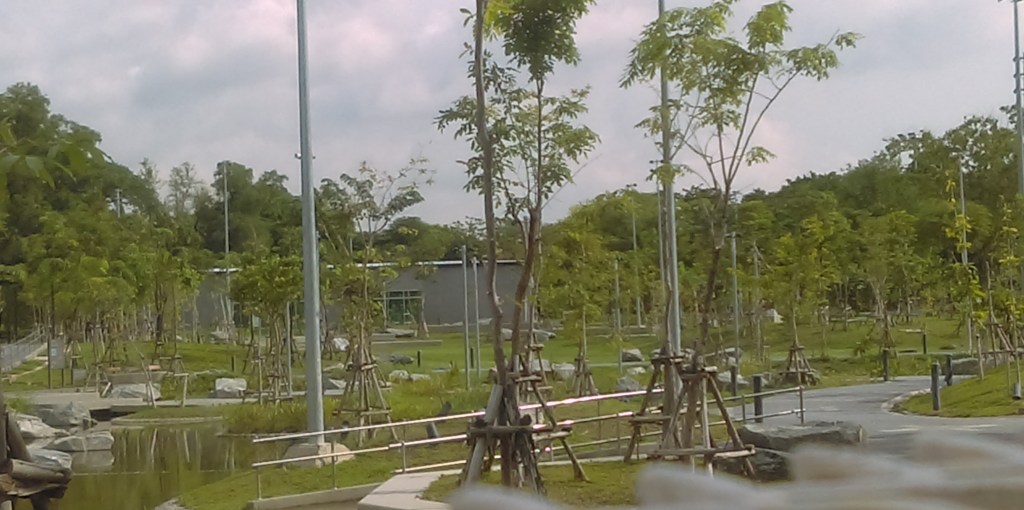
Another photo shows young trees and bare patches where eventually a forest will arise.
The Expats in Bangkok article cited the “educational hub” of Queen Sirikit Park, but of course this requires flexibility as to dates. I visited the Park at a time driven by my schedule, and so there is nothing on the day I visited.
It was only 8:30am, but the heat and humidity drove me towards the exit. I very much liked Queen Sirikit Park, even though it was not English-language friendly.
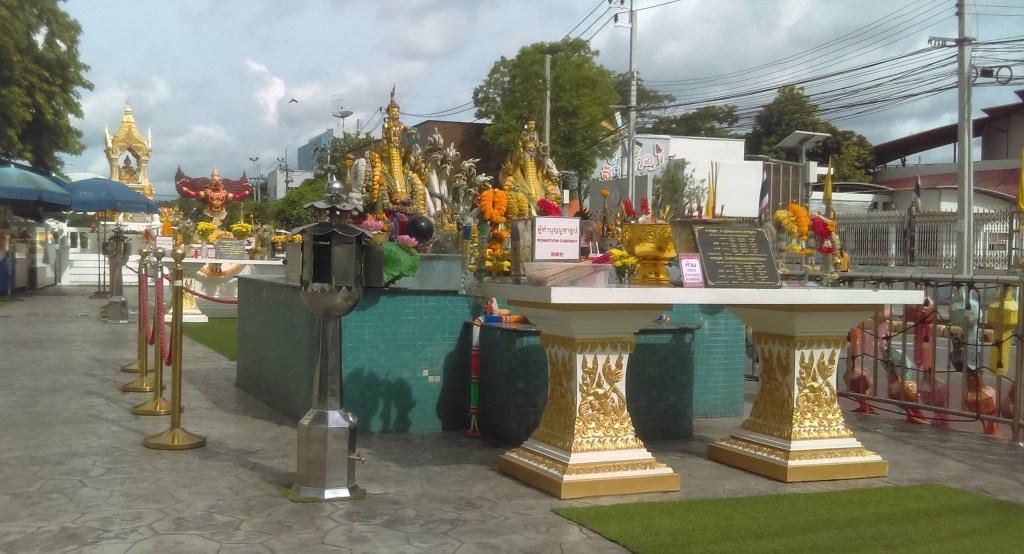
A little down the road there was the entrance to Chatuchak Markets, with accompanying elaborate mythology (above).
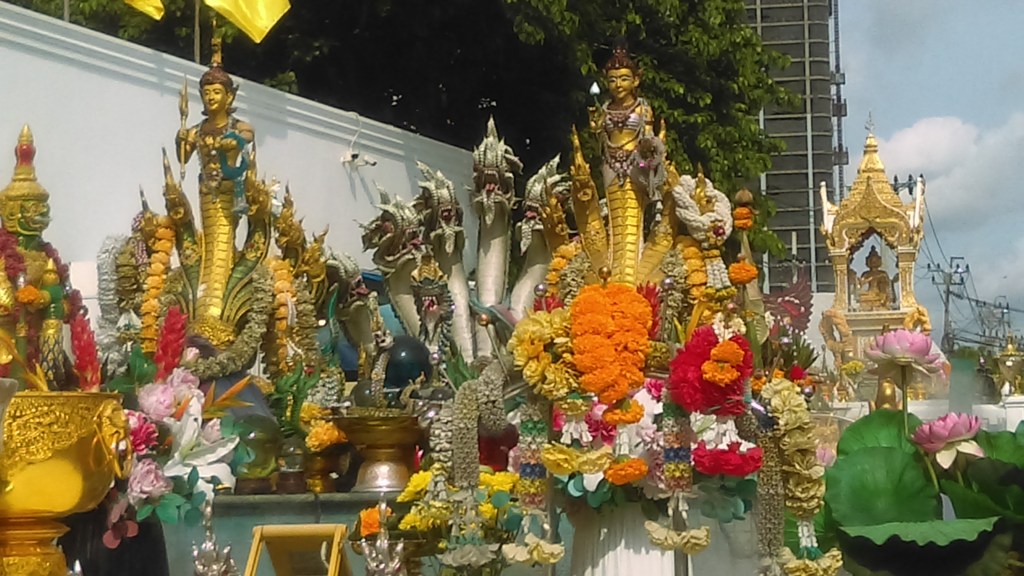
A close-up of naga (above). “The Naga is a mythical creature with long-standing beliefs and connections to the Thai people, and its designation as a national symbol is a significant step towards preserving and promoting Thai culture”.
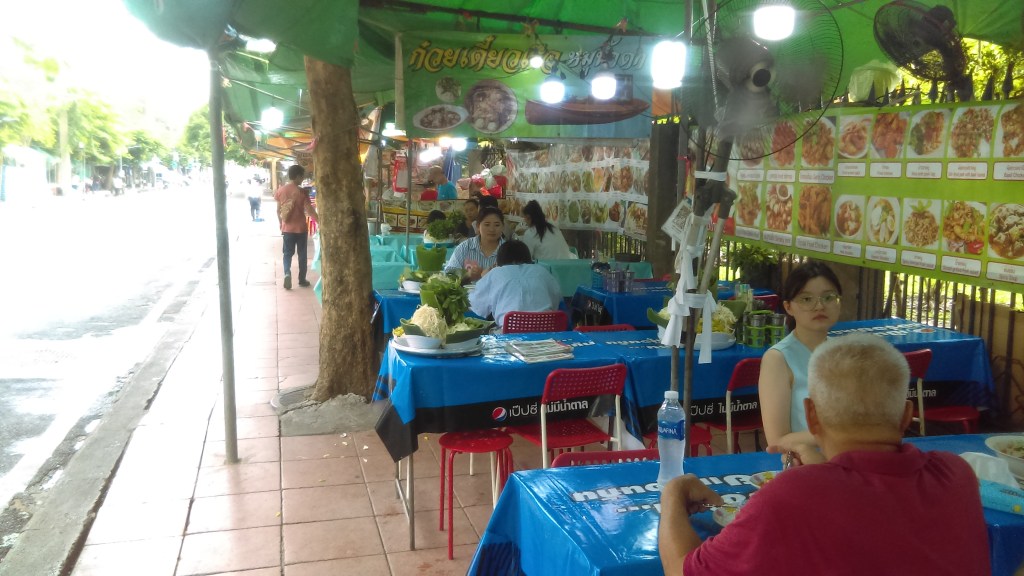
There were many simple restaurants (above) between the street and the park.

There were take-away beverage shops as well (above).
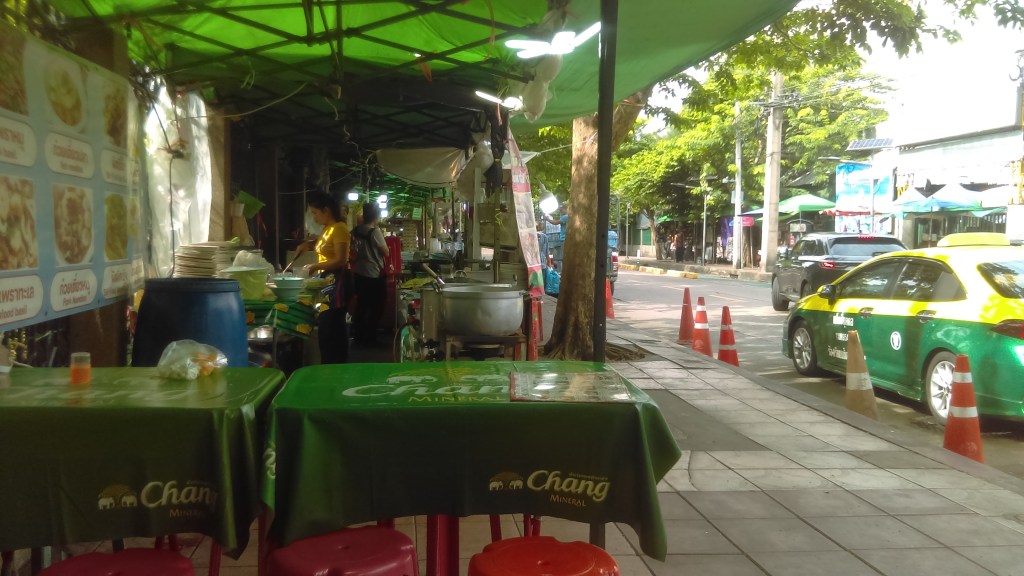
I decided to have bruch at one – it was 9am. The above photo shows me sitting, waiting to dine. The weather was stifling hot.

The dish I ordered was chicken Pad See Ew (above). Carlsbad Cravings said:
“Pad see ew ผัดซีอิ๊ว, (sometimes spelled pad siew, pad siu or phat si-Io) is a Thai stir fried rice noodle dish commonly mixed with protein (chicken, pork, beef or shrimp,) vegetables and a rich, savory, sweet and salty soy-based sauce. True to its name in Chinese, pad sew ew translates to “fried (with) soy sauce” (pad meaning fried and see ew meaning soy sauce). Pad see ew is a Chinese-influenced dish that combines the technique of stir-frying noodles borrowed from Chinese immigrants with the taste of Thailand. Today, pad see ew is the most popular Thai noodle dish in Thailand sold by street vendors and in restaurants throughout the country … Both pad see ew and pad Thai became popular in World War II when Thailand was facing a rice shortage. Rice noodles, on the other hand, were in abundance so the Thai government encouraged the substitution of rice with rice noodles. The citizens mixed rice noodles with various vegetables and proteins resulting in a new inexpensive, instant classic known as pad see ew that the world has been enjoying ever since. … Pad see ew is characterized by chewy rice noodles, stir fried in a very hot wok until charred, mixed with protein (chicken, pork, beef or shrimp) dark, sweet soy sauce, oyster sauce, Chinese broccoli, and eggs. Pad see ew is sweet from the sweet soy sauce, salty from the oyster sauce, and sour from the vinegar and infused with chargrilled flavor from the caramelized noodles to create a beautifully balanced dish.”
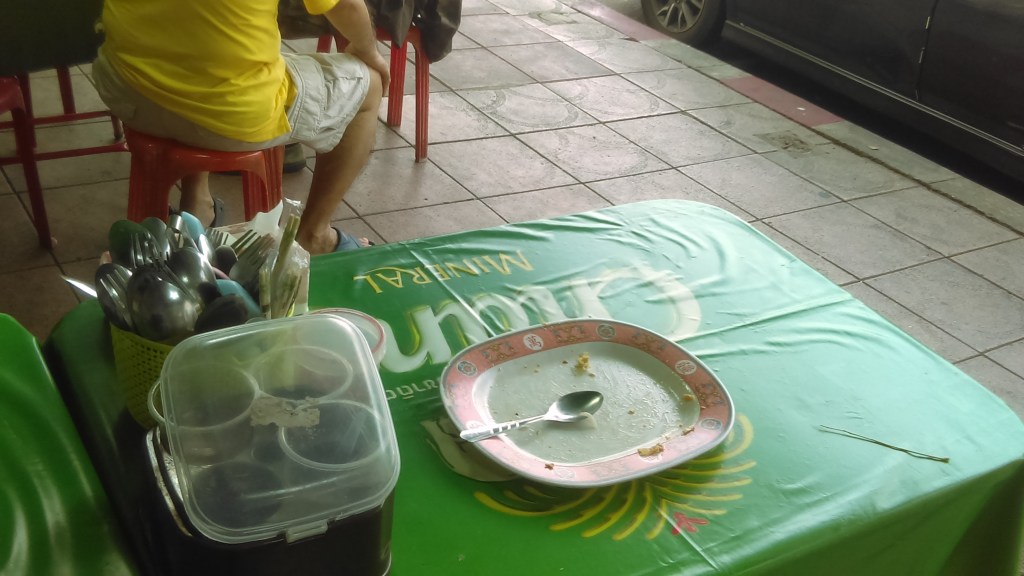
This Chicken Pad See Ew was delicious. The photo is of my empty plate. Cost: 70 baht, around $AUD3.50.
After that I went back to the station – not the BTS station, but a MRT (Metropolitan Rapid Transit) station, the complement to the BTS but underground. MRT stations are blissfully air-conditioned, and I rode in comfort on the long ride home.
 Wandering Richard