January 13, 2025
I’m in Bangkok, with Wren who was my tutor in Chinese, and Ben her partner.
I made the airline bookings half a year ago, booked the hotel room well in advance, and paid for my travel insurance. I was really looking forward to the holiday in Bangkok. Then, only a few weeks ago, my mother was diagnosed with advanced ovarian cancer. I immediately started to book my airfare home, but my parents were strongly against me coming back. My father said this is a sustained effort over years, a marathon not a sprint. Over Zoom, my mother said that she was inundated with offers of assistance, and me coming back to live with her wouldn’t help. So, very reluctantly, I stayed in Taipei, and went on this trip. I still will be going back home in a little over a month.
I noticed that the internet censorship in Thailand are increased. My Australian bank is blocked, for reasons known to the Thai authorities but not to me; I do my banking over the Internet so this is an annoyance for me. The Sydney Morning Herald, an Australian newspaper to which I have an internet subscription, is blocked as well. Oddly, VPNs are not blocked, so I could use a VPN to get around all this.
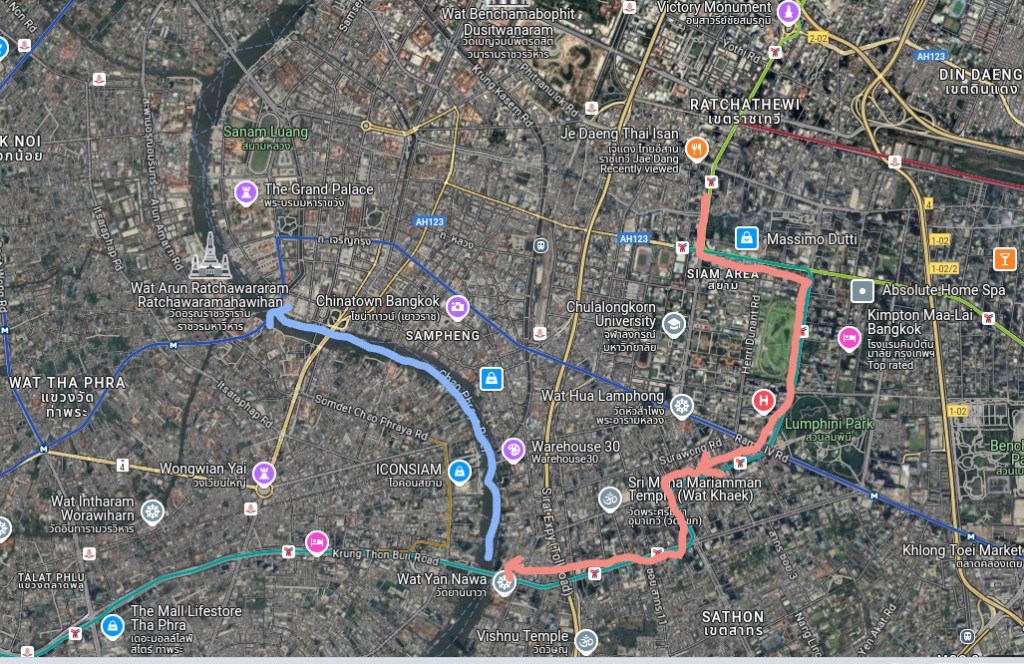
My route, courtesy of Google Maps. I went on the BTS from Ratchatewi BTS station to Saphan Taksin BTS station on the Chao Phraya riverbank, then caught a riverboat to Tha Tien pier, next to Wat Pho, in the heart of the old city next to the Grand Palace. There was an easier way to arrive, on the MRT to Sanam Chai MRT station convenient to the old city, but I wanted a ride on the riverboat.
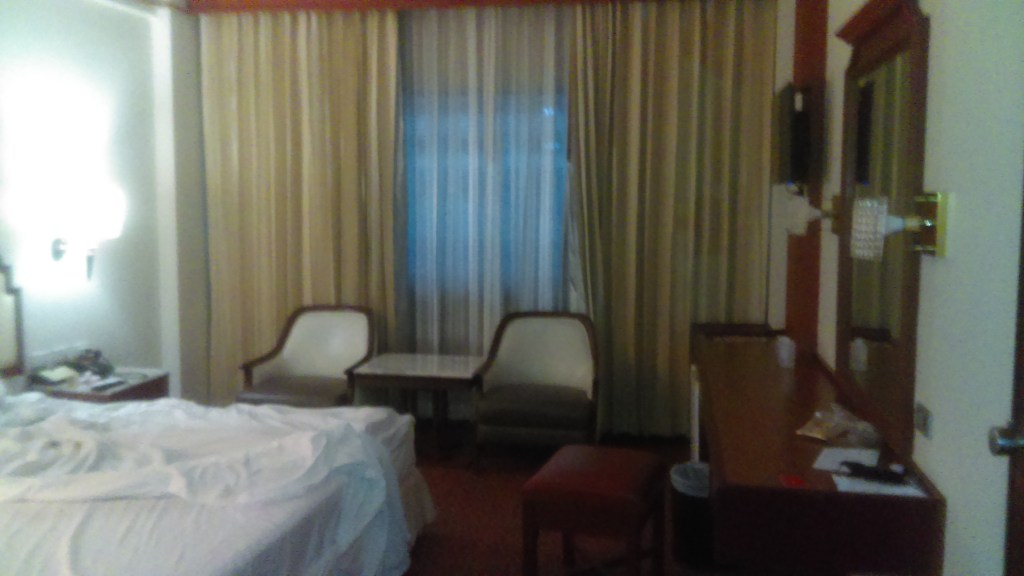
My room at the Asia Hotel. I booked a long way in advance and secured the room for $AUD55 a night. The Asia Hotel is rumoured to be haunted; TraveMyth says: “Asia Hotel in Bangkok is believed to be one of the most haunted hotels in Thailand. Apart from its general spooky and misty atmosphere, some guests have reported hearing crying sounds coming out of the bathrooms, feeling someone touching them when they sleep or seeing strange apparitions wandering around”.
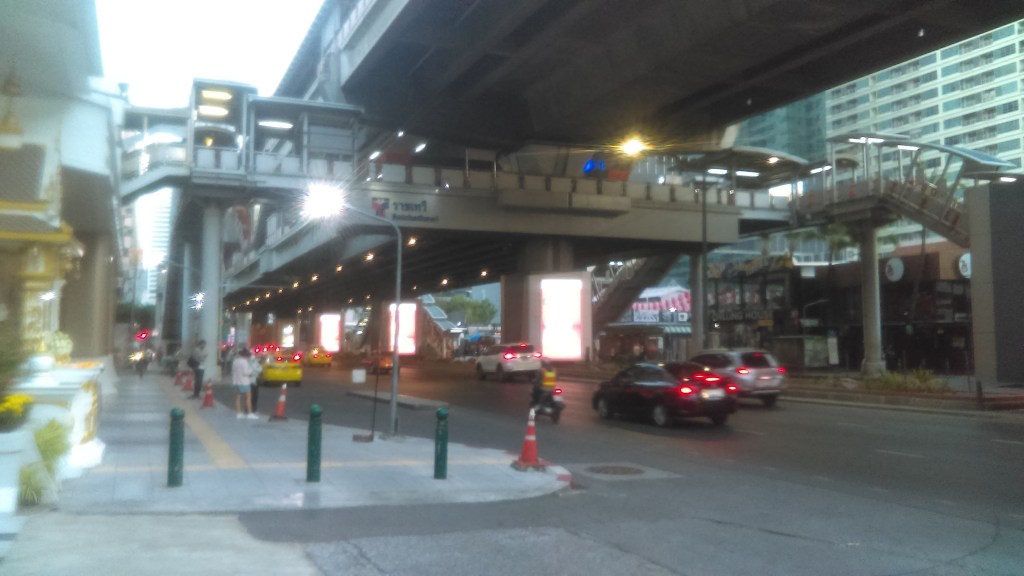
The Ratchatewi BTS station above Phaya Thai Road. Note there is a spirit house at the far left. There is an entrance-way directly into the Asia Hotel. I left the Asia Hotel early, about 7am. On this day the weather in Bangkok was remarkably cold, around 20 degrees Celcius – chilly for Bangkok!
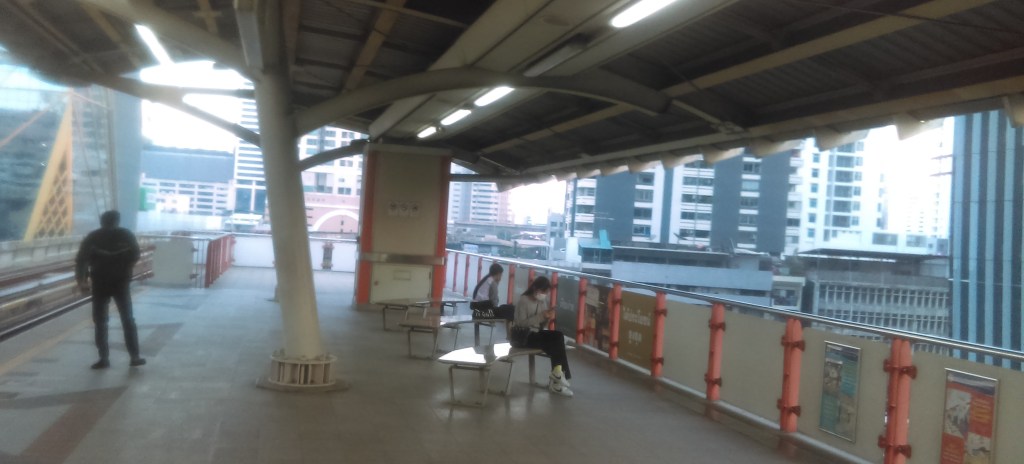
On the platform high above the road, waiting for the BTS train. I was supposed to change trains at Siam BTS station, but I was too busy photographing the scenery and forgot. A quick round of trains put me right.
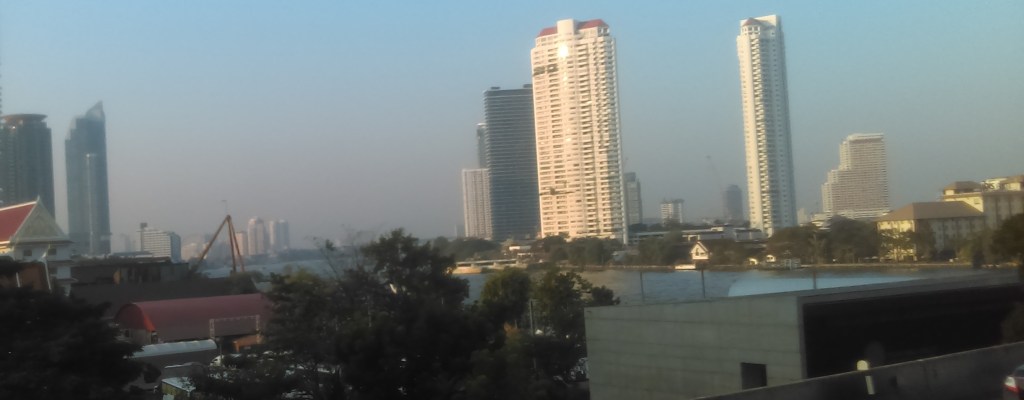
At the Saphan Taksin BTS station, and my first glimpse of the river.
I bought my breakfast at the 7-11 but didn’t eat it. As a result by this stage I was ravenously hungry, so had my breakfast at the Saphan Taksin pier, watching life beside the river.
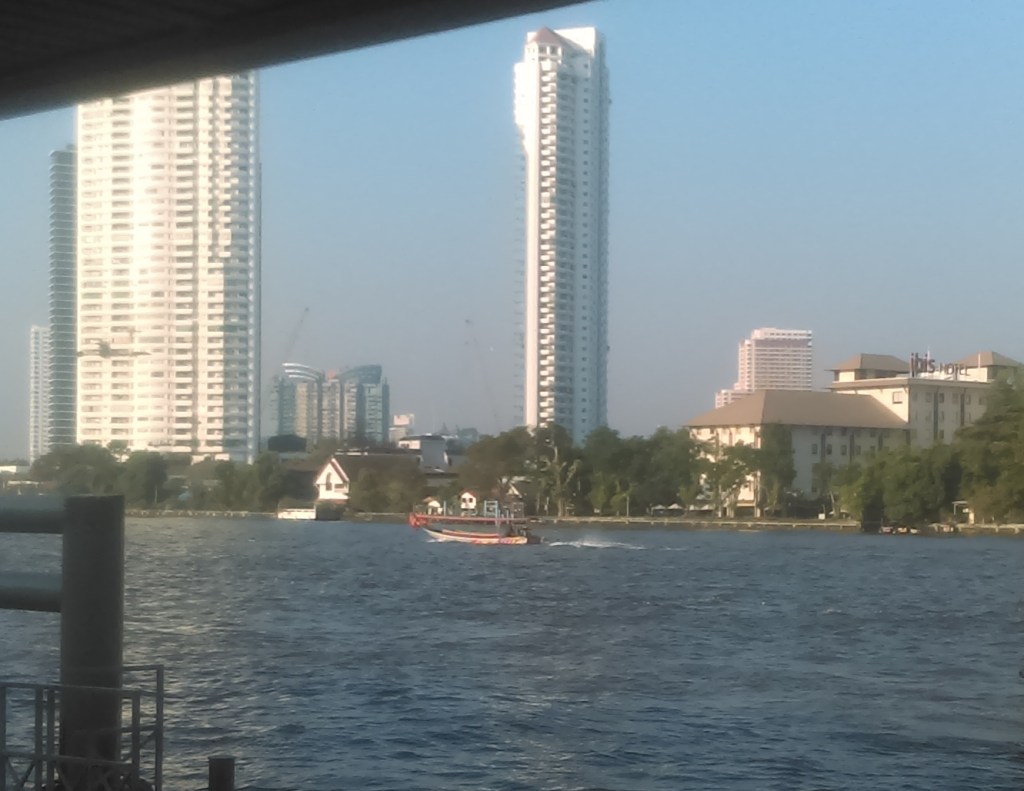
A long-tailed boat: “The longtail gets its name from the trailing drive shaft and propeller at the back of the boat. … The engines at the back of the boats are sometimes custom-made, but more often than not they are simply a converted car or truck diesel engine which makes them relatively cheap and easy to maintain. The boatman sits or stands at the back of the boat whilst the passengers sit in front of him on small wooden planks. An overhead canopy provides shade and shelter and some boats also have pull-down plastic canopies that cover the sides to protect passengers from spray or rain.”
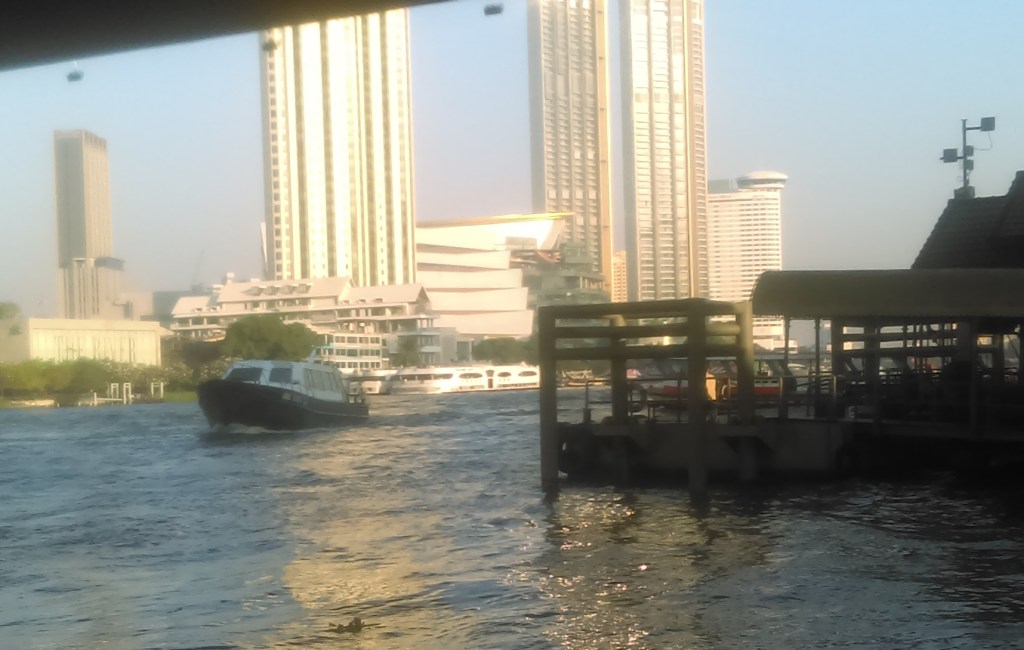
Life on the water.

A river ferry letting off passengers.
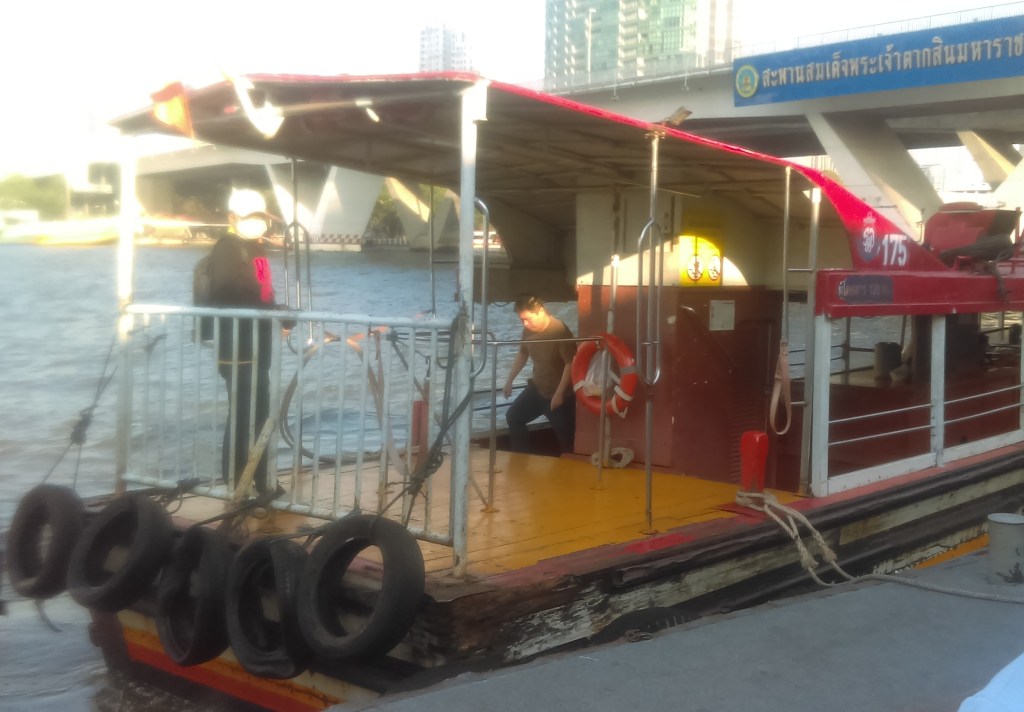
And here’s my river-ferry! A big step over the side of the boat and down into the front where I took my seat.
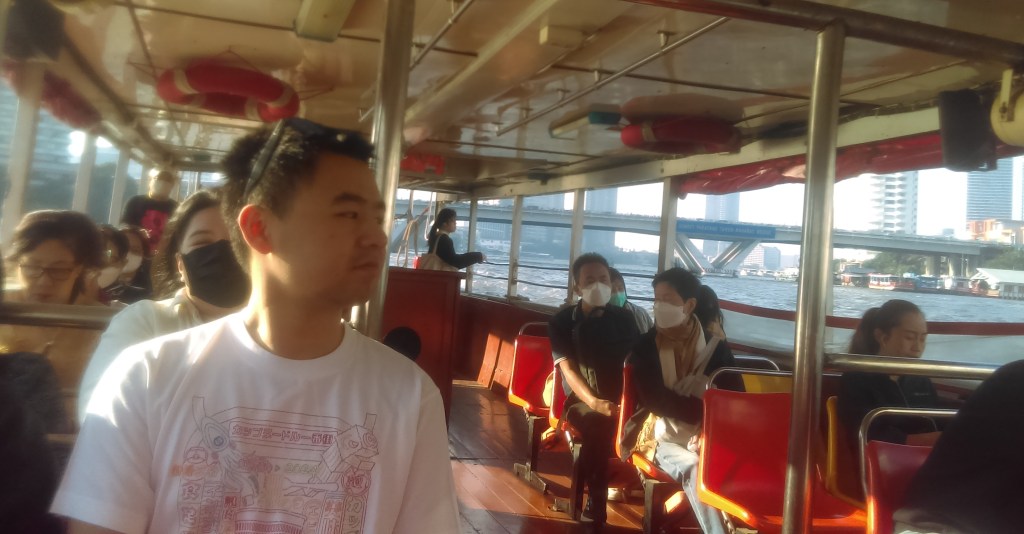
A view back aft.

There was some rough water as we roared along.
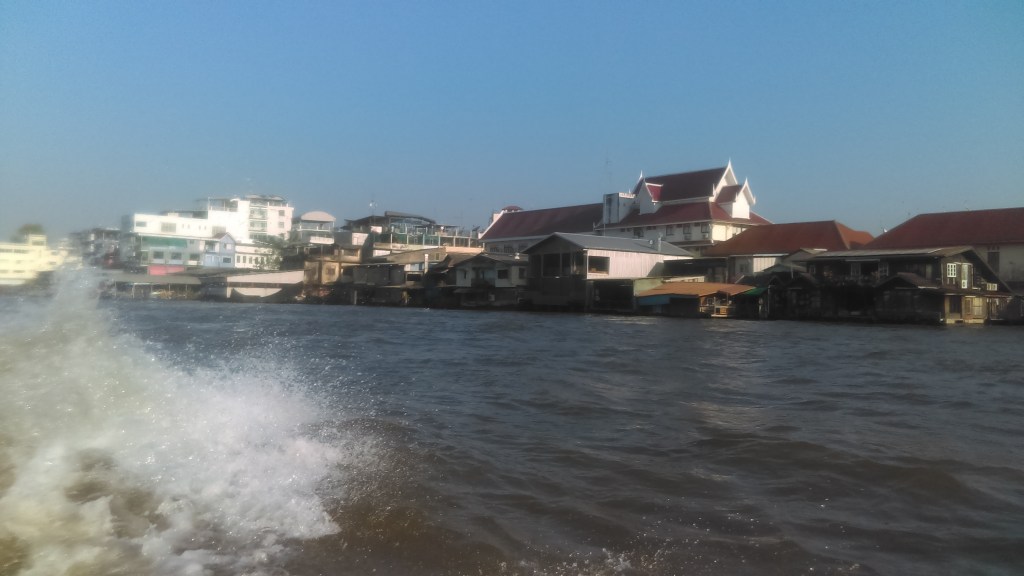
Nice view of the riverbank.
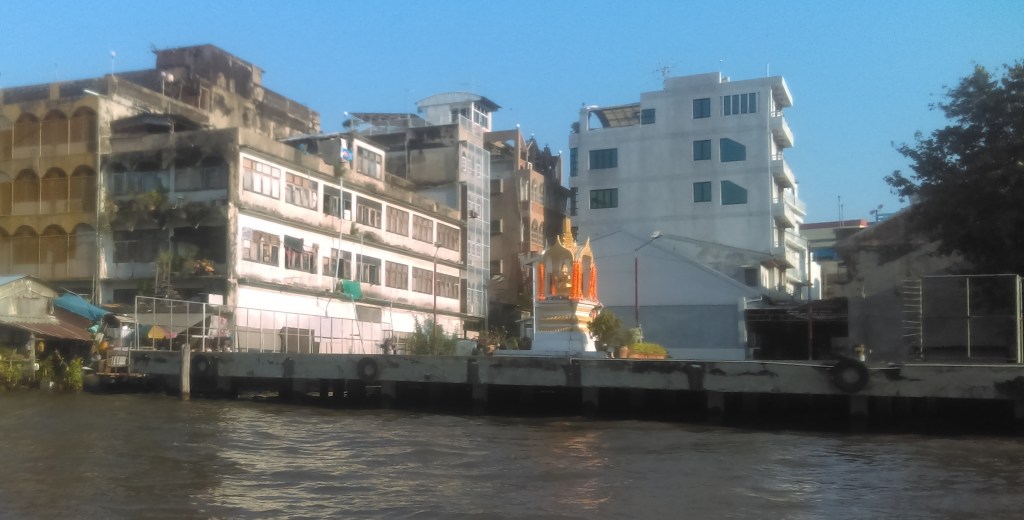
A prominent spirit house: “you may wonder what are those little buildings in front of your apartment or nearby restaurants? They look almost like miniature temples on pedestals. However, these are Spirit houses, also called San Phra Phum in Thai. San means shrine and Phra Phum means Spirit, God or Angel. Thais believe that protector spirits live in these little houses so they will build one in front of their home or business.”
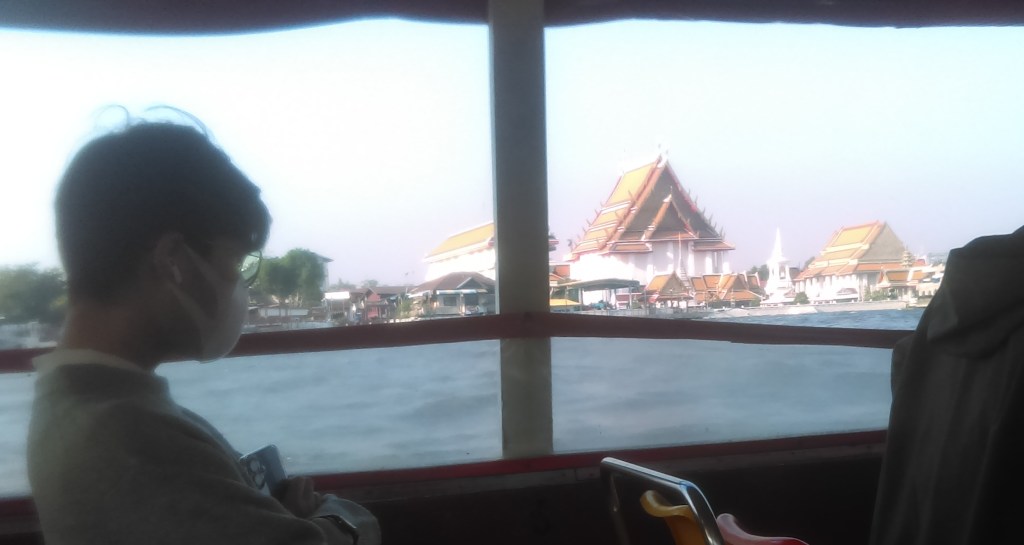
A framed view of a large wat complex, probably Wat Kanlayanamit Woramahawihan.

The Royal Seminary: “This beautiful ochre coloured building stands on the east bank of Chao Phraya river. It is a Neo-Classical building which was constructed 136 years ago. … after Queen Sunantha Kumariratana drowned in the Chao Phraya River King Rama V built this Sunanthalai Building in her memory.” Wikipedia said “There is an often repeated myth that the many witnesses to the accident did not dare to touch the queen, a capital offense—not even to save her life. However, this was not the case; the King’s diary records that boatmen dived into the water, pulled the queen and her daughter from the entangling curtains, and carried them to another boat, where attendants worked in vain to resuscitate them.”
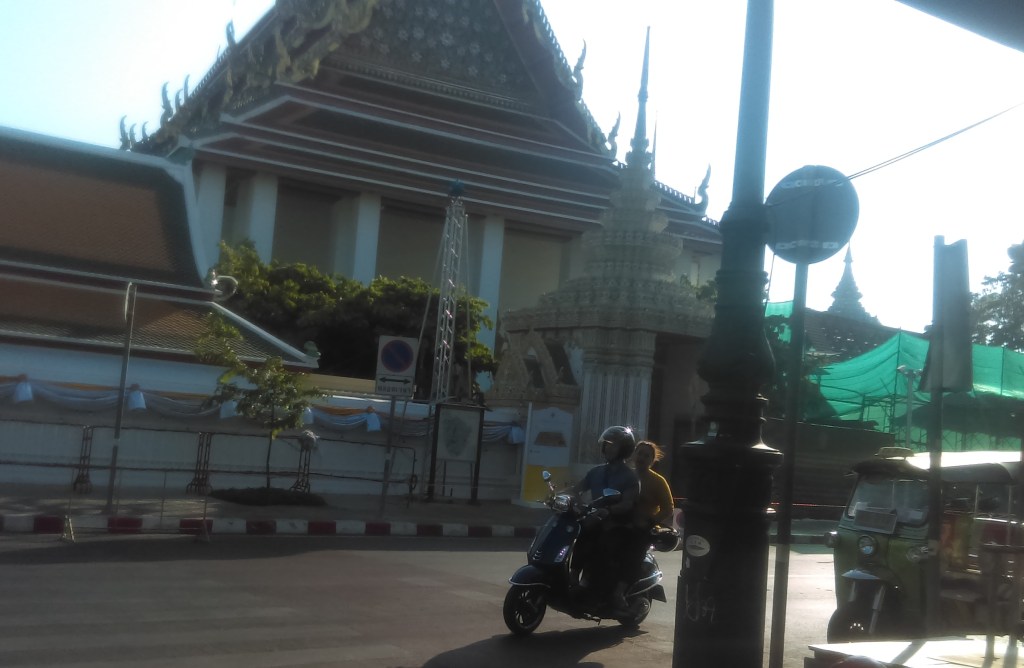
I disembarked the river-boat at Tha Tien pier and walked a block to Wat Pho (above). The building behind the gate houses the Reclining Buddha.
Wikipedia said “The temple is first on the list of six temples in Thailand classed as the highest grade of the first-class royal temples…. It is associated with King Rama I who rebuilt the temple complex on an earlier temple site. It became his main temple and is where some of his ashes are enshrined…. The temple was later expanded and extensively renovated by Rama III.”
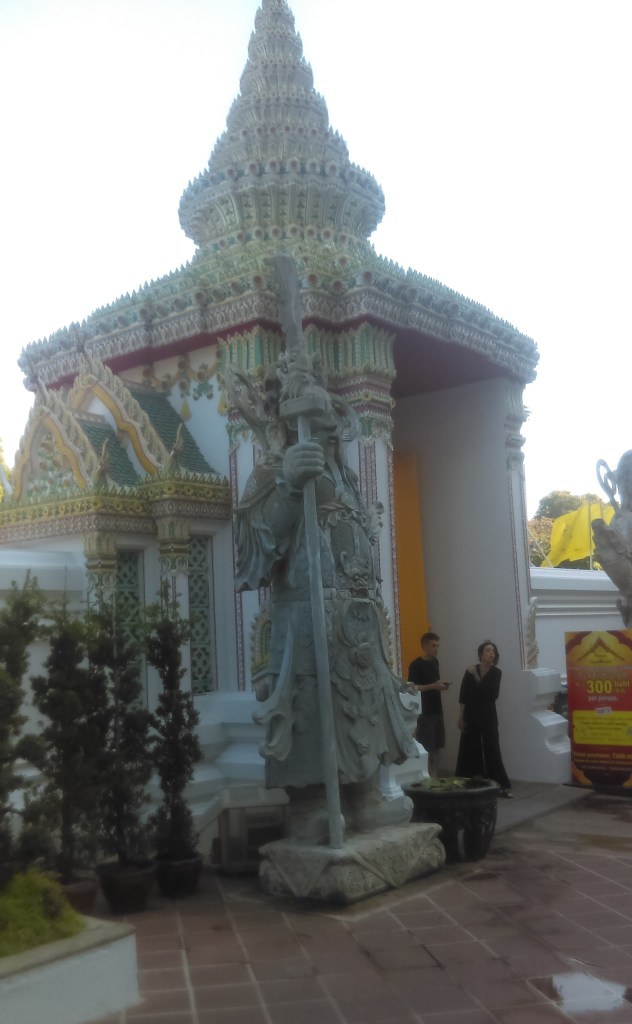
Another gate. According to Wikipedia, the statue is one of the Chinese statues that were imported from China as ballast.
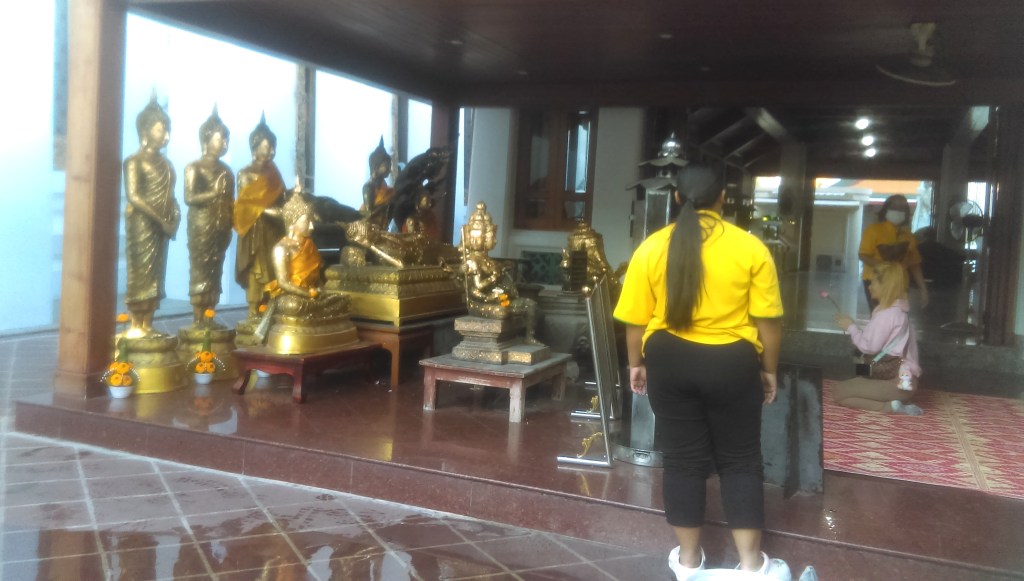
A woman worshiping in front of images of the Buddha. Wikipedia said “During its construction [in 1788], Rama I also initiated a project to remove Buddha images from abandoned temples in Ayutthaya, Sukhothai, and various other sites in Thailand, and many of these retrieved Buddha images were then kept at Wat Pho”.
I paid the entrance fee of BTH300; Thais get in free.
YouTube has many, many clips about Wat Pho, mostly combined with other wats and attractions. I’ve selected the above clip to be specifically about Wat Pho.
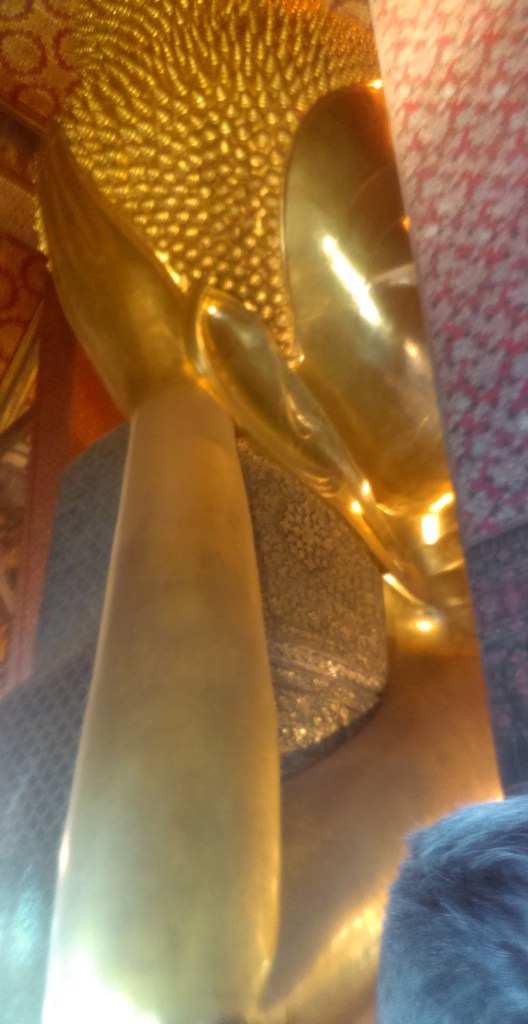
The Reclining Buddha is actually about to die. Lonely Planet said “Located in the compound’s main wí·hăhn (sanctuary), the genuinely impressive Reclining Buddha, 46m long and 15m high, illustrates the passing of the Buddha into nirvana (i.e. the Buddha’s death).” This was viewed as a good thing: the cycle of reincarnation after reincarnation was about to end.
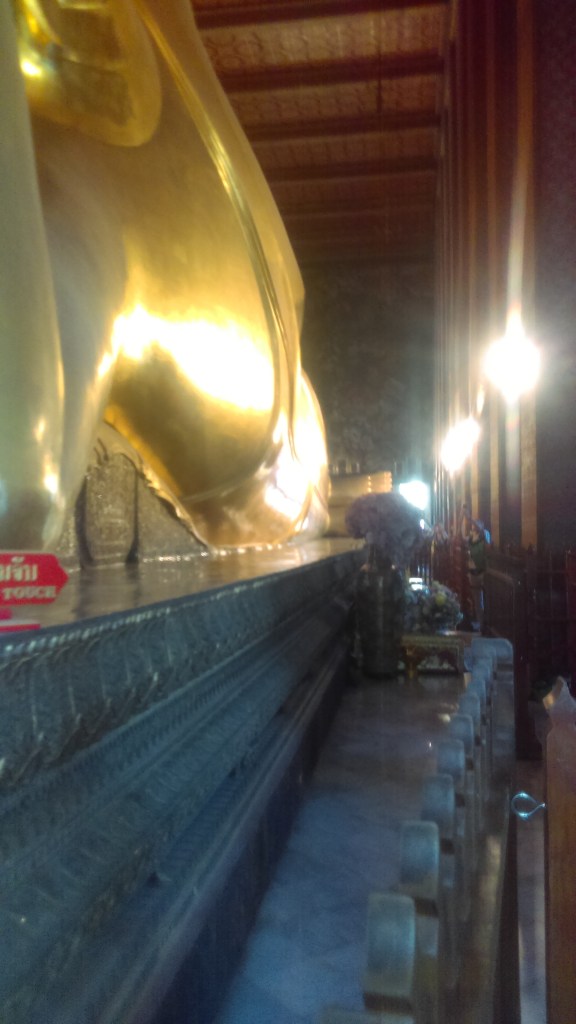
Looking from the head to the feet. When you are in the hall you feel the sheer enormity of the Reclining Buddha. The Civilatis Bangkok said that this is “the largest Reclining Buddha statue in the country. At 150 feet (46 m) long, this gold-plated figure barely fits in the temple that shelters him!”
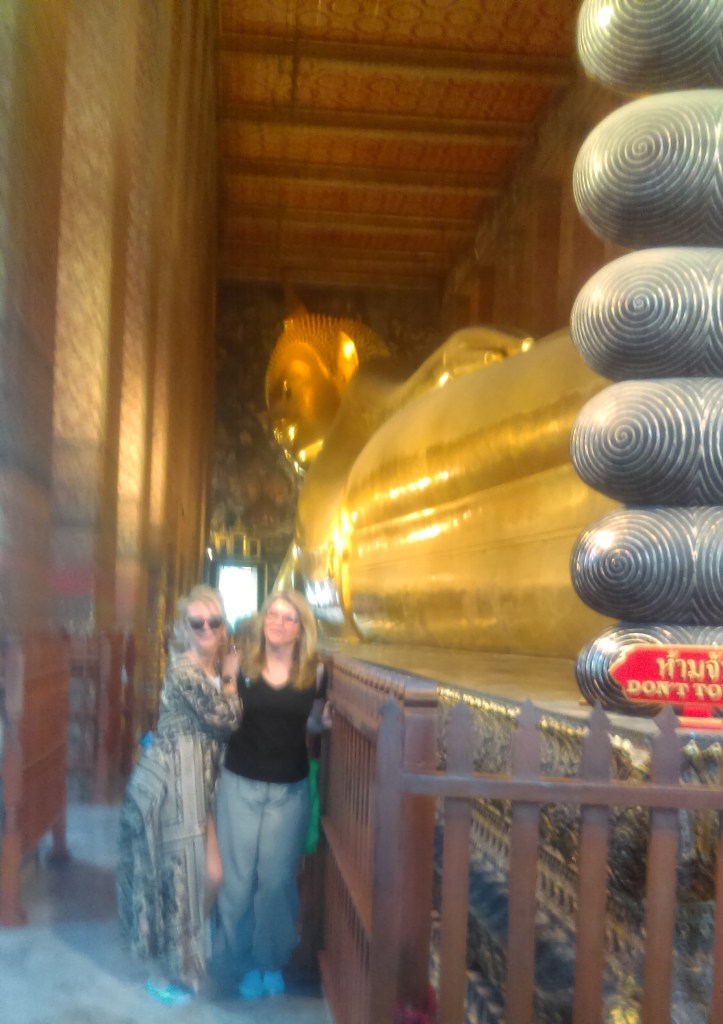
The view reversed, looking from the feet to the head. At the extreme right you just catch a glimpse of the underside of the feet. Emerald Buddha said “The soles of the feet of the reclining Buddha are exquisitely crafted with inlaid mother-of-pearl shell. At the centre of each foot is a symbol of a wheel (dharma- cause and effect) and representing one of many chakra energy points where universal energy flows into the body. Portioned into 108 sections and displaying auspicious symbols identifying The Buddha, including flowers, dancers, white elephants, tigers and altar accessories.”
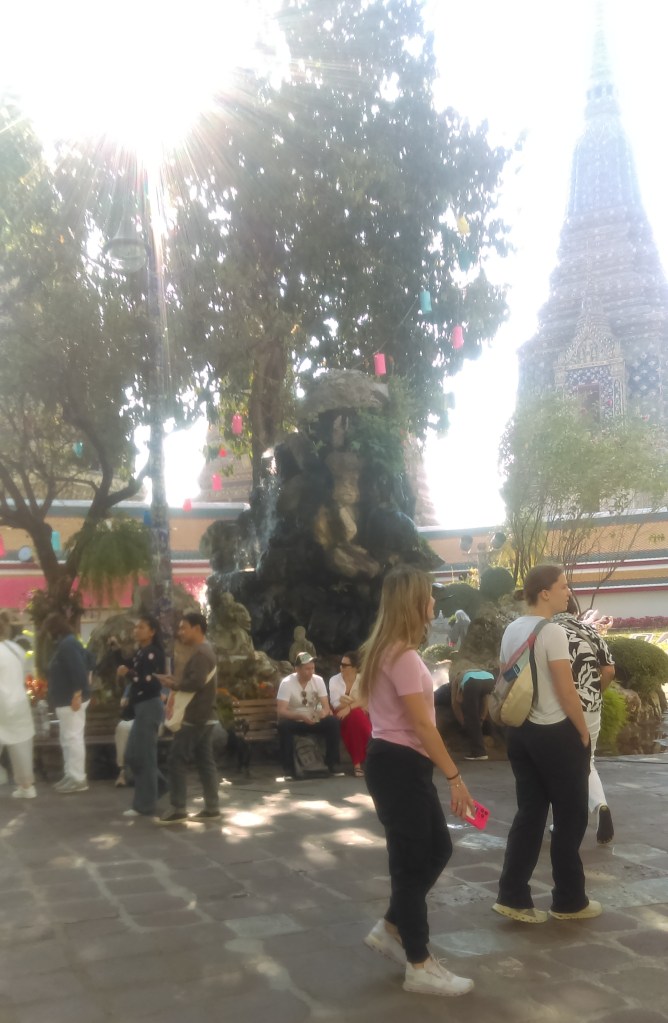
Standing next to the hall. Apart from the Reclining Buddha, as Wikipedia said, “The temple is considered the earliest centre for public education in Thailand, and the illustrations and inscriptions placed in the temple for public instructions has been recognised by UNESCO in its Memory of the World Programme. It houses a school of Thai medicine, and is also known as the birthplace of traditional Thai massage which is still taught and practiced at the temple.” I saw none of those things.

Instead, I was going to see Wat Arun, the Temple of Dawn (above). Wat Arun said “It’s one of the most spectacular and recognizable Thai landmarks…. Visitors journey here in pilgrim like status, due to it’s one of few temples you are permitted to climb its main staircase, rewarding the intrepid with panoramic views of the bustling Chao Phraya river, the Grand Palace and Wat Pho on the opposite bank. … King Taksin (1734–82) when establishing the new capital of Thonburi, following the fall of Ayutthaya (previous Thai capital), brought with him from Vientiane, Loas, The Emerald Buddha which was previously housed in one of the two small buildings located in front of the Grand Pagoda.” It ended up in the Temple of the Emerald Buddha.

I took a short ride on a cross-river ferry (above). When I reached Wat Arun, the entrance fee was BTH200. Around this time, my mobile phone camera indicated it had reached the limit of photos; to take new photos I would have to delete some old ones. I was only going to briefly visit Wat Arun, so I decided to skip it, and go back on the cross-river ferry again. I walked past all the attractions the old city had, and went to Sanam Chai MRT station and home.
 Wandering Richard