January 20th, 2024
Today we visited Huì Guó Market (惠國市場), near International House.
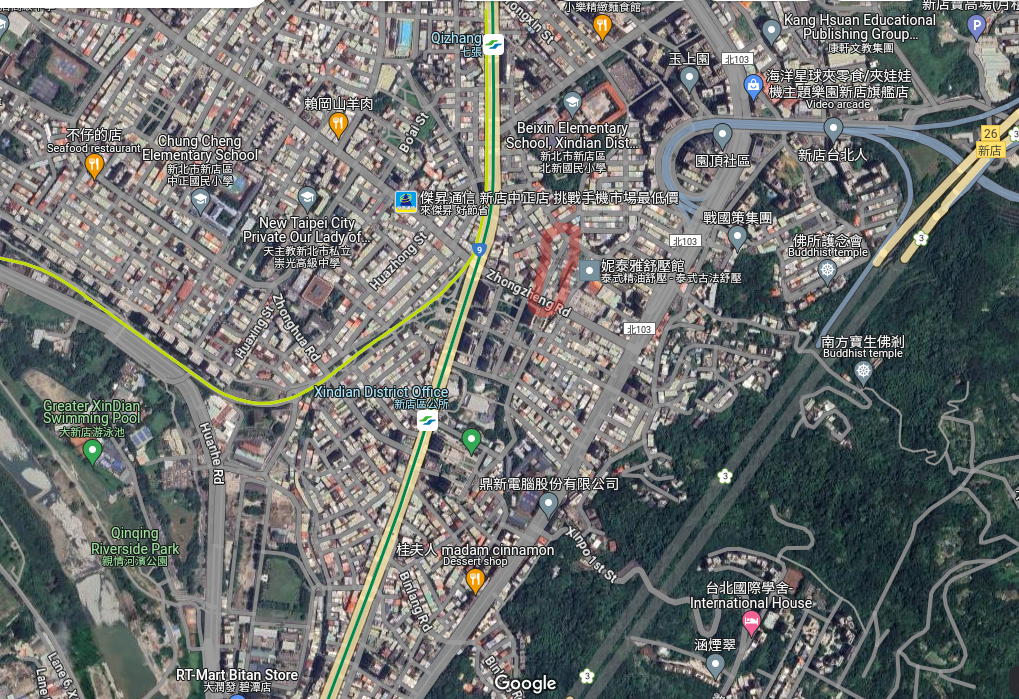
In the above Google Map, Huì Guó Market is indicated by the red oval; it’s too insignificant to be given a marker at this level. Huì Guó (惠國) translates as “benevolent country” on my computer – I’m sure there is a reason to have this as the name of the market, but my search came up negative.
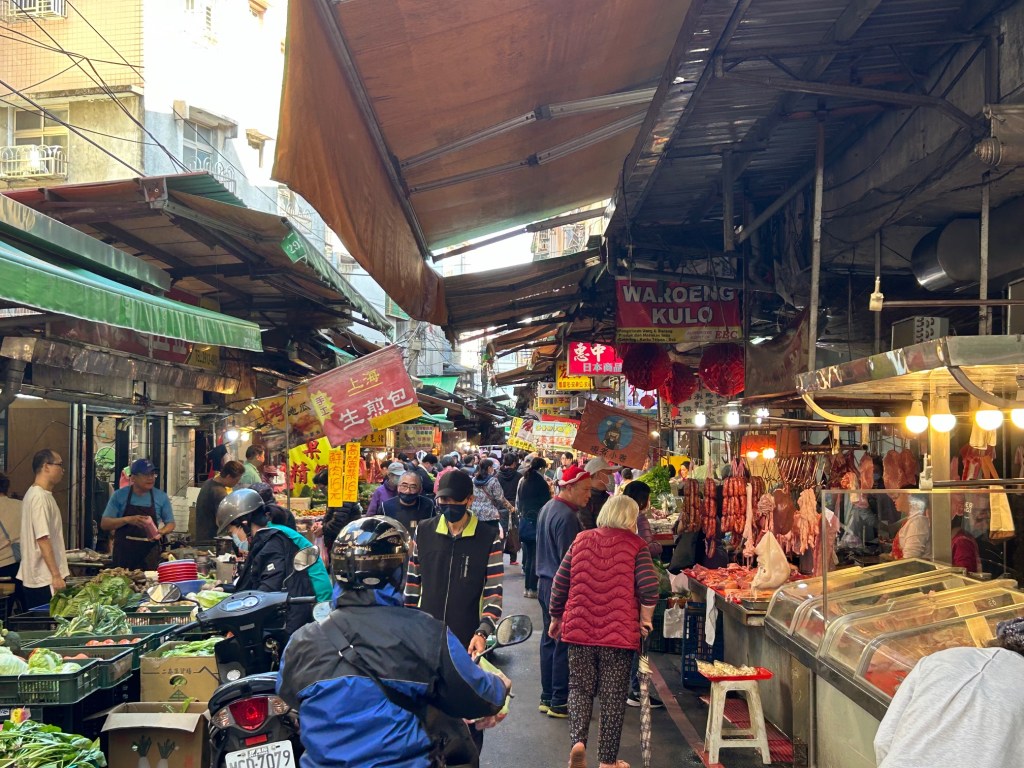
A view in the market itself. Reading the Google reviews of Huì Guó Market were interesting. Apparently the market was here from early on, 40 or more years ago. Originally the market was in a different place. Then a construction corporation bought the market and planned to redevelop it, so the market moved to a temporary home in a side-street nearby. However, construction stalled, and the temporary home became permanent. The site of the old market is now a parking lot, which I walk past to get to the market.
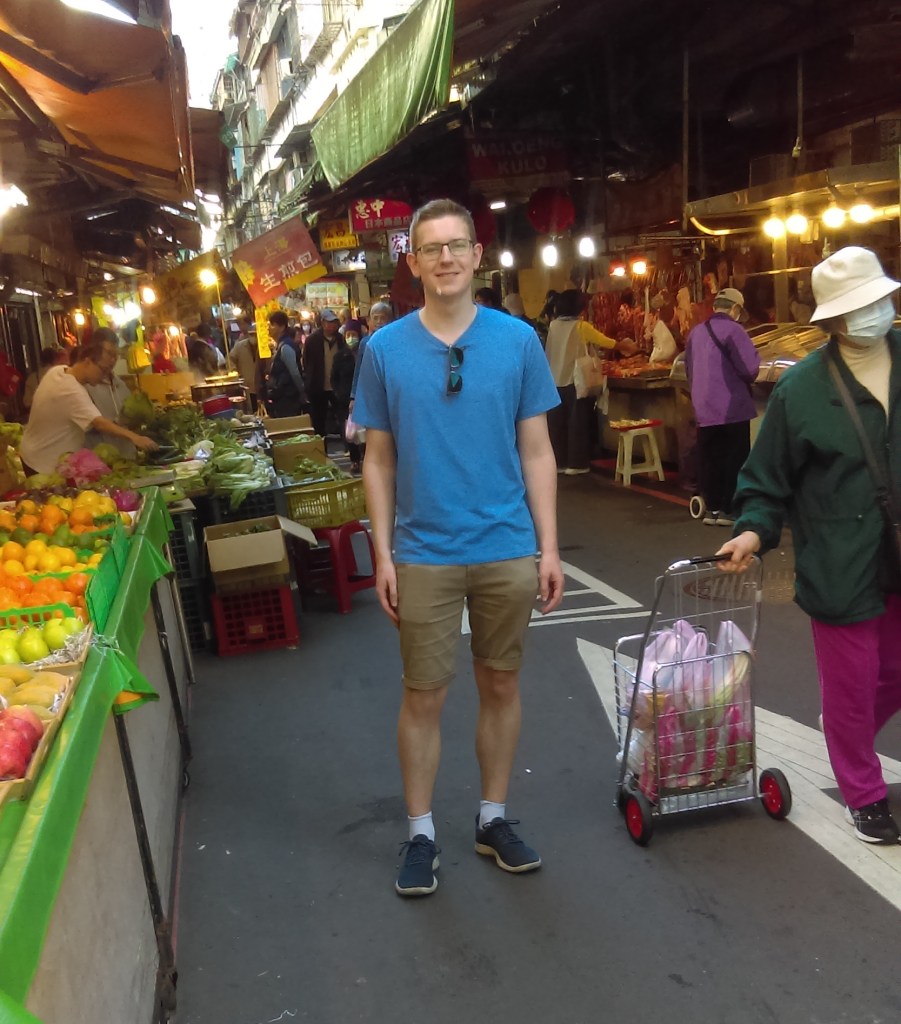
The reason I said “we” is that I was accompanied by Tim (above). He is in International House for a month, so I offered to show him the market. The photo was taken on my phone.

…and there’s me, same location, taken on Tim’s phone. Tim’s phone has a clearly superior camera. Most of the pictures are taken with his phone.
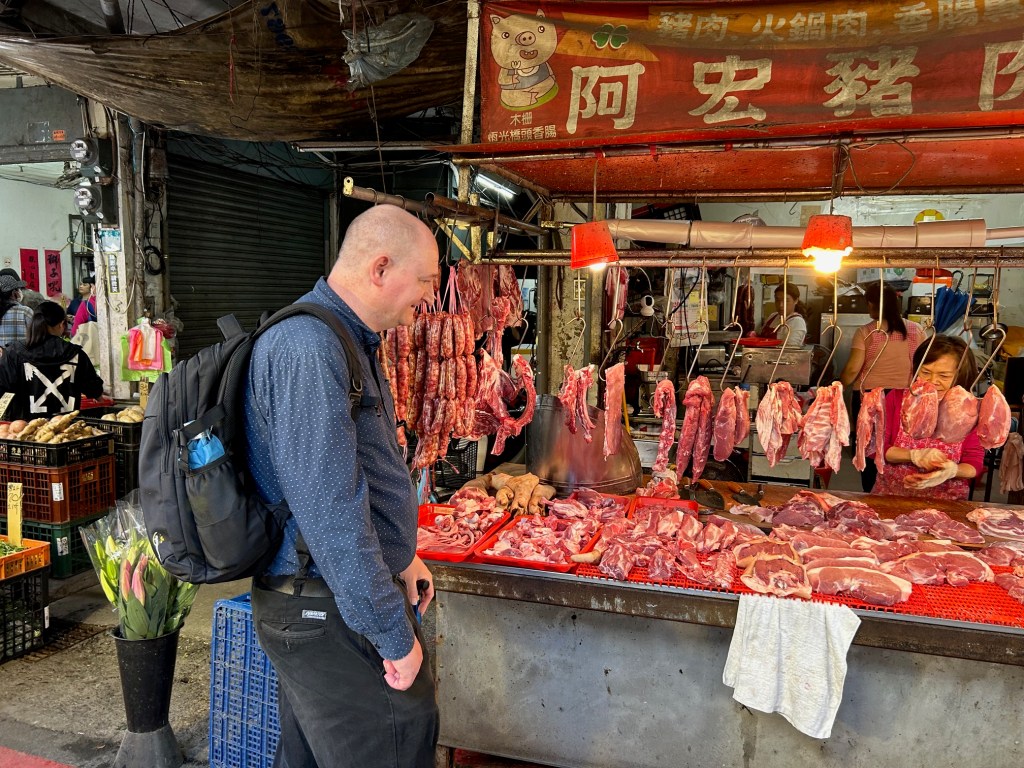
A picture of a butcher’s shop.
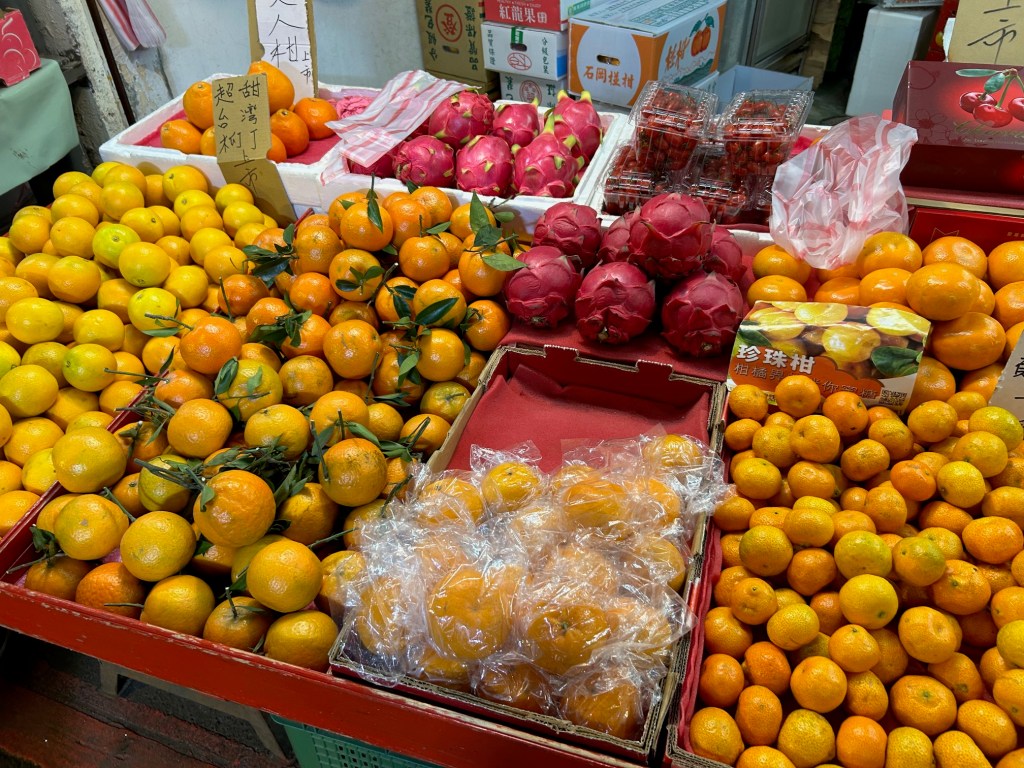
A fruit stall – note the dragon fruit. ”Dragon fruit grows on the Hylocereus cactus, also known as the Honolulu queen, whose flowers only open at night. The plant is native to southern Mexico and Central America. Today, it is grown all over the world. … The two most common types have bright red skin with green scales that resemble a dragon — hence the name. … Its taste has been described as a slightly sweet cross between a kiwi and a pear.”
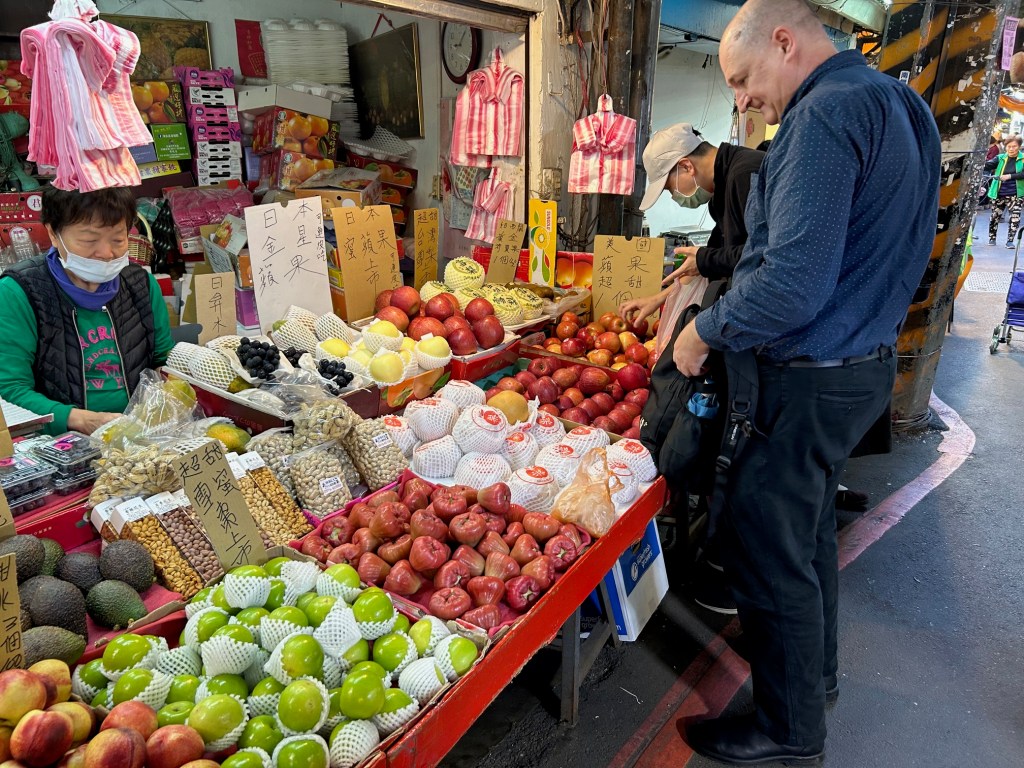
I took this opportunity to buy some fruit for next week. The photo above is me buying apples, the proprietor obligingly selecting some for me.
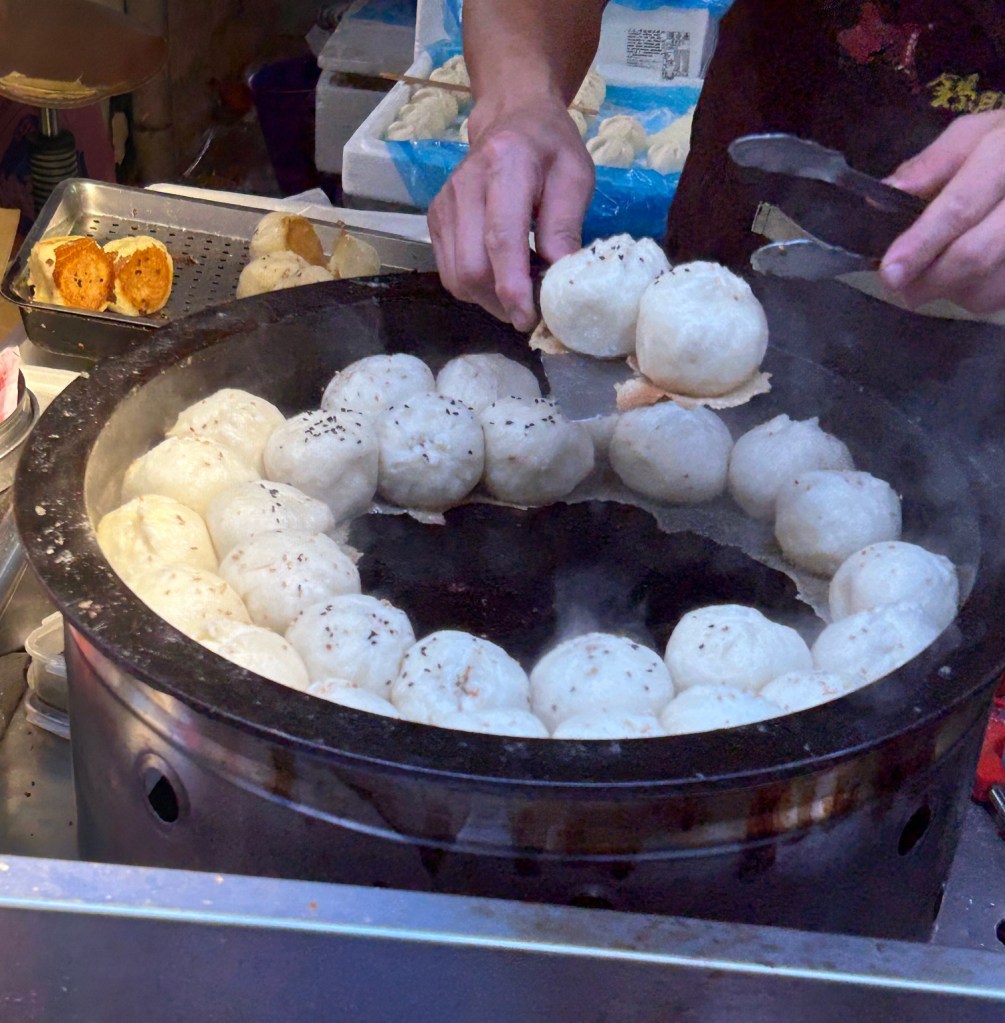
We stopped at a stall selling baozi, steamed pork buns, to eat later. According to Wikipedia, “In many Chinese cultures, these buns are a popular food, and widely available. While they can be eaten at any meal, baozi are often eaten for breakfast. They are also popular as a portable snack or meal.”

We ate at a place which I’ve covered before. The above photo is me standing waiting to enter – there’s usually a line.
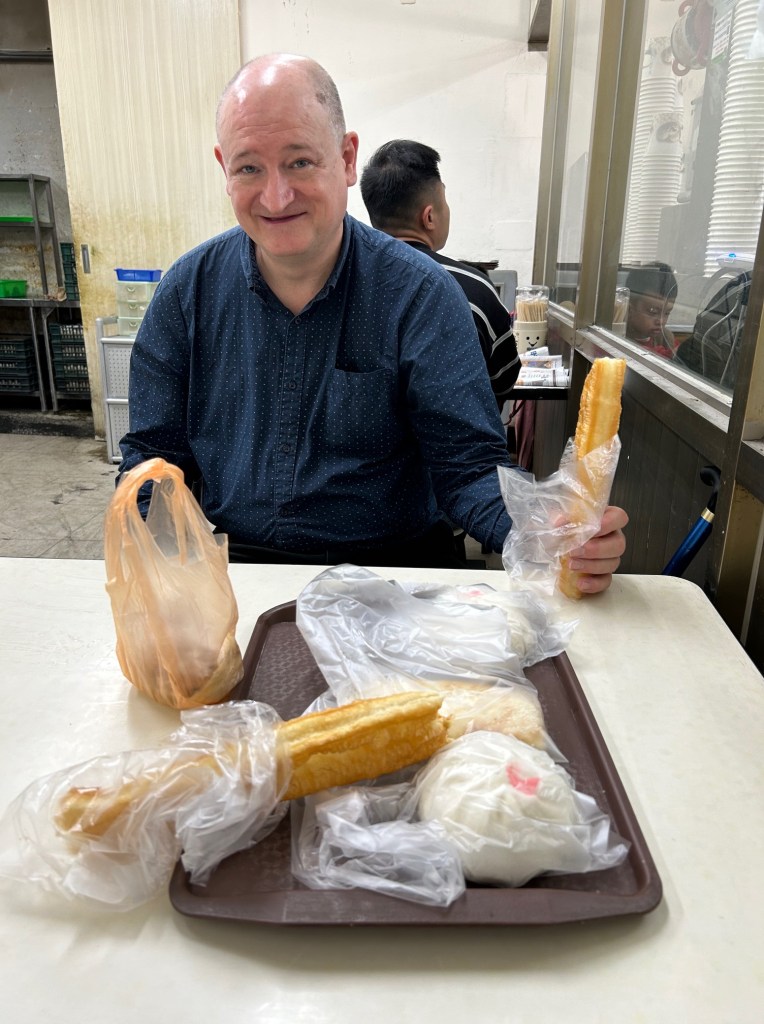
Food! We’re sitting in the back room of the shop. I’m holding a youtiao (油條). “Step into any dim sum restaurant, and you’ll likely run into some version of youtiao. Roughly translated as ‘oil strips’ in Mandarin, these airy, golden fried sticks of dough are the equivalent of savory donuts or churros. While they’re commonly eaten in China for breakfast with congee, youtiao are also found in other East and Southeast Asian cuisines, from Cambodia to Laos, and even in the Philippines and Thailand, although the pastry is known by different names.”
There are also Cáibào (菜包), a steamed bun stuffed with vegetables, and those baozi we bought earlier.
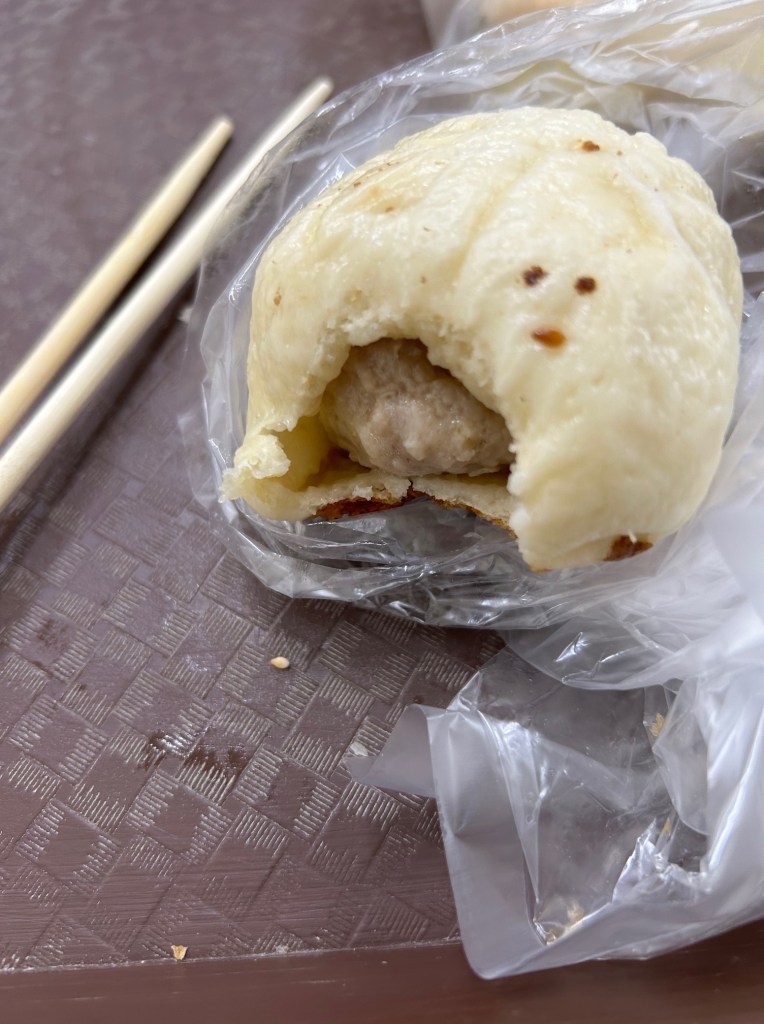
A close-up of the one of the baozi, showing the pork stuffing. The outside dough was really rich and oily, and the pork was very flavoursome.

I also bought xiǎolóngbāo (小籠包), according to Wikipedia, “a type of small Chinese steamed bun (baozi) traditionally prepared in a xiaolong, a small bamboo steaming basket. … Xiaolongbao are traditionally eaten for breakfast. The buns are served hot in the bamboo baskets in which they were steamed”.
I was interested to hear Tim was at the University of Oxford (Worcester College – I was at Merton). We chatted and ate quite comfortably. Then Tim went back to International House while I did the rest of my shopping.
 Wandering Richard
Good to see your account of your visit to the market. It must have been
enjoyable for you to have shown Tim around.
Mum spent a couple of days in the RNSH after experiencing a bad bout of
vertigo in the early hours of Tuesday morning last. All OK now and today
she is singing with her choir at an Australia Day event at Newport
Beach. We will tell you more about the vertigo event at our next zoom
meeting which we must have soon. I’ll get mum to set it up and let you
know the details.
Very hot in Sydney today, Dad.
LikeLike