April 5, 2025
While I was shopping at Huì Guó Market, someone mentioned the Mazu pilgrimage, a huge festival down south near Taichung. I was unenthusiastic, but I said to myself, in a few years I’ll be glad to have gone. So I looked up the temple and found a “Dajia Mazu Pilgrimage Day Tour from Taipei” – the tour was cheap, so I booked it.
Wikipedia says “The Dajia Mazu Pilgrimage is an annual celebration of the Taoist sea goddess Mazu held in Taiwan. During the festival, a statue of Mazu is placed in a litter and carried by foot on a round-trip journey from Jenn Lann Temple in Dajia, Taichung to Fengtian Temple in Xingang, Chiayi, stopping at many more temples along the way. The festival lasts for nine days and attracts large crowds of pilgrims.” We were only going to participate in the first day.

The day, April 5, was grey and gloomy, threatening rain; the temperature was around 18 degrees. The tour began at 7:30am in the park next to Zhongxiao Xinsheng MRT Station. The above photo was taken on the MRT station steps.

It ended up being two groups, the English and the Chinese languages combined, for 6 people; an extra person was added at Taichung. Above you can see the whole group, minus the tour group leader, at Jenn Lann Temple in Dajia.

We set off for central Taiwan. The rain began as we left. The trip took around 2 hours, not including stopping at a roadside service centre on the way there.
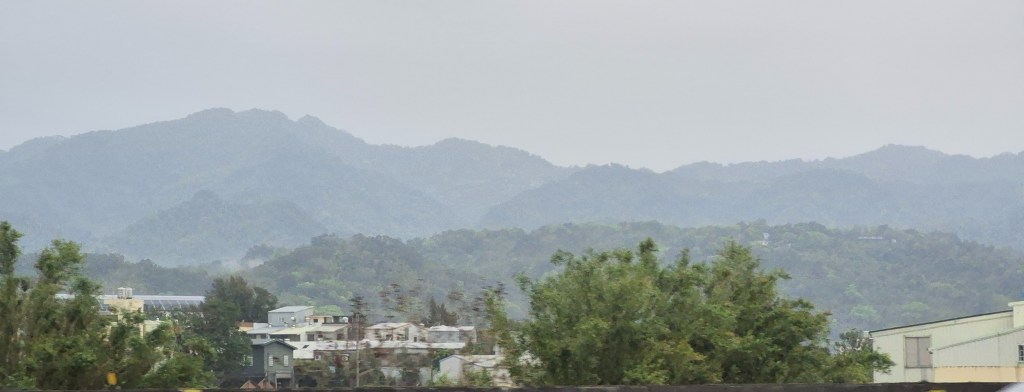
A photo of the mountains from the national highway. As we went south the weather improved slightly; it was no longer raining.

The high-rise buildings of Taichung. We went right into downtown to pick up our last passenger.
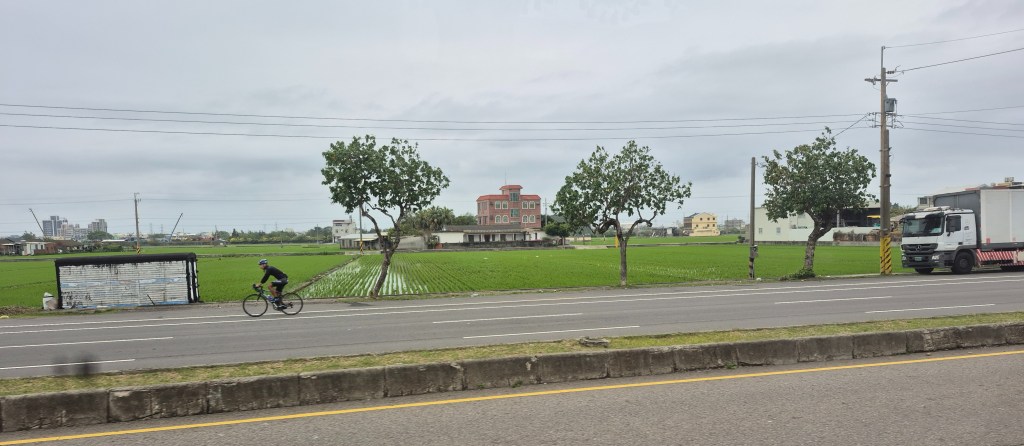
Then we left Taichung heading north-west, climbing to a ridge then down a great slope almost to the ocean. The scenery became almost rural (above).

A close-up of the rice-plants.
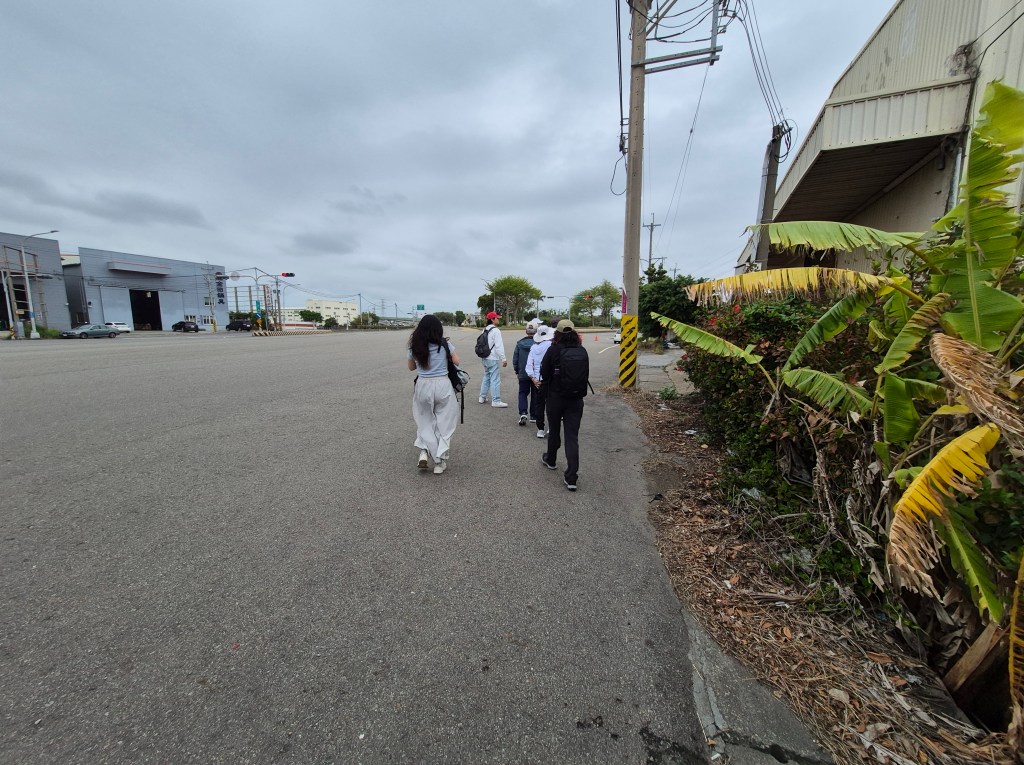
The bus let us off near the pilgrimage route (above), and we walked to the pilgrimage route.
Wikipedia says “Before the procession departs, a ceremony known as jiaogao (筊筶) is held at Jenn Lann Temple, where the pilgrimage’s start date through poe divination. Afterwards, the procession’s Head Banner is tied onto the left dragon pillar of the temple, rectangular pieces of paper known as a xiangtiao (香條) are passed along the route to notify people about the upcoming pilgrimage, and subordinate temples decide among themselves which order to travel inside the procession.”
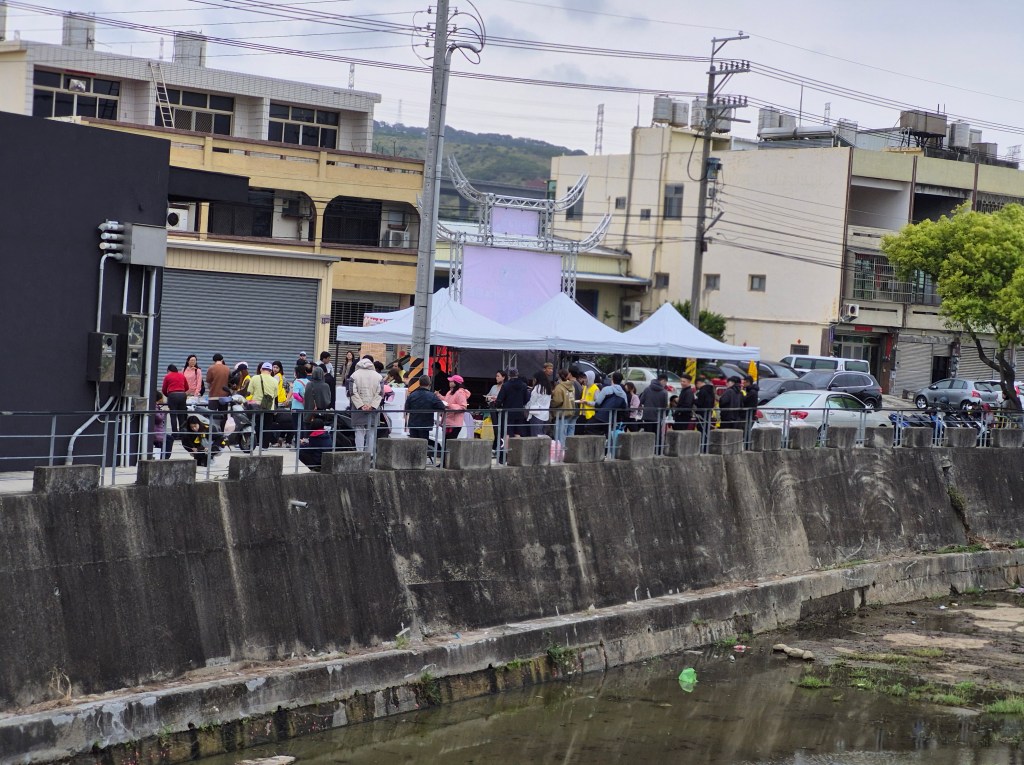
I could see a great many people lining the pilgrimage route (above, with a canal).
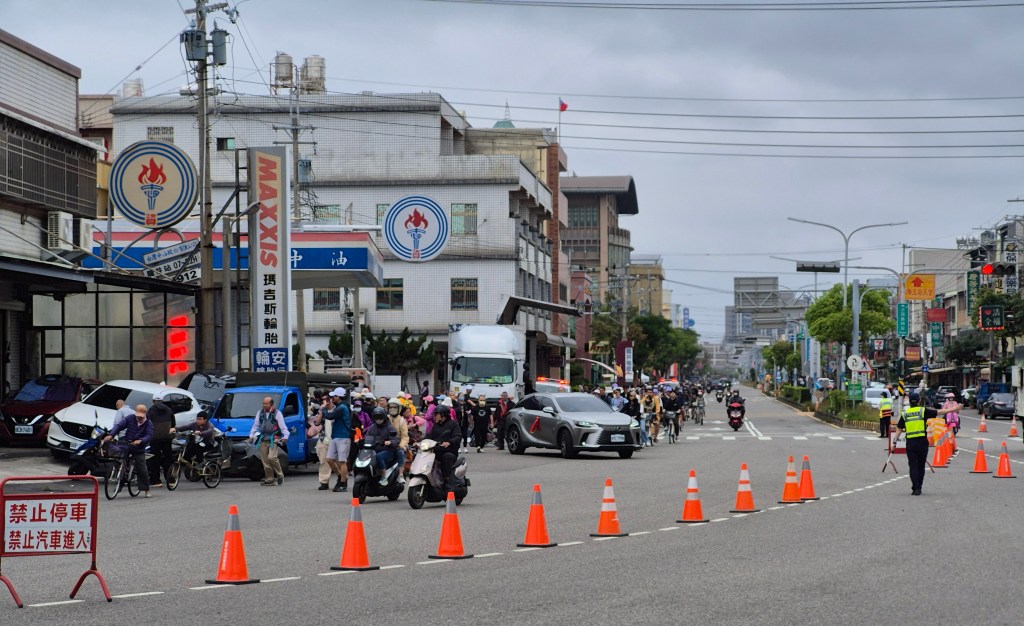
The pilgrimage route. There were a lot of people, thousands upon thousands, but very orderly for a large crowd. There was a large police presence. To my surprise, Wikipedia says “Since Dajia Mazu is considered to be very powerful, temples along the route would often try to ‘steal’ some of Mazu’s power, which is believed to be inside the incense that is carried. Spiritual power may be ‘stolen’ by others if the incense is surrounded by foreign banners and magical writing. In early pilgrimages, there was a twelve-person convoy holding an incense carrier who travelled in secret to avoid losing the spiritual power in the crowd. However, in 1987, the convoy was intercepted by a temple in Qingshui who tried to redirect them to their temple, so Jenn Lann Temple abolished the convoy in later pilgrimages….In modern times, temples that Mazu doesn’t visit will sometimes send people to surround the litter and forcefully ask them to make a detour to their temple. In most cases, the litter bearers concede to these requests in order to avoid conflicts. However, violent brawls do occur if the two sides do not come to an agreement. Therefore, the procession is often accompanied by a large police presence to discourage litter stealing.”
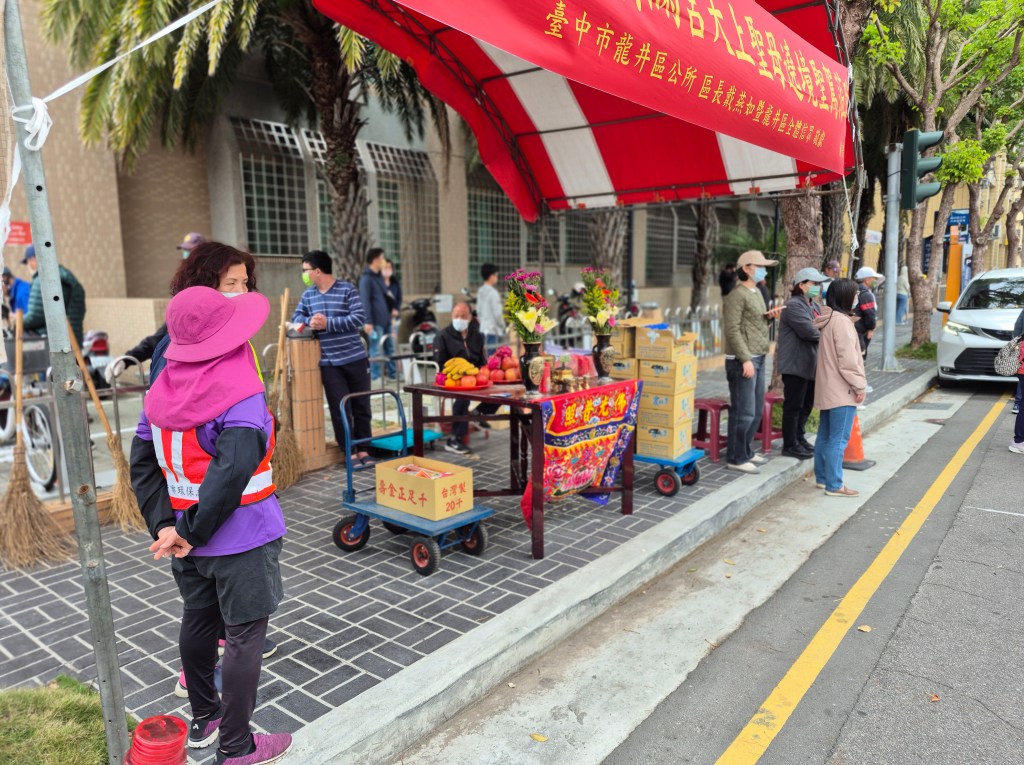
It was very organised, with regular booths at intervals, like the above. Wikipedia says “Pilgrims often follow a vegetarian diet for the duration of the pilgrimage, and food is provided for passing pilgrims by the villages along the way.”

Burning hell money. “The term refers to imitation money, made of paper, in the Chinese world for burning to the ancestors. The act of burning it serves as the means of conveying the value to the other world for use there.”

A photo of an offering; note the hell money to the right.

A photo of a float. The tour guide said the palanquin containing Mazu’s image was still a mile away.

There were these people dressed alike holding replica halberds. Sorry about this out-of-focus photo.

At last – the palanquin! It’s on the left hardly in view; that circular arrangement you can see is a foretaste. The smoke is from fireworks set off down the road.

The palanquin, surrounded by a jostling, camera-wielding crowd.
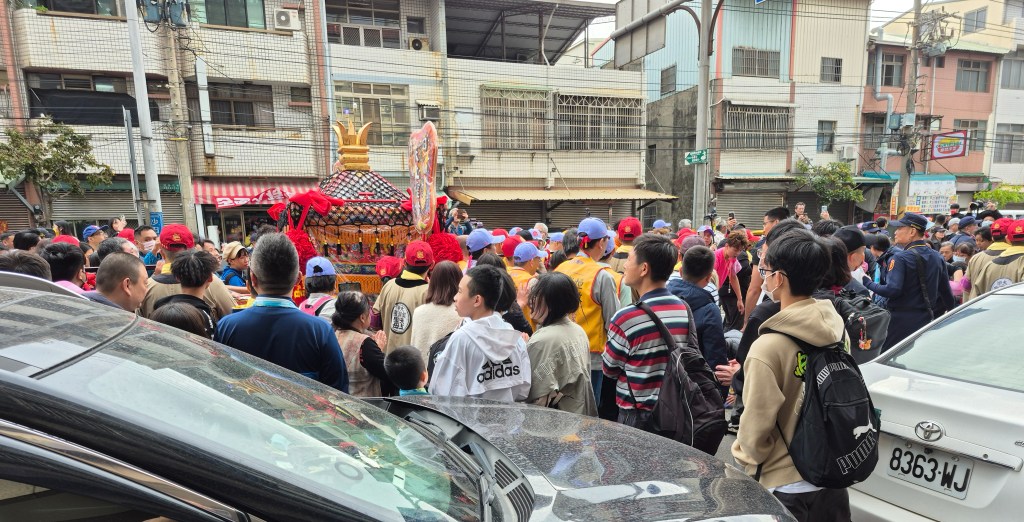
You can’t really see it, but the palanquin is moving over the top of the crouching people. Wikipedia says “The kneeling ritual (Chinese: 鑽轎腳…) is a common practice among Mazu processions. Worshipers may either kneel on the ground for the litter to travel over them or crawl underneath a stationary litter. Originally used to show gratitude towards Mazu, worshippers may also kneel to ask for protection and good luck.”
A TV report from last year. That temple is where we’re going next.
In the wake of the palanquin we joined the procession, and walked for several kilometers amongst the crowd. I chatted with an American woman, who asked what I thought of President Trump’s antics.
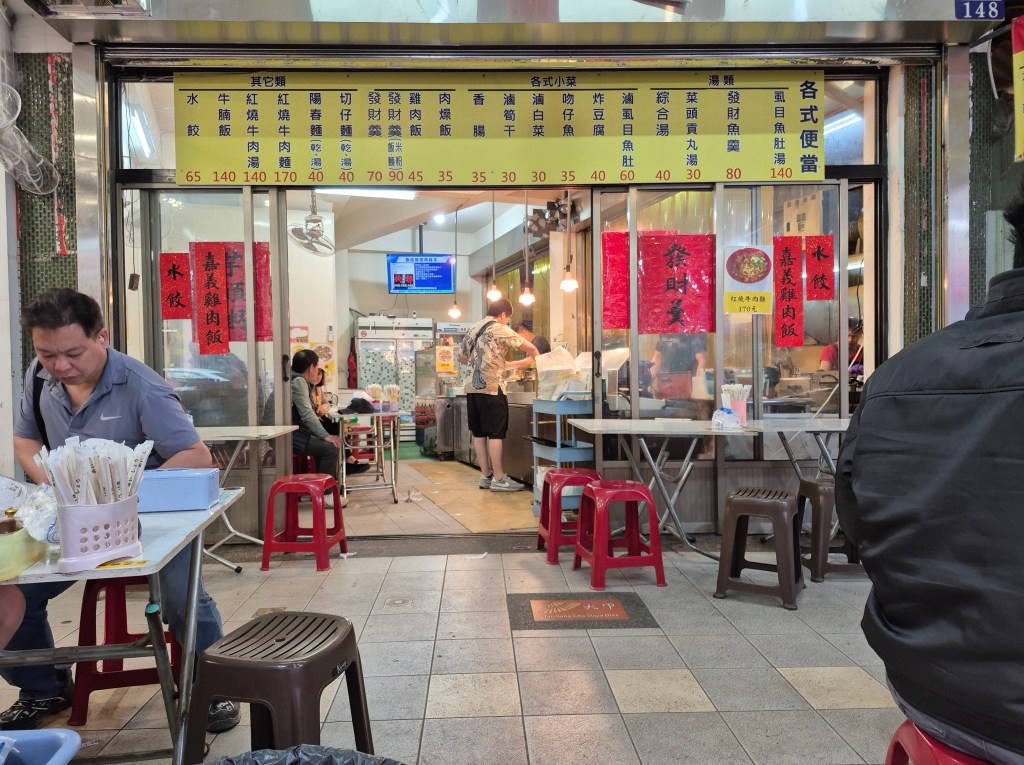
Eventually we reboarded the bus and travelled a short distance to Dajia. There I briefly left the tour because I was very hungry. I ate at the above restaurant.
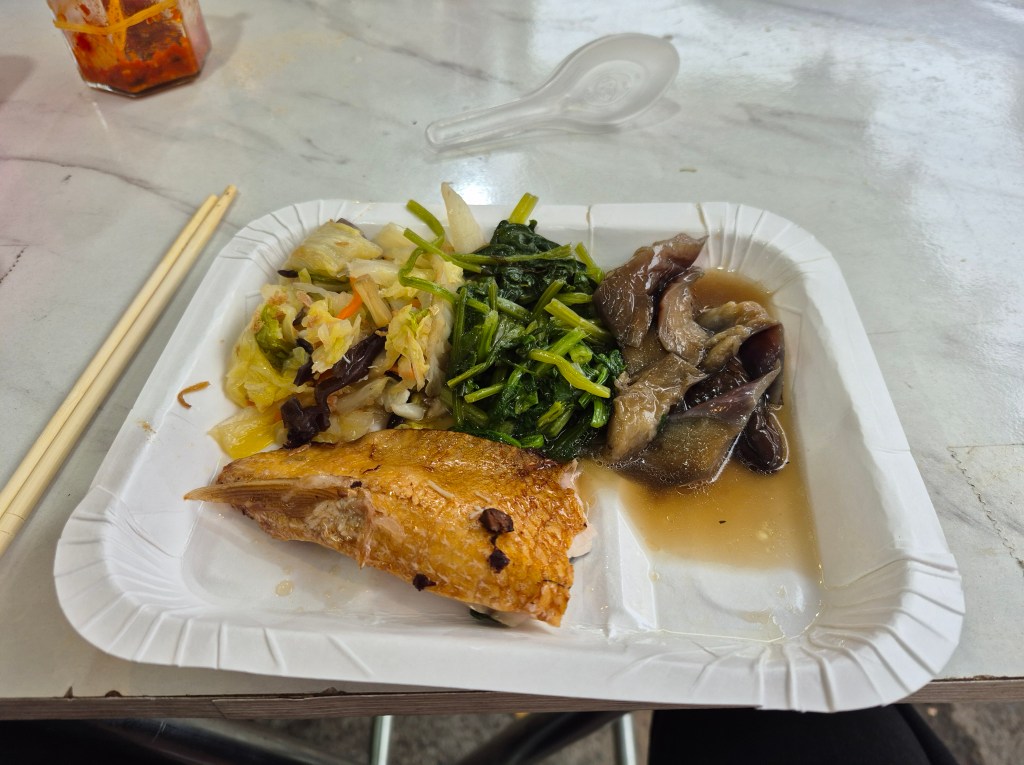
My meal, on a paper plate: cabbage, greens, eggplant, and fish, for NTD 90 ($AUD 4.50). It was delicious.

Just up the road was the Jenn Lann Temple. Round Taiwan Round writes “Dajia Jenn Lann Temple (大甲鎮瀾宮) in Dajia District is one of the most well-known Mazu temples in Taiwan, dedicated to Mazu, the guardian goddess of the Taiwan coast. The temple attracts a large number of worshippers throughout the year.”
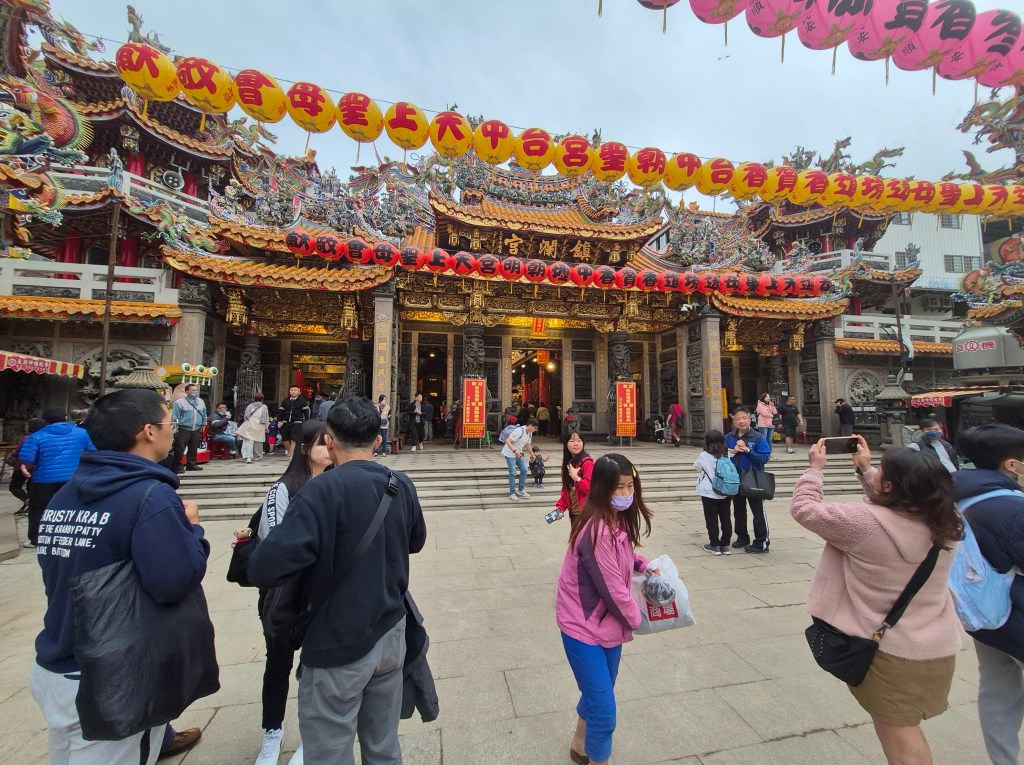
A different view of the entrance-way. According to Wikipedia, the temple originated in 1730 as a small temple.

The entrance-way. Wikipedia says “The day before the pilgrimage, a ceremony known as qi’an (祈安) is held at Jenn Lann Temple to ask for a safe journey, and Mazu is invited to board the litter. The litter contains three statues of Mazu: zhengluma (正爐媽), fuluma (副爐媽), and meizhouma (湄洲媽). During the pilgrimage, Mazu litter is carried by eight men and travels near the end of the procession, behind the crier, flag bearers, musicians, and convoys from other temples.”

Detail of the carving.

The temple still had a bustling air.

A different angle.

Round Taiwan Round writes “There are also many must-try local snacks near the temple entrance, such as crispy taro balls from Wujia Land and Ji Jia Le Taiwanese meatball. The adjacent Jiang Road Tourism Night Market, which has developed alongside Dajia Jenn Lann Temple (大甲鎮瀾宮), is also a highly recommended place to visit.”
Then we reboarded the bus and travelled the 2 hours back to Taipei.
 Wandering Richard
You have given us a good, interesting, account of your day. What did you
say to the American woman re Trump?
LikeLike