Pénghú – from Wandering Richard (http://wanderingrichard.com)

November 26-28, 2023

The academic semester was over, and I had a little less than a week before starting a new semester. The weather was cooling off, though I was still going without my jacket. Red leaves started appearing on the tree below my window; winter was coming.

I planned to visit Pénghú (澎湖), an archipelago of islands between Taiwan and China.

The above map shows the distance. The Tropic of Cancer runs though Pénghú. I originally intended to travel by train to a port on the west coast and then take a ferry to Pénghú, but the flight from Taipei to Pénghú proved more simple and inexpensive, so I settled on that.

A light rain was falling as I traveled to Songshan Airport, the weather grey and cool, with the temperature around the high teens Celsius. I hadn’t taken a plane before in Taiwan, so I was a bit apprehensive. The MRT had a stop dedicated to the airport, logically called Songshan Airport MRT Station. The entrance to the airport was only steps from the MRT.

The airport was small but new, like Sydney Airport shrunk down to a quarter the size, and I progressed rapidly. The airport authorities were thorough on security, so I spent time unpacking and repacking my person and bag. The above photo is of the gate, while I was waiting for it to open. When the gate opened, instead of an aerobridge we were bussed out to our aircraft.

My aeroplane, an ATR 72-600, in the rain. I took this standing at the door of the bus.

The ATR 72 lined up at the end of the runway, a sudden quick acceleration, then we were zooming rapidly upwards towards the cloud layer. Seems like the ATR 72 has light handling compared to a jet.

The clouds cleared as we tracked down Taiwan. There were high mountains on the skyline (above).

There were brilliant views from the air, which I failed to catch (above).

The plane made a short crossing over water, then we descended over the archipelago, with many small islands and a few large ones (above).

Wikivoyage says “The wind-scoured landscape is drier than most of Taiwan, with limited farmable land and lots of agave plants and prickly-pear cactuses. Hardy evergreen trees have been planted in many places as windbreaks. Located to the west of the main island of Taiwan, is composed of 90 islets; most are uninhabited.”

We landed at Penghu Airport, which is a dual-use (military and civilian) airport; I saw many bunkers and earthworks as we taxied. The airport is not that different to Songshan Airport, complete with ATR 72s, flying to cities along the Taiwanese west coast. The sun was shining brighly.

Wikivoyage gives a short history of Penghu. In the 9th or 10th centuries in the Song dynasty, Han Chinese from Southeastern Fujian established fishing communities, and in the subsequent Mongol Empire Penghu formally became an area of Fujian Province. around the 15th Century in the middle of Ming Dynasty, the South China Sea became the setting of international trade among Japanese, European navies, and Chinese pirates. The “Ming Empire sent General Shang Zhouzuo (沈有容, 1557-1628) to expel the VOC fleets from Pescadores. This event was recorded in a stone tablet : 「沈有容諭退紅毛番韋麻郎等」 (It means ‘Shang Zhouzuo expelled Wijbrant and his people’); you still can see the stone tablet at Tian-hou Temple (天后宮) in the present Magong City.”

I walked through the airport without stopping and got into a taxi (above). A quick trip to Magong (馬公) cost 315元, about $AUD16.

A shot of my destination, MF Hotel Penghu. Teacher Lu said that the Chinese characters “澎湖和田大飯店” are illuminating; “和田”, meaning “harmonious rice-field”, indicate that it’s a relaxed place, while “大飯店”, literally “great rice shop”, signify that it’s actually a large hotel.

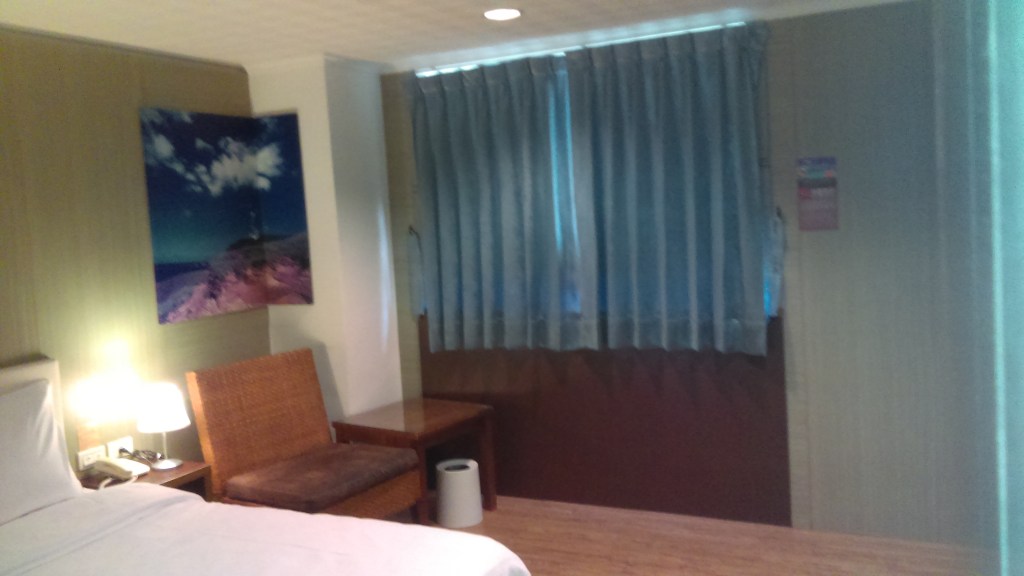
Inside the room. It’s nicer than the photo, tastefully decorated with a flat-screen TV, and thick walls.

The view out the window – very fine, though it’s not captured well here. The room was on the 6th floor, or 5th floor if you are Australian.

I walked around randomly from my hotel. The neighbourhood around the hotel is typical of Magong. I took this photo about three blocks from the hotel. Unfortunately I felt tired from my trip, so I had an early night.

The next day I set out to explore properly.

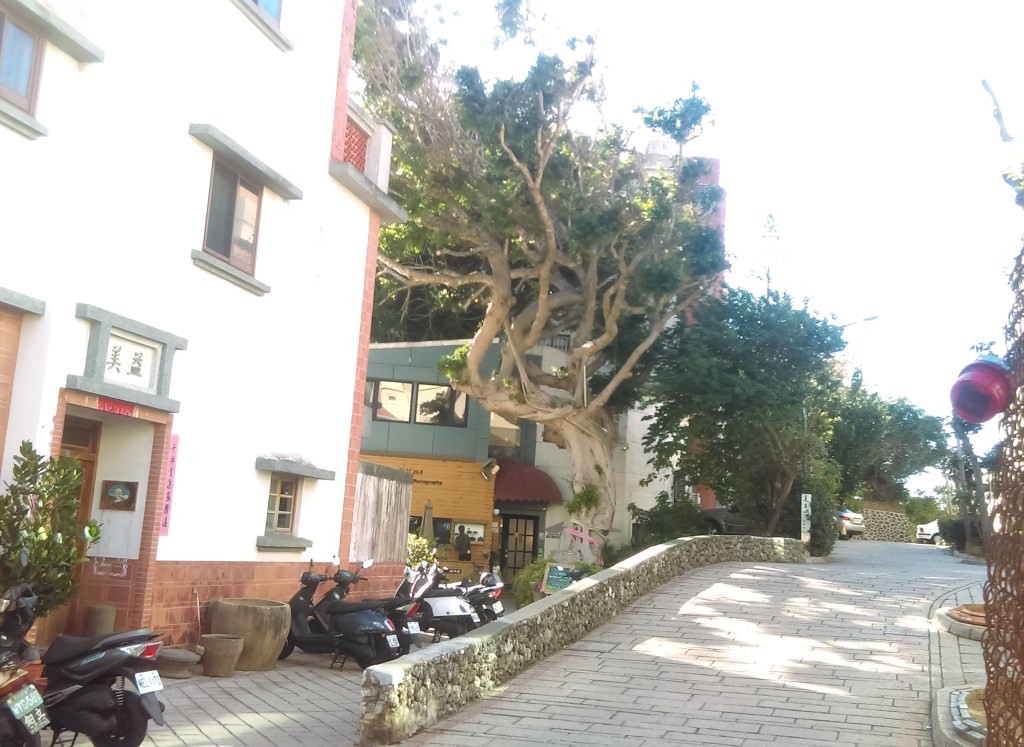
A man directed me towards Zhongyang Old Street (above) – otherwise I would have gone right past it. Zhongyang Old Street is very narrow, despite being in its day the main street of town. The modern equivalent street runs parallel just a block away.

According to Round Taiwan Round, “The only qualified old street on Penghu Island is the Zhongyang Old Street—”Zhongyang” means “central” in Mandarin. Situated near Four Eyes Well and Penghu Mazu Temple, Zhongyang Old Street can be seen through at a glance, yet red brick pillars and wooden houses still give it a hint of history. The only pity here is the commercial atmosphere that overshadows the historical ambiance, yet that’s why lively cultural creations are introduced to the old street. On the old street, you can find painted floating balls with cat portraits on them, handmade basalt accessories, cactus mille-feuilles, martial art schools, tea shops, Breast Touching Lane (Molu Lane), etc.”

Another view of the same street, near Penghu Tianhou Temple.

According to Taiwan Tourism, “As the earliest commercial district of Penghu, the Zhongyang Street are (sic) featured by a dozen of narrow alleys and lanes built in the Qing and Ming Dynasties … In the past, a family would live at one end of a house and do business at the other. In addition, the narrow alleys and lanes look almost mysterious today. There is even an alley only 6 meters wide. During the Japanese Rule, the Zhongyang Street further expanded into a commercial area nicknamed The Seven Streets and One Market.”

According to Wikipedia, “In the late 1980s, this historical street faced threats from urban development which might divide the street into smaller sections. Some local officials and scholars then launched a project in 1991 to preserve the street and made it a cultural and historical district.”

I found a clip on YouTube about Zhongyang Old Street.

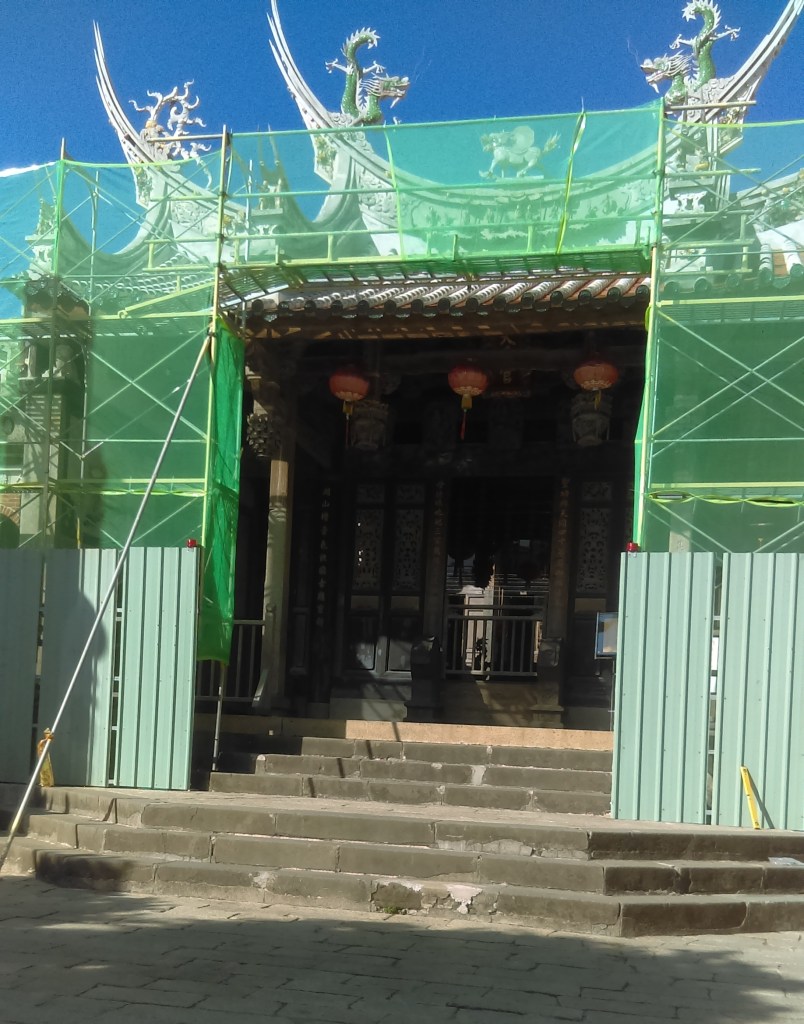
Just along from Zhongyang Old Street is the Penghu Tianhou Temple (澎湖天后宮), the most famous temple in Magong. However it’s hemmed in by scaffolding (above). There are other pictures that do it justice.

Wikipedia says “The Penghu Tianhou Temple is a temple dedicated to the sea goddess Mazu located on Zhengyi Street in Magong City, Penghu, Taiwan. It is usually considered the oldest Mazu temple in Taiwan and, despite differences in characters, is the namesake of the surrounding city of Magong. … The temple claims to be the oldest in Taiwan, possibly dating to the early Ming in the 15th century.” The ‘differences in characters’ refers to the characters being changed in 1920, so the spoken names no longer match in Chinese due to changes in tone.

The temple is made of wood (above). There is a sign saying “天后宮” – Tianhou Temple.

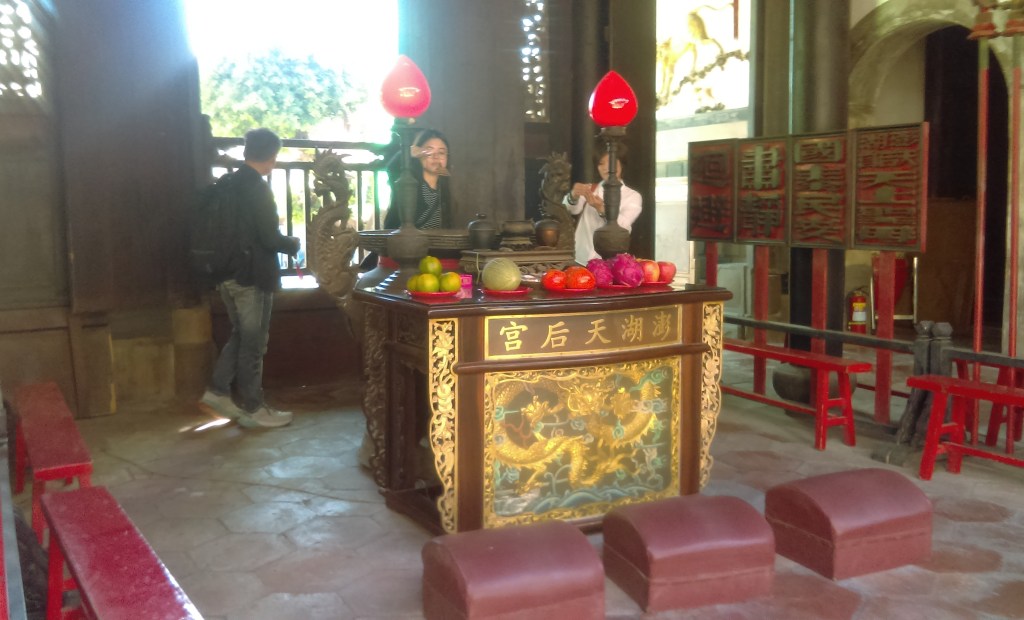
Worshippers praying (above).

Taiwan Tourism said “Penghu Tianhou Temple at Magong was built in 1604. It is Taiwan’s oldest and finest temple. The temple survived for an age of 400 years and has become the worshipping center of Penghu residents. The architecture is the work of famous Tangshan artists. Every part of the temple is made with utmost refined style. Inside the temple are some prized Ching period arts. Its inside out is the extreme artistic presentation of styling and sculpture. There is also a tablet in memory of Yojong Sheng’s success in persuading Dutch invaders to retreat, which is also the earliest tablet found in Taiwan.” Unfortunately I didn’t get to see this tablet.

Close to the Penghu Tianhou Temple is the Four Eyes Well, in a T-intersection (above). The open space is only the size of the average room, hemmed in on all sides with buildings.

Travel King said “Four Eyes Well as its appearance looks like a Four-cavity well situated north-end of the Zhongyang Street in Magong. The well was dug during [the] Ming Dynasty (1592)… This Four Eyes Well is 5.6 meters deep and two meters in diameter. There is a stone slate covering the well opening, leaving four circular openings for people [to] retrieve water, and preventing the people slid[ing] into the well accidently. According to legend, the Four-eyed well remained running even during [droughts], and the water is clear and cool. Now it is the oldest well remain in Magong City.”

Around the Zhongping Old Street there were many photo opportunities (above). The area looks prosperous and well-cared-for.

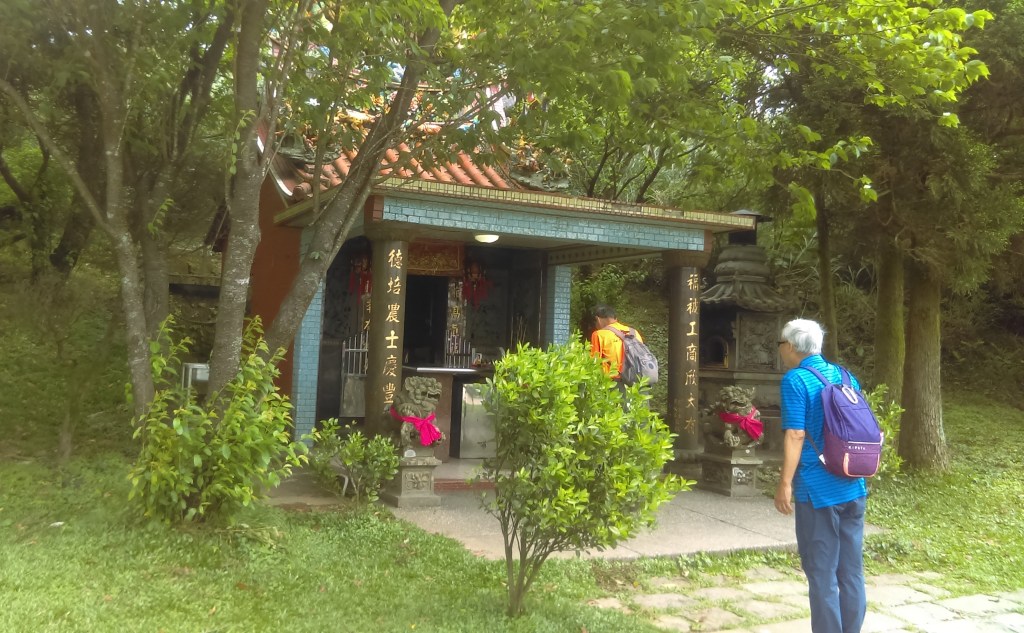
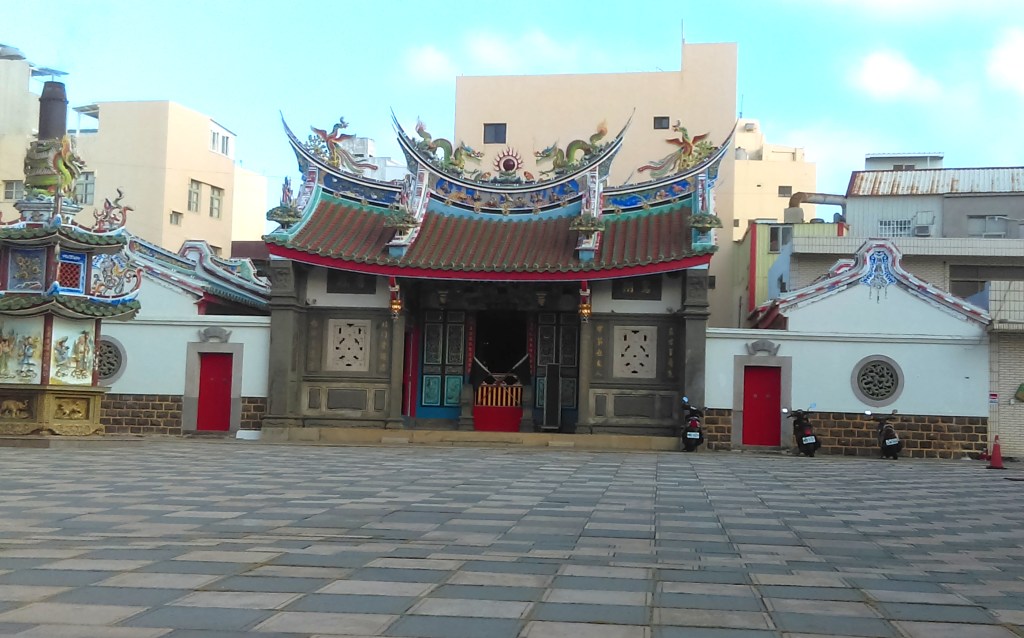
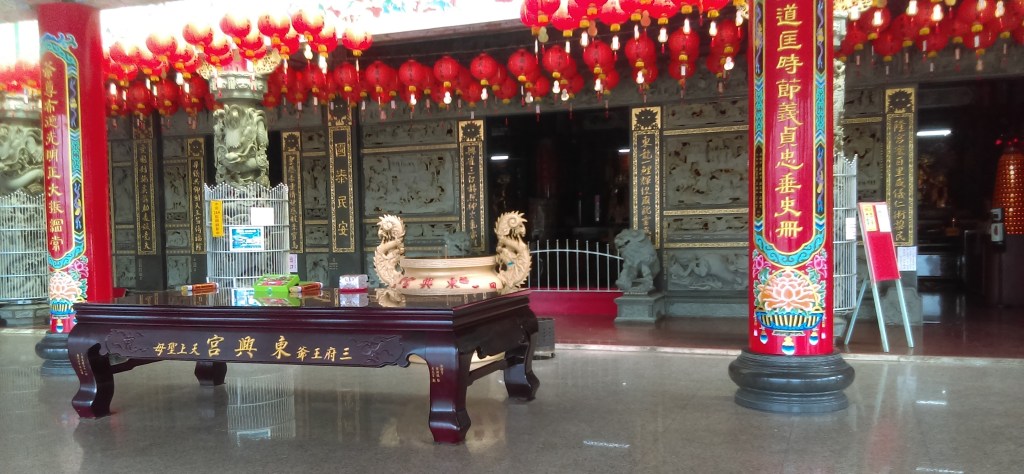
The day before, I had stumbled over this temple just a block away from my hotel. It’s called in Chinese “北極殿”; pinyin Běijí Diàn. According to Wikipedia, Magong Beiji Temple is formerly located in the easternmost area (Dongjia) in Magong.

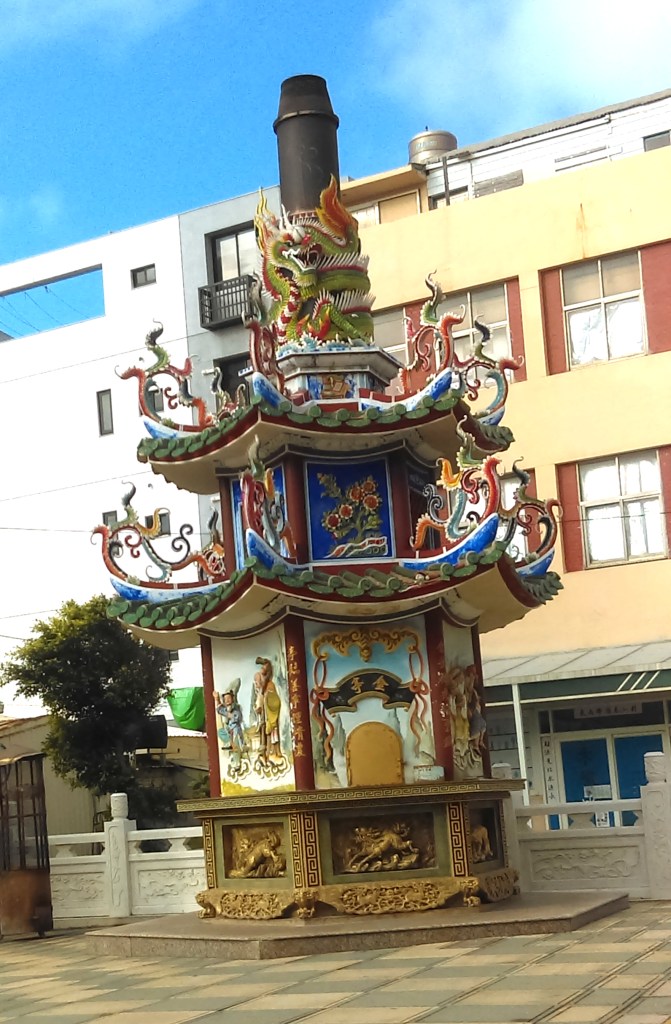
The beautiful crematorium.

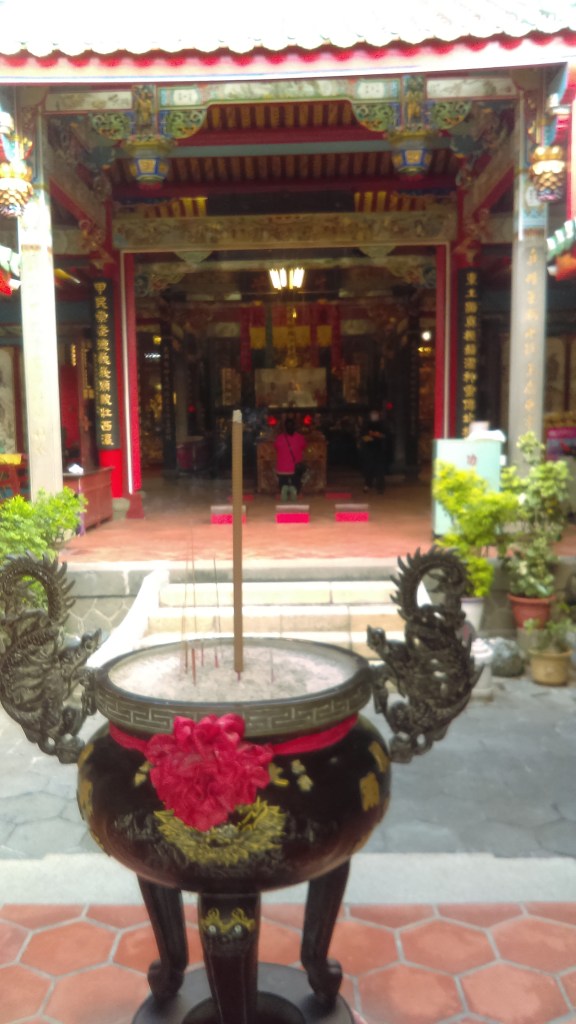
A view of the main altar.

According to Wikipedia, “Beiji Temples mainly serves “Xuan Tian Shang Di (Chinese: 玄天上帝)”, also known as ‘Zhen Wu Shang Di (Chinese: 真武上帝)’ , like other temples in Taiwan, the temple also housed a lot of god statues as well, including Cundi Bodhisattva, Dark Lady, Lord of the Soil and the Ground, Royal Lord and so on.”

A view inside the temple. According to Wikipedia, “The year of establishment is unknown, some said it had existed since the late of Ming dynasty, some said it founded by Zhao Guang (趙廣) in 1690. However, we can confirm that the earliest recording of repair is after 1791 at least.”

A view into the side passage.

My brief stay in Pénghú was over. On the morning of November 28th, I caught a taxi to the airport.

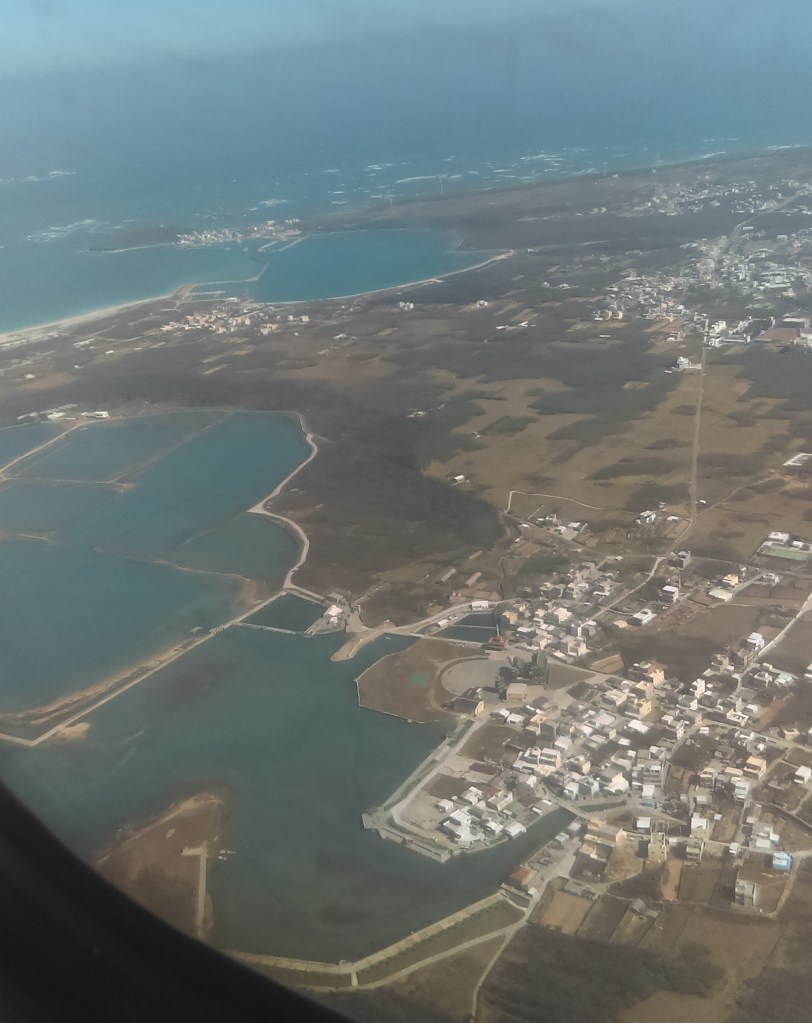
A photo of the archipelago, soon after takeoff.

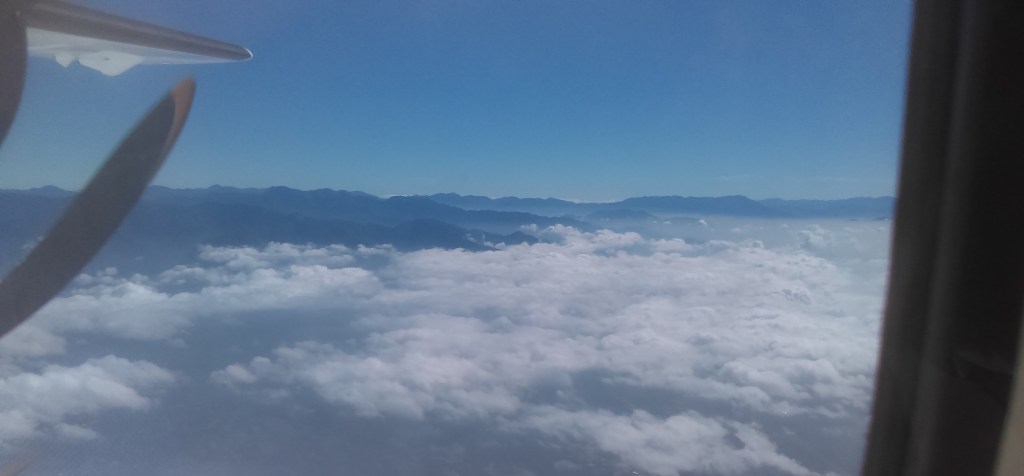
It was brilliant flying weather. I photographed a view on Taiwan (above) from my window seat. All too soon we landed and I took the MRT home.
Bitan – From Wandering Richard (http://wanderingrichard.com)

October 8, 2023

國慶日快樂! (Guóqìng rì kuàilè!) Happy National Day!

On a whim, as I was dressing, I decided to go to Bitan (碧潭), on the Xindian River near International House.

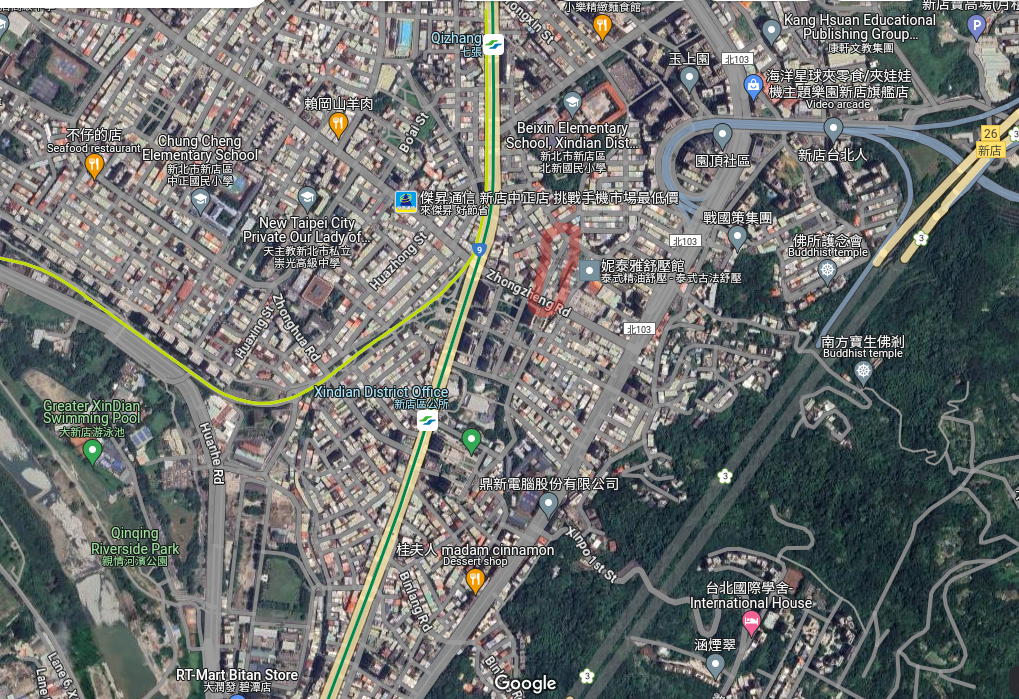
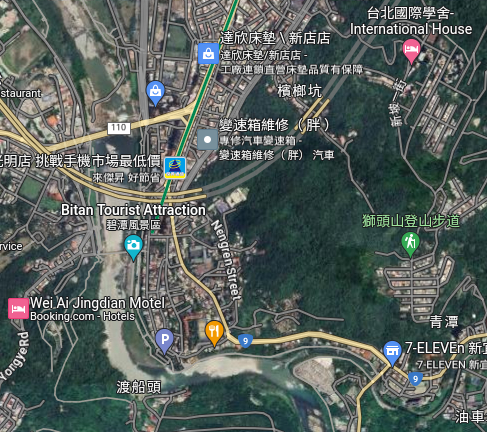
The Google map above shows Bitan as very close; I’ve walked there before. However, it was raining (though the temperature I estimated was in the high 20’s), so I went via bus to Qizhang MTR Station and then a short train ride to Xindian MRT Station.

Bitan, just across the narrow road from Xindian MRT Station. Bitan means “Green Pool” in Chinese.

New Taipei City Travel says: “Taiwan’s Xindian Bitan Scenic Area was already popular during the Japanese colonial period. In 1927, Taiwan Daily News launched a poll of “Eight Scenic Views of Taiwan” for all readers, which was the craziest readers’ poll in Taiwan’s history. Eventually, readers selected eight scenic views, twelve attractions, and two special spots, which included Xindian Bitan. Therefore, it can be seen as one of the leading scenic areas in Northern Taiwan. In recent years, the popularity of hiking in Taiwan has grown, and Bitan, with Hemei Mountain on its left and Shitou Mountain on its right, has become a good choice for urban residents to get closer to the mountains.”

There are many YouTube clips of Bitan. The above is of a person walking from Xindian MRT Station, as I did, exploring Bitan and Xindian Old Street, early in the morning.

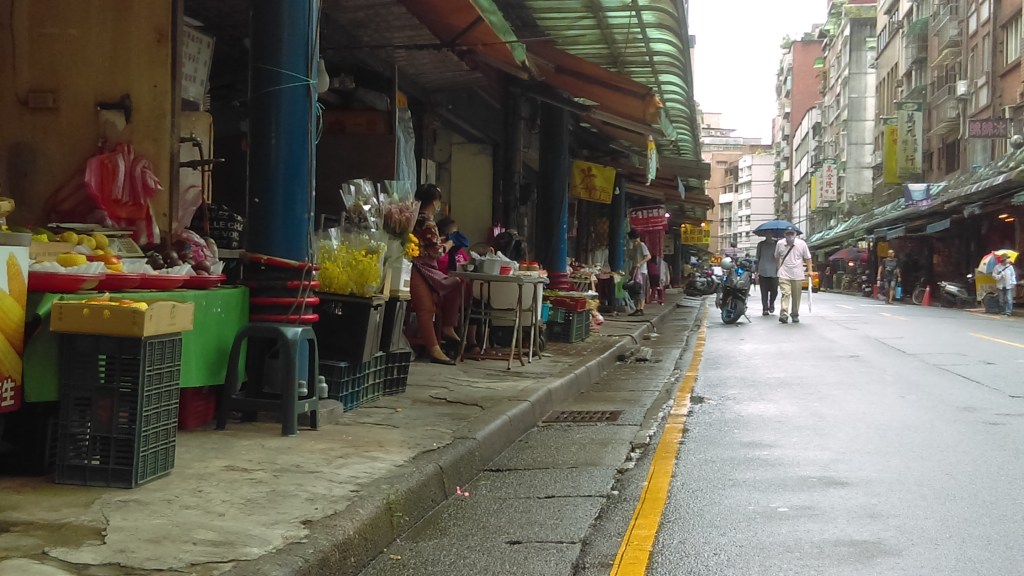
Just down from Xindian MRT Station there is a traditional market (above). Somewhat unusually there is a road running through this market.

In the middle of this traditional market is the above structure, a high bridge support for the Bitan Suspension Bridge.

A close-up of the bridge support. The people in the background are just stepping out on the Bitan Suspension Bridge proper.

On the Bitan Suspension Bridge. Note the planks on which we walked. The Bridge trembled constantly.

New Taipei City Travel says: “The Bitan Suspension Bridge, completed and opened in 1937, is a landmark bridge for tourism in Xindian, and even the concept of the emblem of the Xindian District Office is based on its design. This 30-meter-high and 200-meter-long bridge is a popular choice for dating couples”.

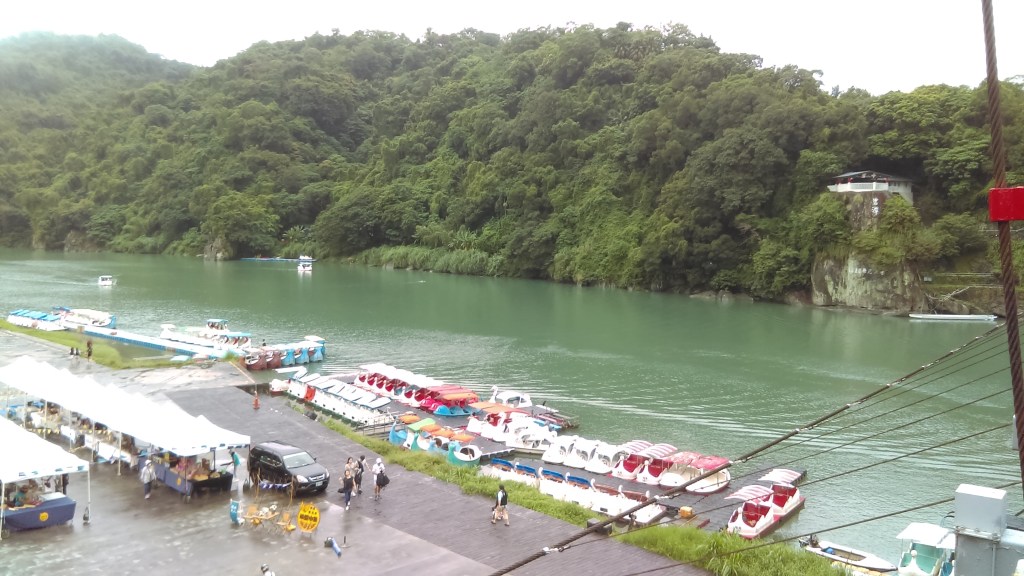
Quite a view from the Bridge. The hut in the lower center of the above photo is where the boats are hired.

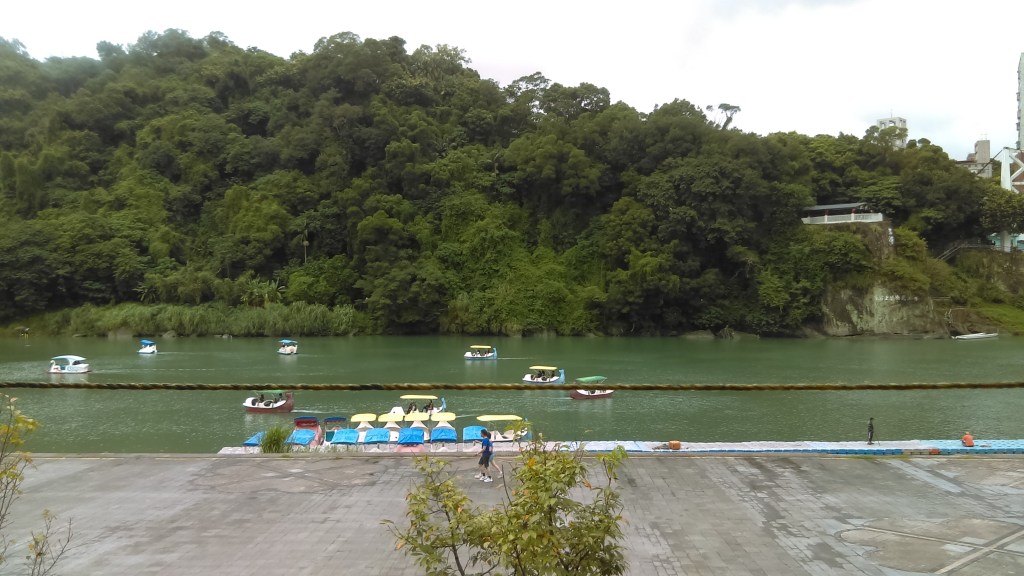
The view over to the south side, showing the boats also moored ready for hire.

New Taipei City Travel says: “After crossing the Bitan Suspension Bridge, people can enter Hemei Mountain on the left side. The curious rocks on the mountain wall facing Bitan are magnificent, so it is also called the ‘Little Red Cliff.'” In the photo above, presumably that area is on the extreme right, with the observation deck above, and writing in the center of the little cliff.

Between the traditional market to the right, and Bitan to the left, there is a temple (above), squeezed into a narrow block. It looks like the temple’s designers ran out of space on the ground, so they added an extra storey.

On the Internet, the descriptions of this temple are all in Chinese. Google Maps lists this temple as 新店長興宮 – perhaps “Xindian Long-Prospering Temple”; Google translates it as “Changxing Palace”. The temple has a Facebook page, which translating from the Chinese says there are actually three associated temples in Taipei. Academia Sinica, likewise in Chinese, says it’s a Daoist temple, and the chief deity is “Tutu Gong”.

Inside the temple, looking back up to where I’d taken the previous photo. Apart from the prominent entrance-way just out of shot to the right, there was a large cauldron filled with incense sticks, a subsidiary shrine, and a few people hanging out.

In this photo I’ve turned 90 degrees to the right, showing the entrance-way.

A photo of the innermost sanctum, taken in a quick shot leaning in at the entrance-way. Is that a statue of “Tutu Gong”? The Chinese writing on the wall translates as “Long-Prospering Temple”. To be honest, I feel like I have only superficially checked out this temple; perhaps a reader can add their contribution.

I felt a little hungry, so I went to the Waterfront area. There were a long row of restaurants with high prices. This cafe attracted me, with a sign (in Chinese) saying “coffee”, and a gleaming coffee machine.

But what made me order from this shop was the sign advertising Bundaburg fruit juices, complete with Australian flag and kangaroo.

I ordered a pork hamburger (above) and a mango ice-cream. The pork in the pork burger was firm and meaty. The ice-cream looked exactly like the photo on the wall of the shop. Total cost 240元 ($AUD 12).

While I was eating I admired the view. Incidentally, New Taipei City Travel says: “The Xindian Ferry on the south side of the Hemei Mountain hiking trail is the last ferry in Bitan. Before the Bitan Suspension Bridge opened, the residents of Xindian River relied on the ferry to travel between the two sides of the river. In its heyday, there were nine ferries. However, the function of the ferry has been gradually replaced as the construction of land transportation methods improved. Today, the ferry from Wantan to Xindian Street, where boatmen carry passengers and shuttle leisurely on the Bitan River, is the only one that remains.”

Then I went back to Xindian Old Street and purchased a meal for dinner at International House. It’s a pity I didn’t think to photograph this, but in the YouTube clip above you can see something of Xindian Old Street. Then I caught the train home.
Fulong – from Wandering Richard (http://wanderingrichard.com)

September 29, 2023

中秋快樂! (Zhōngqiū kuàilè) – Happy Mid-Autumn Festival! You can read about it in Taiwan Public Holidays. Just think, it has been over four years since I first came to Taiwan.

The weather is cooling off. The mornings are without the heat of summer, though in the heat of the day the temperature is in the low 30’s. Now International House’s air-conditioner gets switched off at 5am, which in my opinion is too soon.

I decided to do a day trip to Fulong (福隆).

Fulong is not marked on the map above; it’s located under “Gongliao District”, almost to the eastern end of land. From Xindian to Fulong Beach is around 60 kilometres, less than going from Northbridge to Penrith in Sydney.

After eating breakfast in a cafe near Qizhang MRT Station, I went via the MRT subway train, which was moderately full (above).

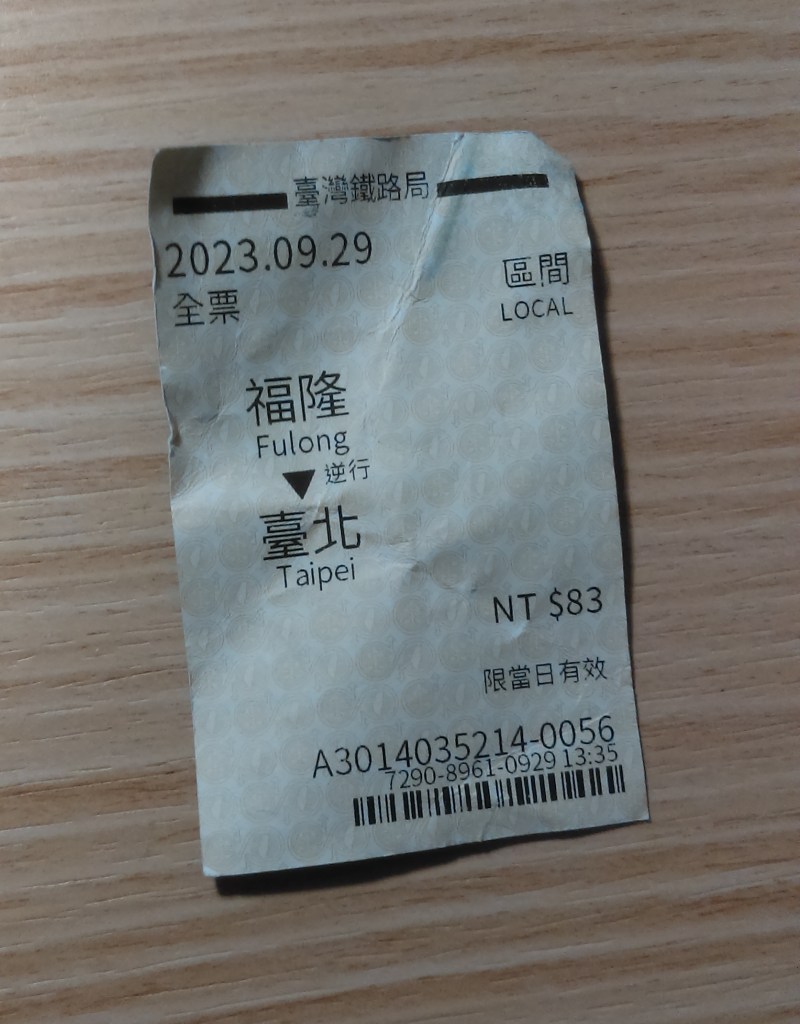
At Taipei Main Station I bought a physical ticket (above). You will observe that it’s not the ticket above, because I made a serious mistake.
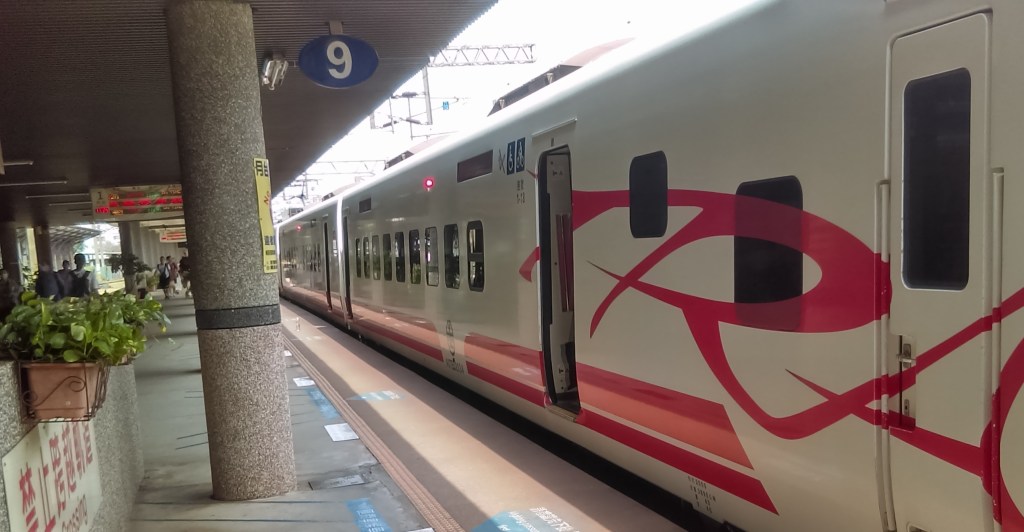
I hopped on a fast intercity express, figuring it would get me to Fulong quicker. The above picture is of a similar train at Yilan.

The intercity express went via the Mountain Line (above). I stood the whole way, not having a seat reserved.

Here is a view of (I think) the Keelung River.

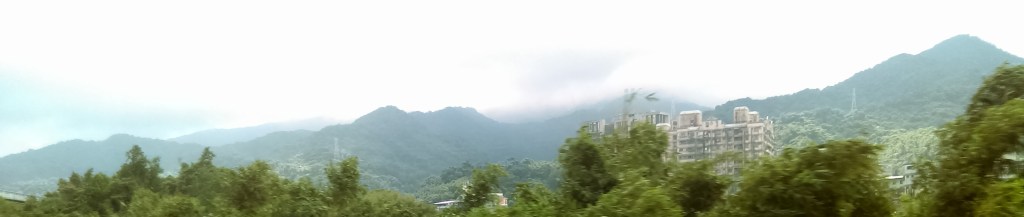
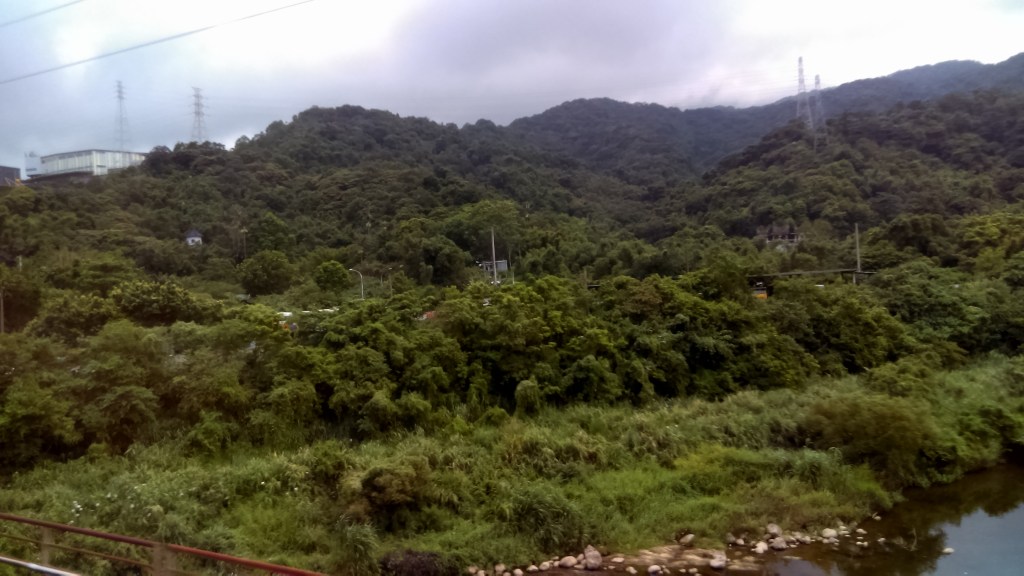
The views were very scenic (above). However, I didn’t realise the intercity express was a non-stop train. The next stop was Yilan, way down south, over an hour away. I passed through Fulong but the intercity express didn’t halt. Worse, the conductor came along and charged me 202元 ($AUD10), around 2½ times the slow train price.

I changed to a slow train (above) at Yilan and reversed my travel.

Aboard the slow train. I paid extra for the slow train as well.

Fulong, at last.

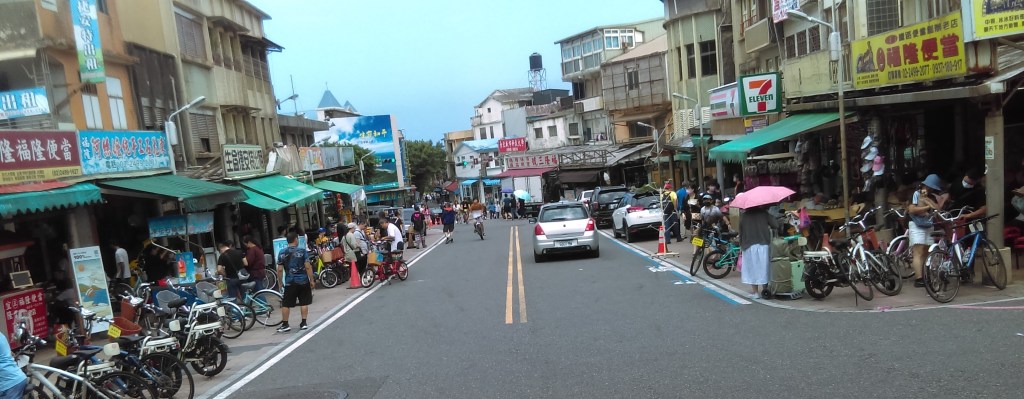
On the steps to Fulong Station looking out over the busy street.

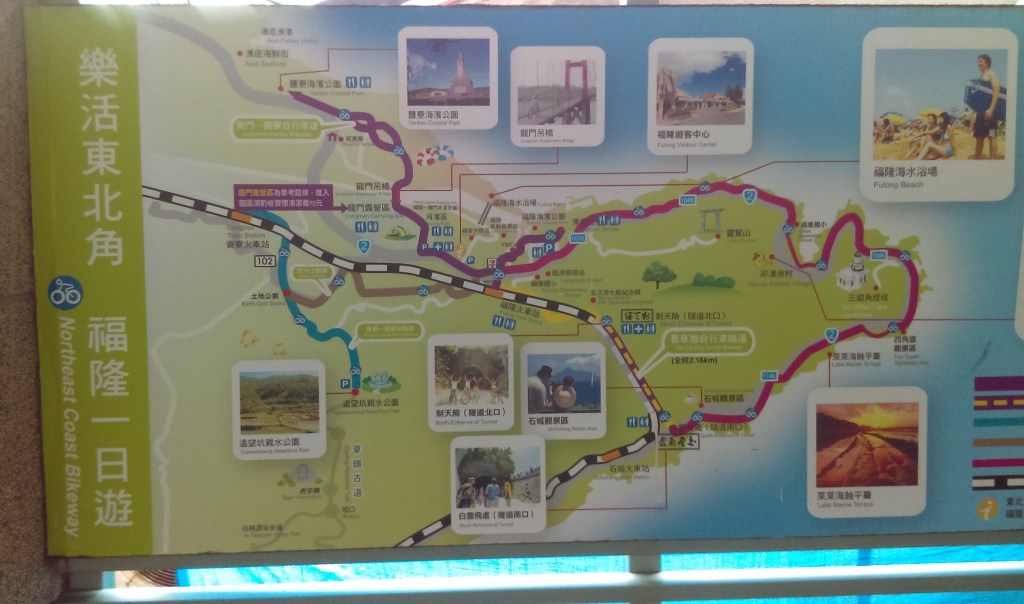
A map at the station. There are also a few Internet guides to Fulong, for instance Hoponworld.

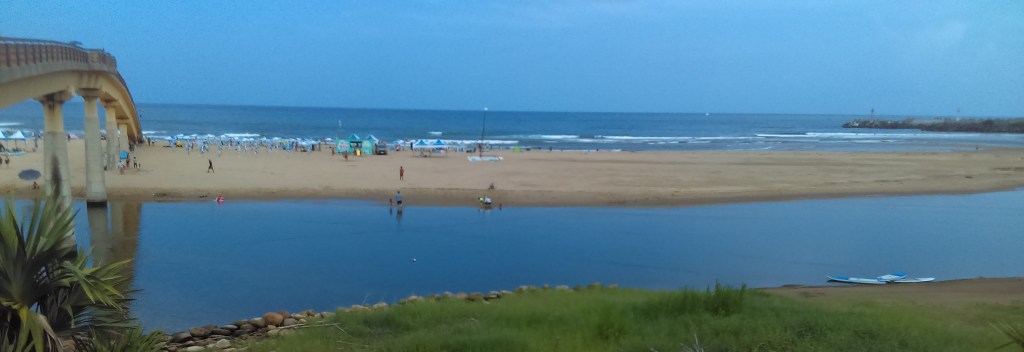
I followed the road for a few hundred meters to Fulong Beach (above). According to Tour Taiwan, “Fulong Beach is located at the mouth of Shuangxi River at Sandiaowan, Gongliao District, New Taipei City. The beach stretches as long as 3 kilometers with golden sand. It has always been a summer resort in northern Taiwan. Every summer, a good number of tourists would gather here to swim and enjoy the sun. Fulong Beach was famous during the Japanese occupation of Taiwan. … It is the most famous beach in northern Taiwan, just as Kenting is the most famous beach in southern Taiwan.”

Another shot of Fulong Beach, showing the bridge. I neglected to properly read the Internet reviews of Fulong Beach, so I was astounded to learn of the admission price. To go across that bridge costs 120元 ($AUD6). I guess sandy beaches are precious in Taiwan. Needless to say, I didn’t spend the money. In the east coast of Australia there are beaches after beaches for thousands of kilometers; Australians don’t know how lucky they are.

On YouTube there are many clips about Fulong Beach, but comparatively few on Fulong itself. The above YouTube clip is representative.

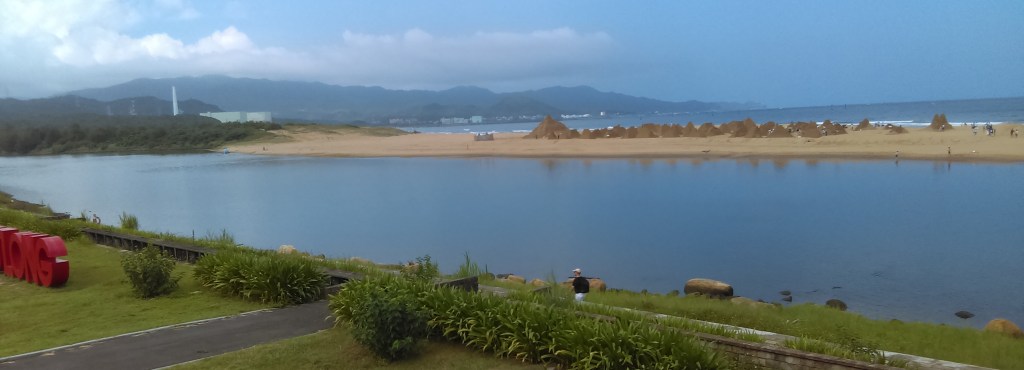
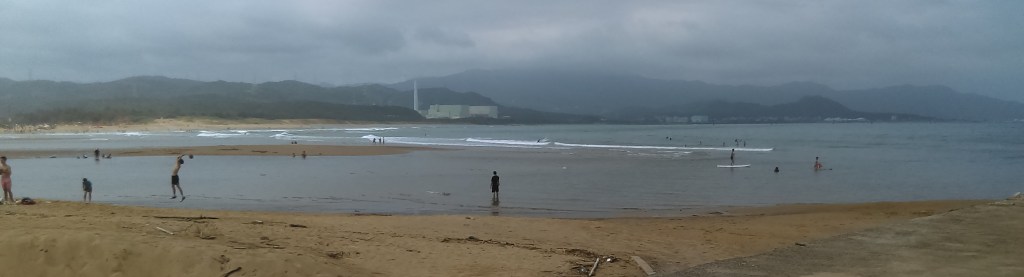
There is also a (free) public beach. The above photo shows the Lungmen Nuclear Power Plant in the distance.

Young men played a kind of football on the beach, while boys and girls waded in the shallows (above). I could imagine the lazy days here.

I returned to the station and walked west on highway 2 trying to find the temple. It was in the middle of the day, hot and humid; after only a few hundred meters sweat dampened my shirt, and I was irritable and dehydrated. I seriously considered turning around.

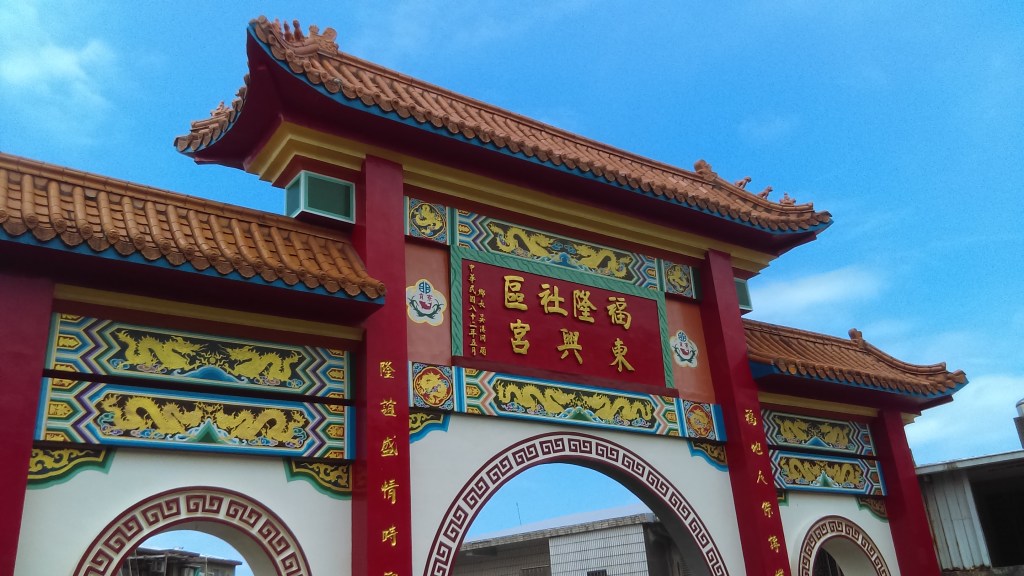
Fortunately, I persevered, and met the entrance to Dong Xing Temple, on highway 2. I can actually mostly read the sign – Fulong District, Dong Xing Temple. Native speakers of Chinese, please correct me if I am wrong.

I seemed to walk several hundred meters to the temple, although it probably wasn’t that far; the weather was that hot and humid. I took the above photo propping my mobile phone on the crematoria.

According to Ben Hsu of the Google reviews of Dongxing Temple, “The Temple is registered as a Taoist temple, although it is more a temple which worships ancestors [3 old families’ ancestors- families Lin, Wen and Fu] and worships Chinese and Taiwanese folklore deities, including Ma-tzu, Land God, and other deities. The Temple was originally built in 1926 and went through a few rounds of rebuild and expansion and current temple structure was finalized in year 2000. The Temple is well loved and worshipped by the local residents, because residents of Fulung Township escaped from a few bombings during the World War II and other political suppression in early 1950 when Chiang Kai-shek came to Taiwan in 1949.”

I didn’t stay long, just a quick snap at the entrance (above). Then I retraced my steps to Fulong Station.

I had read about the takeaway shops in Fulong. Hoponworld says “Many blogs rave about the lunchboxes in Fulong, which have been famous since the Japanese occupation. If you’re into that, you won’t need to look far to find a biàndang shop in Fulong. There are a couple of shops right in front of the train station.”

Sure enough, there was one right next to the station (above) – you can see the entrance outside the front of the shop.

I ordered the grilled pork biàndang and milk tea (above). The biàndang reminded me of the railway dish, but richer and more complex. It included pork, whole boiled egg, tofu, a fish cake, pickled vegetables, steamed cabbage, and other things I’ve forgotten. It was delicious!

Shortly after this meal the weather turned from high humidity to torrential rain. When I arrived back in Taipei, after getting the slow train this time, the weather turned again to a fine late afternoon.